Shivraj Singh Chouhan to Work on Long-Term Plan for Agricultural Education
Synopsis
Union Agriculture Minister Shivraj Singh Chouhan has announced plans to develop a long-term strategy for agricultural education in India, signalling a push to align curricula and training with modern farming and rural development needs.
Key Takeaways
Union Agriculture Minister Shivraj Singh Chouhan announced on October 14, 2026 that he will work on a long-term plan for agricultural education.
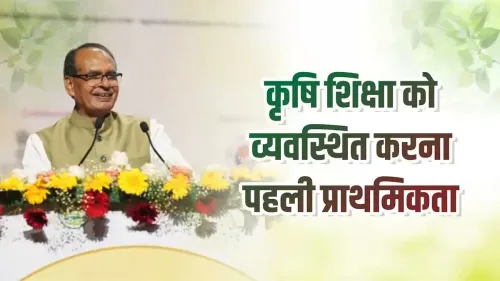
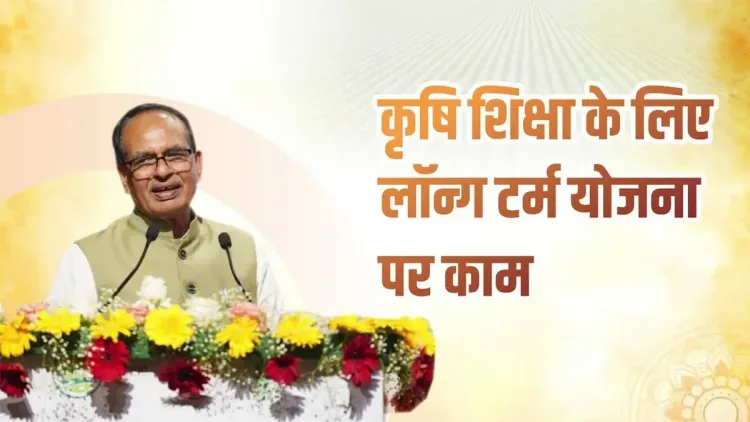
The announcement was made via a post on X in Hindi: 'कृषि शिक्षा के लिए लॉन्ग टर्म योजना पर काम करेंगे' .
ICAR (Indian Council of Agricultural Research) is the apex body overseeing agricultural education and research in India and would be a central institution in any such plan.
The National Education Policy 2020 had already called for greater integration of agricultural and vocational education into mainstream curricula.
Key beneficiaries would be agricultural students and rural youth who depend on relevant, up-to-date training pathways.
Watch for follow-up references in the next Union Budget or ICAR annual plan for concrete steps on curriculum revision or new degree programmes.
A quiet but consequential signal came from Union Agriculture Minister Shivraj Singh Chouhan on Wednesday, October 14, 2026, when he announced on X that he intends to work on a long-term plan for agricultural education — a pledge that could shape how India trains the next generation of farmers and rural professionals.
In the post, Chouhan wrote: 'कृषि शिक्षा के लिए लॉन्ग टर्म योजना पर काम करेंगे' — ('We will work on a long-term plan for agricultural education'). Spare in words, but pointed in direction.
Why Agricultural Education Needs a Long-Term Fix
India's agricultural higher-education ecosystem is anchored by the Indian Council of Agricultural Research (ICAR), the apex autonomous body that coordinates curricula, research, and extension services across the country's network of state agricultural universities. For years, policymakers and educators have flagged a persistent mismatch: curricula built for an older agrarian model struggling to keep pace with precision farming, climate-resilient crop science, and agri-tech entrepreneurship.
The National Education Policy 2020 explicitly called for deeper integration of agricultural and vocational education into mainstream learning pathways. That recommendation has moved slowly. Chouhan's statement suggests the ministry is now willing to own the timeline problem — and push for something more structural than a one-cycle curriculum revision.
What 'Long-Term' Could Mean for Rural Youth
The primary stakeholders are agricultural students and rural youth — a demographic that often picks up a degree only to find it disconnected from the realities of the farm or the market. A durable plan, if it materialises through ICAR's annual programme or the next Union Budget, could mean new degree pathways, updated syllabi, or stronger links between agricultural universities and the private agri-sector.
Chouhan brings particular weight to this conversation. As a four-term Chief Minister of Madhya Pradesh — a state where farming communities form a decisive political and economic constituency — he has navigated agricultural policy from the state level before arriving at the national ministry. That ground-up experience, ministers often argue, is precisely what long-range planning in this sector demands.
The specifics remain ahead of us. But when India's agriculture minister flags long-term education reform, the syllabi of tomorrow's agronomists are already in play.
Point of View
Though brief, lands at a moment when agricultural education reform has been a slow-moving mandate since the National Education Policy 2020. By personally flagging a 'long-term' approach, the minister is implicitly acknowledging that incremental, budget-to-budget fixes have not been enough. For a BJP government that has staked significant political capital on farmers' welfare, anchoring that narrative in education — not just income support — signals a possible broadening of the agrarian policy conversation. The real test will be whether this intent translates into structural changes in ICAR's planning cycle or remains a statement of direction.
NationPress
14 Oct 2026
Frequently Asked Questions
What did Shivraj Singh Chouhan announce about agricultural education?
On October 14, 2026, Union Agriculture Minister Shivraj Singh Chouhan announced on X that he will work on a long-term plan for agricultural education in India.
What is ICAR and what role does it play in agricultural education?
ICAR, the Indian Council of Agricultural Research, is the apex autonomous body in India responsible for coordinating agricultural education, research, and extension services across state agricultural universities.
Does India's National Education Policy address agricultural education?
Yes. The National Education Policy 2020 called for greater integration of agricultural and vocational education into mainstream curricula, a recommendation that has seen slow implementation.
Who will benefit from a long-term agricultural education plan?
Agricultural students and rural youth are the primary stakeholders who stand to benefit from a reformed, future-ready agricultural education system.
Where can I see follow-up action on this agricultural education plan?
Observers should watch the next Union Budget and ICAR's annual plan for concrete proposals on curriculum revision, new degree programmes, or dedicated funding for agricultural education reform.