Giriraj Singh backs Pashmina push for Ladakh's Changpa herders
Synopsis
Union Textiles Minister Giriraj Singh on 14 October 2026 backed an initiative to promote world-famous GI-tagged Pashmina and strengthen the livelihoods of Ladakh's Changpa nomadic shepherds, calling it a commendable step for preserving traditional heritage.
Key Takeaways
Giriraj Singh , Union Textiles Minister, publicly endorsed a Pashmina promotion initiative for Ladakh on 14 October 2026 .
The post specifically highlights the dual goal: promoting world-famous Pashmina and strengthening livelihoods of Changpa shepherds .
Ladakh's Pashmina carries a Geographical Indication (GI) tag , linking its authenticity to the Changthangi goat reared at altitudes above 4,500 metres .
Since Ladakh became a Union Territory in 2019 , central government focus on its textile economy has intensified.
Cheap imitation Pashmina in markets remains a persistent threat to Changpa herders' incomes and the viability of traditional pastoral practices.
The specific scheme or project being praised was not named in the minister's post; rollout details are yet to be announced.
High on the Changthang plateau, where temperatures plunge and the air is thin enough to ache, Changpa nomads have coaxed the finest wool in the world from their Changthangi goats for centuries — and now Union Textiles Minister Giriraj Singh has publicly backed a fresh effort to protect both that heritage and the livelihoods that sustain it, posting his support on Wednesday, 14 October 2026.
Posting in Hindi, the minister called the initiative 'a commendable step towards promoting world-famous Pashmina and strengthening the livelihoods of Changpa shepherds.' He added that the move would 'encourage local livestock keepers and help carry forward Ladakh's traditional Pashmina heritage' — framing it as both an economic and cultural imperative.Why Pashmina and the Changpa are inseparable
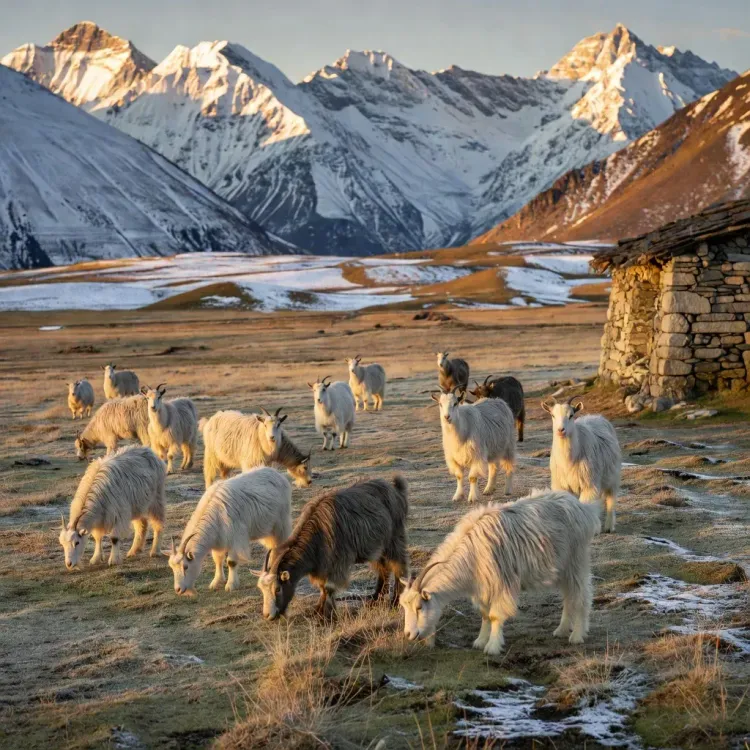
Ladakh's Pashmina is not simply a luxury textile — it is a Geographical Indication (GI)-tagged product whose authenticity is tied directly to the Changthangi goat and the nomadic Changpa community that rears it at altitudes above 4,500 metres. The ultra-fine undercoat, harvested by hand each spring, cannot be replicated at lower altitudes or by industrialised breeding. That biological specificity is both the wool's greatest selling point and the community's most persistent vulnerability: cheap machine-spun imitations flood markets and undercut prices, threatening the economic case for maintaining traditional herding practices. Central ministries have periodically intervened — through the Textiles Ministry, the Khadi and Village Industries Commission, and development programmes for border Union Territories — to counter these pressures. Since Ladakh became a Union Territory in 2019, the strategic and economic spotlight on the region has sharpened considerably, adding a geopolitical dimension to what was once a niche craft-promotion story.Textiles policy meets Himalayan border development
The convergence here is deliberate. Pashmina promotion schemes serve at least three policy objectives at once: preserving an irreplaceable indigenous textile tradition, improving incomes for one of India's most remote pastoral communities, and reinforcing the Centre's development narrative for a strategically sensitive border territory. For the Textiles Ministry, championing a GI-tagged product with global luxury-market appeal also fits neatly into the broader push for 'Brand India' positioning in premium export segments. The specific initiative Minister Singh is praising has not been named in his post, and its full rollout details remain to be announced. What his endorsement signals, however, is ministerial momentum behind Pashmina's next chapter — one the Changpa shepherds, navigating climate shifts and market pressures alike, are watching closely.If the follow-through matches the rhetoric, the finest wool on the planet may finally carry the policy weight it has always deserved.
Point of View
Border-area development, and indigenous community welfare. For the BJP, championing Pashmina in Ladakh is also symbolically potent — it ties the Centre's development credibility to a Union Territory whose special status was a signature political act of 2019. The harder test will come when scheme details emerge: past Pashmina interventions have often struggled with implementation gaps between Delhi's policy intent and the ground realities of Changthang's extreme terrain and fragmented supply chains.
NationPress
14 Oct 2026
Frequently Asked Questions
What is Pashmina and why is it associated with Ladakh?
Pashmina is an ultra-fine luxury wool harvested from the Changthangi goat, which is reared by Changpa nomads on the Changthang plateau of Ladakh at altitudes above 4,500 metres. Its GI tag legally links authentic Pashmina to this specific region and breed.
Who are the Changpa shepherds?
The Changpa are a nomadic pastoral community of Ladakh who traditionally herd Changthangi goats and yaks on the high-altitude Changthang plateau. They are the primary producers of raw Pashmina wool.
What did Giriraj Singh say about Pashmina in October 2026?
On 14 October 2026, Union Textiles Minister Giriraj Singh posted on X calling an unnamed initiative a 'commendable step' for promoting world-famous Pashmina and strengthening the livelihoods of Changpa shepherds in Ladakh.
Why did Ladakh's Pashmina sector get more central government attention after 2019?
When Ladakh was reorganised as a Union Territory in 2019, direct central oversight increased, bringing the region's traditional industries including Pashmina more directly under the purview of Union ministries such as Textiles.
What are the main threats to Ladakh's Pashmina industry?
Cheap machine-spun imitations sold under the Pashmina name undercut authentic prices, reducing income for Changpa herders. Climate change affecting high-altitude grazing lands and a gradual decline in traditional herding also threaten the sector's long-term viability.