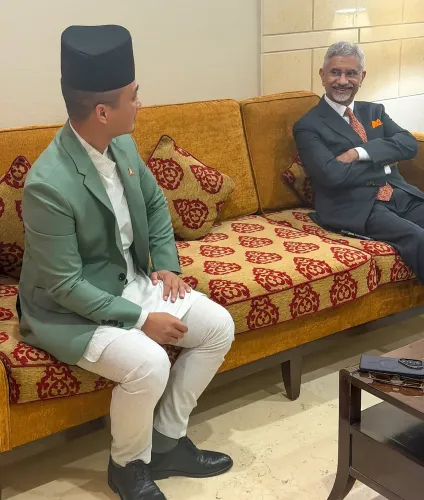
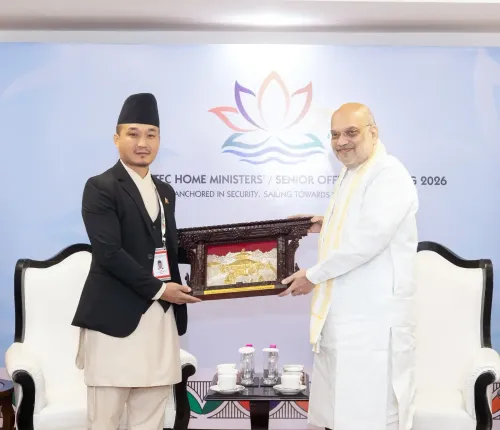
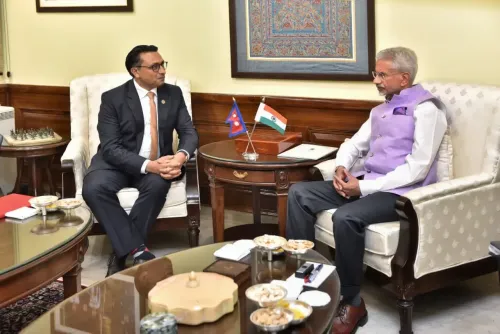
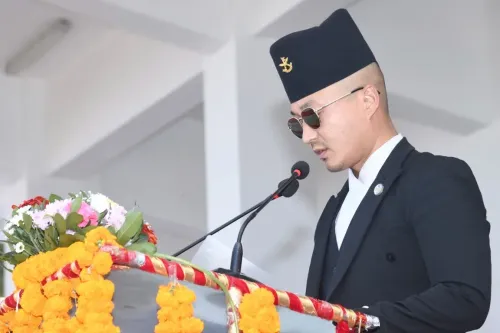
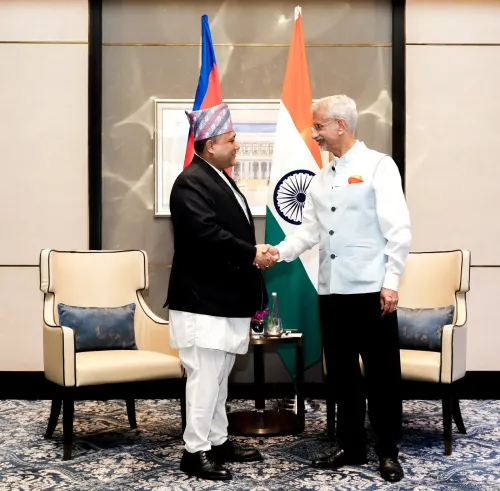
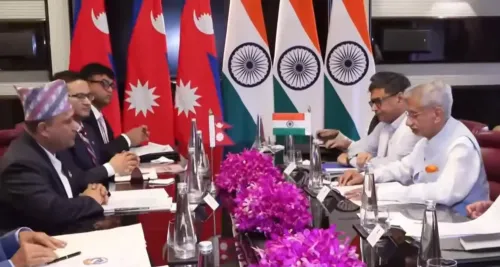
Jaishankar meets Nepal Home Minister Sudhan Gurung
Synopsis
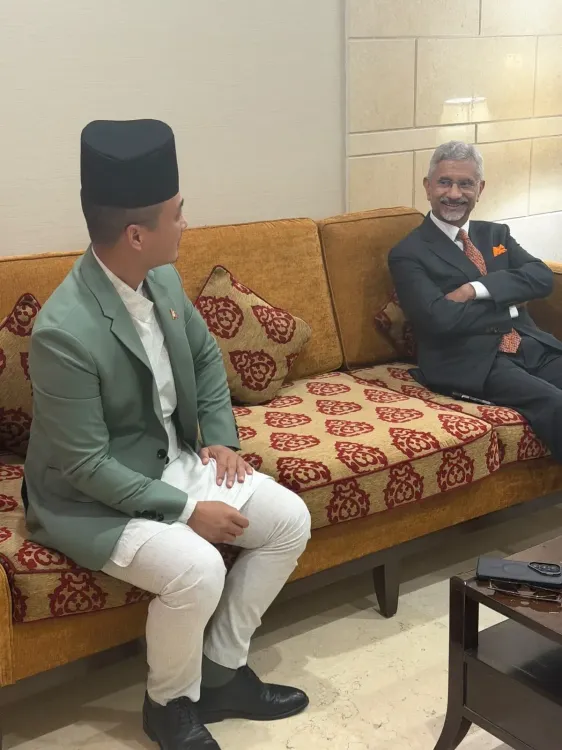
External Affairs Minister Dr. S. Jaishankar met Nepal Home Minister Sudhan Gurung on 14 October 2026, reinforcing India-Nepal bilateral ties with a focus on border security and law-enforcement cooperation under the framework of the 1950 Treaty of Peace and Friendship.
Key Takeaways
Jaishankar met Nepal Home Minister Sudhan Gurung on 14 October 2026 .
The meeting falls within India's long-standing 'neighbourhood first' diplomatic framework.
India and Nepal share an open border governed by the 1950 Treaty of Peace and Friendship .
Home-ministry-level engagements typically address cross-border crime, migration, and law-enforcement coordination.
Both governments are expected to consider follow-up security talks or a joint statement.
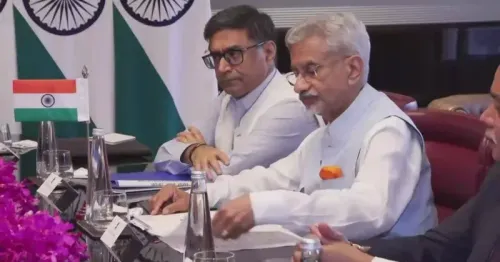
Border security, cross-border crime, and the deep institutional ties binding two neighbours came into focus on Wednesday, 14 October 2026, as Union External Affairs Minister Dr. S. Jaishankar met Nepal Home Minister Sudhan Gurung on the sidelines of high-level bilateral engagements.
A meeting at the intersection of diplomacy and security
Jaishankar posted on X: 'Nice to meet Home Minister Sudhan Gurung of Nepal,' accompanied by the Indian and Nepali flags — a characteristically understated signal of a working engagement between two countries whose relationship runs far deeper than protocol. Meetings between Indian and Nepali home-ministry counterparts have historically centred on the management of the two nations' open border, law-enforcement cooperation, and curbing cross-border criminal networks.
India and Nepal share one of the world's most porous open borders, governed by the landmark 1950 Treaty of Peace and Friendship, which allows citizens of both nations to live and work freely across the frontier. That openness is both an asset and a challenge — requiring constant coordination between security agencies on both sides.
Why home-ministry diplomacy matters here
When an External Affairs Minister sits across from a Home Minister, the agenda almost always straddles two worlds: formal foreign policy and the nuts-and-bolts of domestic security. India conducts regular high-level exchanges with Kathmandu to manage shared border concerns, migration flows, and connectivity initiatives. A meeting at this level signals that both sides are keeping those channels active and operational — not waiting for a crisis to convene.
For Dr. Jaishankar — a career diplomat who served as Indian Ambassador to China, the United States and Singapore before becoming Foreign Secretary and then External Affairs Minister — neighbour-first diplomacy has been a consistent thread. Engaging Nepal's internal-security establishment directly fits that framework of treating the neighbourhood as a strategic priority, not an afterthought.
Any joint statement or announcement of follow-up security talks between the two governments will be the clearest measure of what this meeting ultimately produced.
Point of View
Whose diplomatic career was forged in managing complex bilateral relationships with large neighbours, a working-level exchange like this is a routine but deliberate investment in the neighbourhood-first doctrine. The real test will be whether it yields concrete outcomes on shared security concerns.
NationPress
14 Oct 2026
Frequently Asked Questions
Why did Jaishankar meet Nepal's Home Minister?
The meeting was part of high-level bilateral engagement between India and Nepal, with home-ministry-level talks typically covering border security, cross-border crime, and law-enforcement cooperation.
Who is Sudhan Gurung?
Sudhan Gurung is the Home Minister of Nepal at the time of this meeting in October 2026.
What is the 1950 Treaty of Peace and Friendship between India and Nepal?
The 1950 Treaty of Peace and Friendship is the foundational bilateral agreement that frames security and people-to-people ties between India and Nepal, including provisions for an open border allowing citizens of both countries to live and work freely across the frontier.
What does India and Nepal's open border mean for security?
The open border, while enabling free movement of people, also requires constant coordination between Indian and Nepali security agencies to manage cross-border crime, migration, and law enforcement.
What is India's neighbourhood first policy?
India's 'neighbourhood first' policy prioritises deep and proactive engagement with South Asian neighbours, treating regional relationships as a strategic cornerstone of foreign policy.