CM Sukhu in Kaza: Warmth of Spiti's Tribal Heart

Synopsis
Chief Minister Thakur Sukhvinder Singh Sukhu visited Kaza, the high-altitude tribal headquarters of Lahaul and Spiti, on October 14, 2026, describing the community's reception as filled with enthusiasm, warmth, and the rich heritage of tribal culture.
Key Takeaways
CM Thakur Sukhvinder Singh Sukhu visited Kaza , headquarters of Spiti subdivision, on October 14, 2026 .
He described an atmosphere of enthusiasm and warmth ('उत्साह और आत्मीयता') across the town.
Sukhu identified the sense of 'अपनापन' (belonging) as the defining identity of the tribal communities of the region.
Kaza sits at approximately 3,800 metres above sea level in Lahaul and Spiti district .
The region has constitutional and budgetary protections under the Tribal Sub-Plan framework dating to the Fifth Five Year Plan.
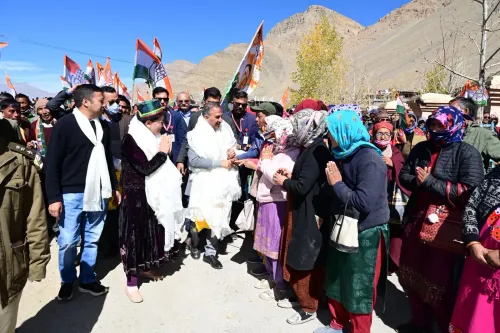
At altitude, in the stone-and-sky silence of Kaza, a reception unfolded that Chief Minister Thakur Sukhvinder Singh Sukhu described as defined by something rarer than ceremony — sheer warmth. The Chief Minister's Office of Himachal Pradesh shared his words on Wednesday, October 14, 2026, as Sukhu made a visit to the high-altitude tribal headquarters of Lahaul and Spiti district.
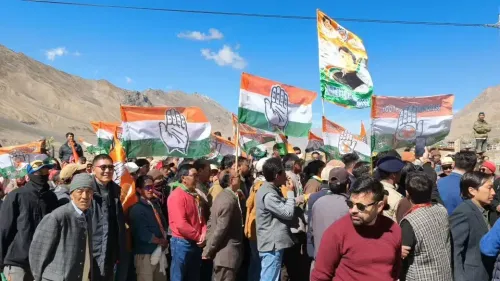
In his own words, 'काजा में हर तरफ़ उत्साह और आत्मीयता का माहौल है' — 'There is an atmosphere of enthusiasm and warmth all around in Kaza.' He noted that the rich heritage of tribal culture and the outpouring of affection from large numbers of people were together making the welcome something special.
Spiti's Welcome: What Makes Kaza Different
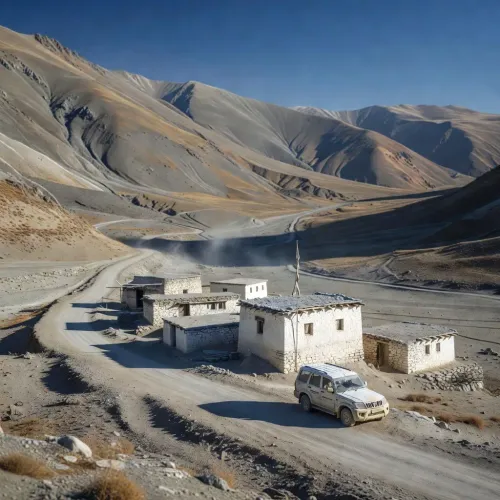
Kaza sits at roughly 3,800 metres above sea level, the administrative nerve-centre of the Spiti subdivision. It is not a place a Chief Minister drops into incidentally — reaching it requires crossing some of the most demanding mountain roads in the country, and the communities there carry a distinct Buddhist cultural identity that sets Spiti apart from the rest of Himachal Pradesh.
Sukhu's observation that this sense of belonging — 'अपनापन' — is the very identity of tribal brothers and sisters here is both a cultural acknowledgement and a political signal. Successive Himachal governments have conducted outreach visits to remote tribal districts precisely because the distance is real, in kilometres as much as in administrative attention.
A Region With Constitutional Roots in Welfare
Lahaul and Spiti, along with other designated tribal areas of Himachal Pradesh, falls within the ambit of special protections and resource-allocation frameworks that date back to the Fifth Five Year Plan. The state's Tribal Sub-Plan has channelled dedicated funding toward Scheduled Tribe areas for decades, covering infrastructure, education, and livelihood support in valleys where the terrain itself makes delivery difficult.
These regions also sit in a border-adjacent geography, giving them added strategic significance beyond cultural heritage and tourism. Any administrative visit to Kaza carries weight that extends well beyond a reception.
Whether the Chief Minister's visit will be accompanied by specific scheme announcements or cultural event commitments for the Spiti valley remains to be seen — but the signal sent by showing up, in person, in October, at nearly four kilometres above sea level, is rarely lost on communities this far from the state capital Shimla.
Point of View
Particularly in geographically and administratively distant constituencies like Spiti. For a chief minister who came to power in December 2022, building a presence in border-adjacent tribal districts carries both welfare and electoral logic. The emphasis on cultural identity — 'अपनापन' as the defining quality of tribal communities — also signals a softer governance narrative that complements harder infrastructure and scheme-delivery politics. Whether this visit translates into tangible programme announcements will determine how much it registers beyond symbolic goodwill.
NationPress
14 Oct 2026
Frequently Asked Questions
Why did CM Sukhu visit Kaza in October 2026?
CM Thakur Sukhvinder Singh Sukhu visited Kaza on October 14, 2026, as part of an outreach engagement with the tribal communities of Lahaul and Spiti district. He described the reception as warm and culturally rich.
Where is Kaza and why is it significant?
Kaza is the administrative headquarters of the Spiti subdivision in Lahaul and Spiti district, Himachal Pradesh, situated at approximately 3,800 metres above sea level. It has a distinct Buddhist cultural identity and falls under special tribal welfare frameworks.
What is the Tribal Sub-Plan in Himachal Pradesh?
The Tribal Sub-Plan is a resource-allocation framework that has directed dedicated government funding toward Scheduled Tribe areas in Himachal Pradesh since the Fifth Five Year Plan era, covering infrastructure, education, and livelihoods in remote areas like Spiti.
Who is Chief Minister Sukhvinder Singh Sukhu?
Thakur Sukhvinder Singh Sukhu is the Chief Minister of Himachal Pradesh, representing the Congress party. He has held the post since December 2022.
What did CM Sukhu say about tribal identity in Kaza?
CM Sukhu said that the sense of 'अपनापन' — belonging or warmth — is the very identity of tribal brothers and sisters in the region, describing the Kaza visit as marked by enthusiasm and the rich heritage of tribal culture.