HP CM's Office pledges Rs 1,500 monthly aid to Kaza families

Synopsis
The Chief Minister's Office of Himachal Pradesh visited Kaza in Spiti Valley on October 14, 2026, thanking Buddhist monks and nuns for their blessings and reaffirming a monthly Rs 1,500 cash transfer for economically needy families in the high-altitude tribal region.
Key Takeaways
The Chief Minister's Office of Himachal Pradesh reached out to the people of Kaza, Spiti Valley on October 14, 2026 .
A heartfelt thank-you was extended to Buddhist monks and nuns of the region for their blessings.
The government is providing Rs 1,500 per month in financial assistance to economically needy families.
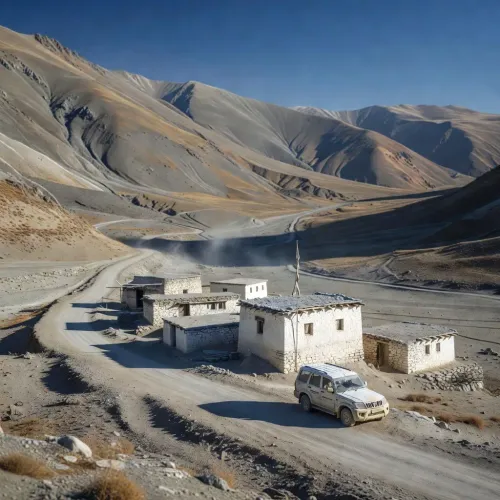
Kaza is the main town of Spiti Valley in Lahaul and Spiti district , with a predominantly Buddhist population at over 3,800 metres altitude.
The outreach combines religious community engagement with welfare reiteration in one of Himachal Pradesh's most remote tribal belts.
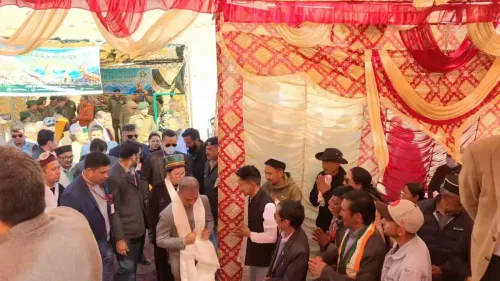
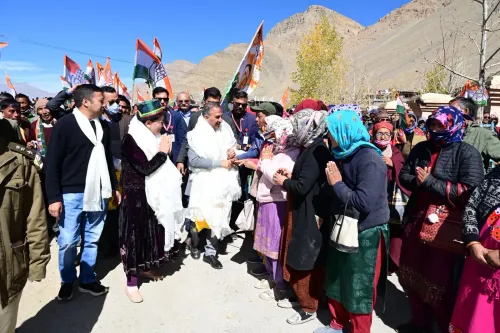
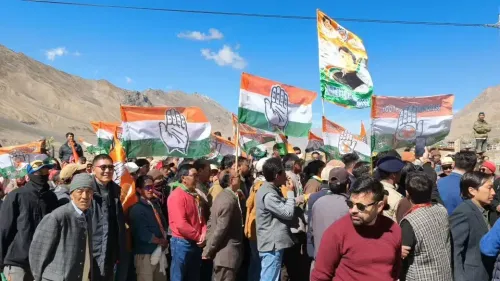
In the high-altitude Spiti Valley, where Buddhist monasteries dot the cold-desert landscape and roads close for months every winter, the Chief Minister's Office of Himachal Pradesh reached out to the people of Kaza on Wednesday, October 14, 2026 — thanking Buddhist monks and nuns for their blessings and reaffirming a monthly cash transfer of Rs 1,500 for needy families in the region.
The post, in Hindi, reads: 'Bauddh bhikshu bahnon ke aashirvacanon ke liye hriday se dhanyavad' — 'A heartfelt thank you to the Buddhist monk-sisters for their blessings.' It goes on: 'My bond with the brothers and sisters of Kaza is from heart to heart. Our government is a government of the common people. We are yours, and always dedicated to your service. Needy families are being given Rs 1,500 in financial assistance every month.'
Kaza: Where governance meets the high-altitude frontier
Kaza is the administrative headquarters of the Spiti Valley in Lahaul and Spiti district, sitting at over 3,800 metres above sea level. The town is home to a predominantly Buddhist population, with monasteries wielding deep social and community influence across the sparsely populated tribal belt. Outreach from state leadership here carries symbolic weight — this is not a routine constituency visit.
Himachal Pradesh governments have periodically spotlighted direct cash transfers and social security support in remote tribal districts like Lahaul and Spiti, where geographic isolation and harsh winters sharpen economic vulnerability. The Rs 1,500 monthly assistance being highlighted here is positioned squarely at economically weaker households — the families most dependent on state support when livelihoods are constrained by altitude and accessibility.
Cash transfers and community trust in Spiti's tribal belt
The combination of religious acknowledgement and welfare reiteration in a single post is deliberate. By opening with gratitude to Buddhist bhikshus and bhikshunis — figures of considerable moral authority in Spiti — the government signals that it is engaging on the community's own terms. The welfare promise follows naturally: a monthly Rs 1,500 direct benefit for needy families, framed as ongoing and unconditional.
Direct benefit transfers to tribal and remote populations have been a recurring feature of social policy in Himachal Pradesh, aimed at plugging gaps where physical infrastructure cannot reach. For a family in the Spiti Valley, a guaranteed monthly transfer is not an abstraction — it is fuel, medicine, or a child's school supplies through a winter that can last five months.
Watch for further detail on eligibility criteria, the disbursement schedule, and whether this Rs 1,500 monthly support is extended to other tribal or rural pockets of the state in the coming weeks.
Point of View
Then activates the policy message. For the ruling dispensation in Shimla, maintaining goodwill in remote tribal districts like Lahaul and Spiti — where voter turnout is high relative to population and Buddhist institutional influence is strong — carries disproportionate political and symbolic value. The Rs 1,500 monthly transfer, while modest, represents the state's most direct livelihood touchpoint for families in a region where winter isolation limits economic options. If the scheme's coverage is expanded or its quantum revised in the near term, Spiti will likely serve as the announcement backdrop again.
NationPress
14 Oct 2026
Frequently Asked Questions
What is the Rs 1,500 monthly assistance announced by the Himachal Pradesh government?
The Himachal Pradesh government is providing Rs 1,500 per month in direct financial assistance to economically needy families, as reaffirmed by the Chief Minister's Office during an outreach in Kaza, Spiti Valley on October 14, 2026. Exact eligibility criteria and the scheme's official name have not been specified in the post.
Where is Kaza, and why is it significant for HP's welfare outreach?
Kaza is the main town of Spiti Valley in Lahaul and Spiti district, Himachal Pradesh, situated at over 3,800 metres above sea level. It has a predominantly Buddhist population and is one of the state's most remote tribal areas, making direct cash transfers especially critical for residents who face months of winter isolation each year.
Why did the Himachal Pradesh CM's Office thank Buddhist monks and nuns in the Spiti post?
Buddhist bhikshus and bhikshunis hold deep religious and community authority in the Spiti Valley. The Chief Minister's Office expressed heartfelt gratitude for their blessings, signalling respectful engagement with the region's cultural and spiritual leadership alongside its welfare announcements.
Which district does Kaza belong to in Himachal Pradesh?
Kaza belongs to Lahaul and Spiti district in Himachal Pradesh, one of the state's largest and most sparsely populated tribal districts.
Does Himachal Pradesh have other welfare schemes for tribal or remote areas?
Himachal Pradesh governments have periodically announced direct cash transfers and social security programmes targeting remote tribal districts, including Lahaul and Spiti. The Rs 1,500 monthly assistance highlighted in this post is one such measure aimed at economically weaker households in these regions.