CM Bhajan Lal Reaffirms Rajasthan's Commitment to Employee Welfare
Synopsis
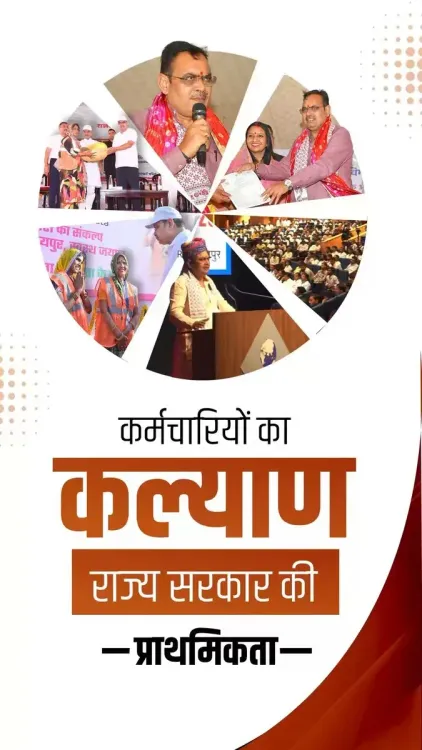
Rajasthan Chief Minister Bhajan Lal Sharma on 23 June 2026 reaffirmed his government's commitment to employee welfare, social security, and administrative efficiency, calling civil servants the foundation of good governance and a bridge between the state and its people.
Key Takeaways
CM Bhajan Lal Sharma posted on 23 June 2026 reaffirming the Rajasthan government's commitment to employee welfare and social security.
He described civil servants as 'the strong foundation of good governance' and a vital bridge between government and citizens.
The statement aligns with a national BJP-era pattern of linking employee welfare with improved bureaucratic performance and citizen-centric governance.
Rajasthan , with its large civil service cadre spread across 33 districts , stands to see broad impact if welfare commitments translate into concrete policy.
Analysts will watch for specific budget allocations or administrative orders on employee benefits and training in the next fiscal cycle.
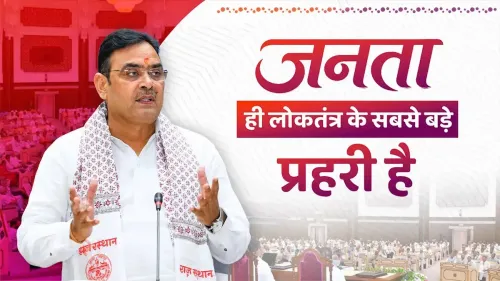
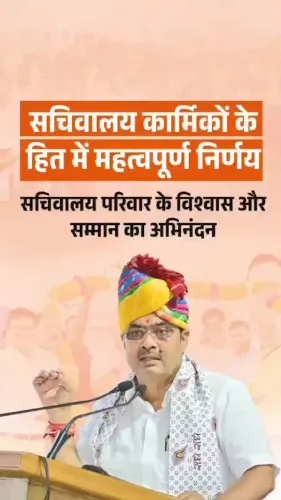
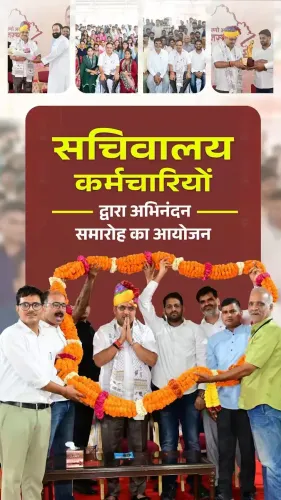
Rajasthan Chief Minister Bhajan Lal Sharma on Tuesday, 23 June 2026 reaffirmed his government's commitment to strengthening employee welfare, social security, and administrative efficiency, describing civil servants as the cornerstone of good governance and a vital bridge between the state and its citizens.
Posting on X, the Chief Minister wrote: 'कार्मिक सुशासन की मजबूत नींव हैं, जो सरकार और जनता के बीच महत्वपूर्ण सेतु का कार्य करते हैं।' ['Personnel are the strong foundation of good governance, serving as an important bridge between the government and the public.'] He added that the Rajasthan government remains continuously committed to empowering employees through welfare, social security, and enhanced work capacity to make public service more effective.
Context
The statement positions Rajasthan's civil servants not merely as administrative functionaries but as active agents of citizen-centric governance. Chief Minister Sharma, who assumed office in December 2023 following the BJP's victory in the state assembly elections, has consistently framed personnel management as central to his administration's governance agenda. The post's emphasis on the employee-as-bridge metaphor signals a broader intent to align bureaucratic performance with public satisfaction.
Policy Backdrop
India's post-2014 administrative landscape has seen a sustained push towards good governance, with National Good Governance Day observed annually since 2014 to promote efficiency and citizen-first administration across states. BJP-led state governments have frequently used employee welfare provisions as a lever to improve bureaucratic output, linking service conditions with service delivery. The Rajasthan government's stated focus on social security and work capacity for its employees fits squarely within this national pattern of administrative modernisation.
Employee welfare in large states like Rajasthan carries significant fiscal and administrative weight. With a substantial cadre of state government employees, any policy movement on pay, pensions, health benefits, or training programmes has wide-ranging implications for both the state exchequer and the quality of public service delivery across Rajasthan's 33 districts.
Stakeholders and Impact
The primary beneficiaries of the commitment articulated by CM Sharma are Rajasthan's state government employees and civil servants, whose welfare and working conditions directly influence how effectively government schemes and services reach ordinary citizens. A motivated and well-supported bureaucracy is widely regarded as essential to reducing grievance backlogs, improving scheme implementation, and building public trust in state institutions.
Citizens across the state stand to benefit indirectly: when civil servants are equipped with better training, social security, and institutional support, the quality and speed of government service delivery at the grassroots level tends to improve. This is particularly relevant in a geographically vast state like Rajasthan, where last-mile delivery remains a persistent challenge.
What's Next
Observers will watch for concrete follow-through in the form of budget allocations, administrative orders, or policy announcements targeting employee welfare and capacity-building in the upcoming fiscal cycle. The Rajasthan government may translate this stated commitment into specific programmes covering health coverage, pension security, or professional training for civil servants. How the administration converts this public affirmation into measurable policy action will be a key test of its governance priorities in the months ahead.
Point of View
But its framing is deliberate: by casting civil servants as the 'foundation' of good governance, the BJP-led Rajasthan government is building a political narrative that ties administrative performance to employee well-being. This is consistent with a post-2014 BJP governance playbook that presents bureaucratic modernisation as both a welfare and an efficiency project. For a government now in its second year, translating such affirmations into measurable outcomes — visible in service delivery metrics or employee satisfaction — will matter more than the rhetoric itself. The statement also subtly sets the stage for potential welfare announcements ahead of the next budget cycle, giving the administration political credit before any specific measure is rolled out.
NationPress
22 Sept 2026
Frequently Asked Questions
What did Rajasthan CM Bhajan Lal Sharma say about government employees?
CM Bhajan Lal Sharma said that personnel are the strong foundation of good governance and serve as an important bridge between the government and citizens, and that the Rajasthan government is committed to empowering employees through welfare, social security, and improved work capacity.
What is Bhajan Lal Sharma's position and party?
Bhajan Lal Sharma is the Chief Minister of Rajasthan and a senior BJP leader. He assumed office in December 2023 after the BJP won the Rajasthan state assembly elections.
What is the Rajasthan government's policy on employee welfare?
The Rajasthan government, under CM Bhajan Lal Sharma, has stated a commitment to strengthening employee welfare, social security, and work capacity as tools to make public service delivery more effective across the state.
How does good governance relate to civil servants in Rajasthan?
According to CM Sharma, civil servants are the cornerstone of good governance, acting as the critical link between state administration and ordinary citizens. Their welfare and efficiency are therefore seen as directly tied to the quality of public service delivery.
What should we expect next from the Rajasthan government on employee welfare?
Policy watchers expect the Rajasthan government to follow up this commitment with specific budget allocations or administrative orders on employee benefits, health coverage, pensions, or training programmes in the upcoming fiscal cycle.