CM Bhajan Lal Backs Ram Jal Setu Link Project for 17 Districts
Synopsis
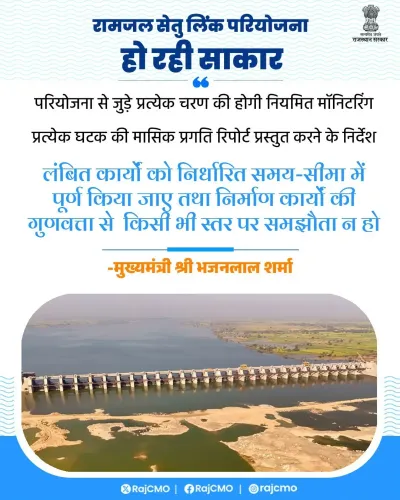
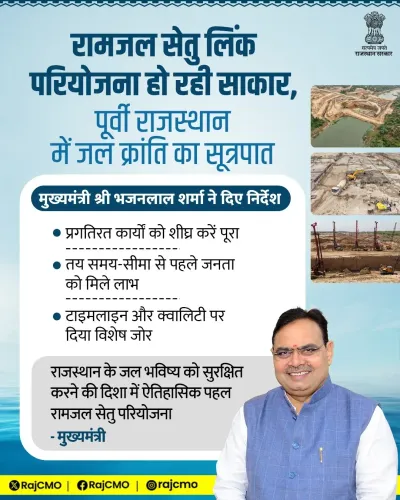
Rajasthan Chief Minister Bhajan Lal Sharma has declared the Ram Jal Setu Link Project a new lifeline for 17 districts, pledging stronger water availability and broad benefits for farmers, rural communities, and the general public across the water-scarce state.
Key Takeaways
Rajasthan CM Bhajan Lal Sharma announced the Ram Jal Setu Link Project on 24 July 2026 .
The project is intended to serve 17 districts of Rajasthan.
Primary beneficiaries include farmers, rural villages, and ordinary citizens across the covered districts.
The initiative aims to strengthen water availability in one of India's most arid states.
The project aligns with Rajasthan's long-standing strategy of river-link and canal infrastructure, building on schemes such as the Indira Gandhi Canal .
Key next steps include formal project sanction orders, budget allocations, and environmental clearances .
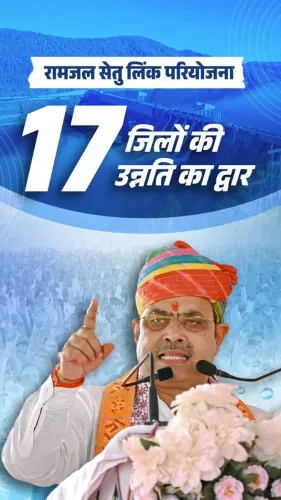
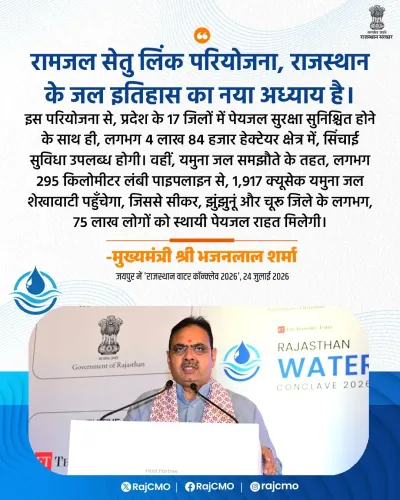
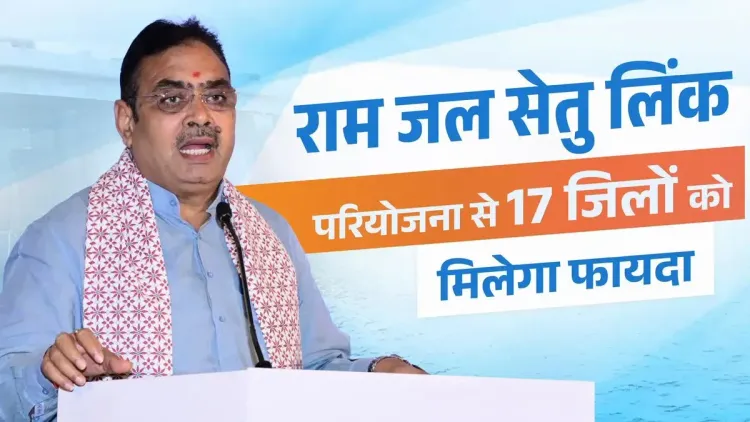
Rajasthan Chief Minister Bhajan Lal Sharma on Friday, 24 July 2026, declared that the Ram Jal Setu Link Project will become a new lifeline of development and prosperity for 17 districts of Rajasthan, promising wider benefits for farmers, villages, and the general public through strengthened water availability across the state.
Context
Posting on X, CM Sharma wrote: 'Ram Jal Setu Link Pariyojana Rajasthan ke 17 jilon ke liye vikas aur samridhi ki nayi jeevandhara banegi' — meaning, 'The Ram Jal Setu Link Project will become a new lifeline of development and prosperity for 17 districts of Rajasthan.' He added that the project will strengthen water availability in the state and that farmers, villages, and ordinary citizens will receive wide-ranging benefits from it.
The announcement underscores the BJP government's continued focus on water infrastructure as a cornerstone of rural development in one of India's most water-scarce states. Sharma, who assumed office as Chief Minister in December 2023, has repeatedly positioned large-scale water projects as central to his administration's development agenda.
Policy Backdrop
Rajasthan is characterised by vast arid and semi-arid zones where chronic water scarcity has historically constrained agricultural productivity and rural livelihoods. State governments across party lines have long pursued canal and river-link projects to channel water from perennial sources into drought-prone districts, building on foundational infrastructure such as the Indira Gandhi Canal, which transformed large tracts of the Thar Desert over decades.
The broader national framework for river interlinking — under discussion since the 1980s under the National Perspective Plan — has included components relevant to augmenting water transfer into Rajasthan. The Ram Jal Setu Link Project appears to be positioned within this long-standing policy lineage, combining central-level river-linking ambitions with state-specific water augmentation strategies.
The approach reflects a pattern in which Rajasthan administrations seek both central government funding and independent state-level investment to stabilise irrigation and drinking water supply, particularly ahead of monsoon uncertainties that regularly affect crop cycles in the state's western and southern districts.
Stakeholders and Impact
The primary beneficiaries identified by CM Sharma are farmers, rural villages, and the general public across the 17 districts the project is set to cover. Improved water availability in these regions would directly affect irrigation patterns, potentially enabling a shift from rain-dependent kharif cultivation to more stable, year-round farming.
Rural communities in water-stressed districts stand to gain from enhanced drinking water security, reducing the seasonal burden that falls disproportionately on women and marginal households. If central funding commitments and environmental clearances are secured, the project could also generate significant employment during construction and operation phases.
What's Next
Observers will watch closely for formal project sanction orders, state budget allocations earmarked for the Ram Jal Setu Link Project, and any central government funding announcements or environmental clearances that move it from declaration to implementation. Upcoming Rajasthan assembly sessions are expected to provide the first legislative and financial contours of the initiative.
The project's scale — spanning 17 districts — means that inter-departmental coordination across water resources, agriculture, and rural development ministries will be critical. The pace at which detailed project reports and tender processes are initiated will determine whether the vision articulated by CM Sharma translates into ground-level change for Rajasthan's farming communities.
Point of View
The BJP government is drawing a direct line between large-scale water infrastructure and rural prosperity — a politically resonant message in a state where agricultural distress and drinking water shortages have historically shaped voter sentiment. The announcement also fits a broader national pattern in which BJP-governed states have sought to revive and rebrand river-interlinking components under new nomenclature to build public momentum before formal central clearances are obtained. Whether the project moves swiftly from announcement to sanction will be the real test of administrative intent.
NationPress
23 Oct 2026
Frequently Asked Questions
What is the Ram Jal Setu Link Project in Rajasthan?
The Ram Jal Setu Link Project is a water infrastructure initiative announced by Rajasthan Chief Minister Bhajan Lal Sharma that aims to strengthen water availability across 17 districts of the state, benefiting farmers, villages, and the general public.
Which districts will benefit from the Ram Jal Setu Link Project?
CM Bhajan Lal Sharma stated the project will cover 17 districts of Rajasthan, though a detailed district-by-district breakdown has not yet been made public as of the announcement on 24 July 2026.
How will the Ram Jal Setu Link Project help Rajasthan farmers?
The project is expected to improve irrigation water availability in drought-prone and arid districts, potentially enabling more stable year-round farming and reducing dependence on unpredictable monsoon rainfall.
What is the current status of the Ram Jal Setu Link Project?
As of CM Sharma's announcement on 24 July 2026, the project has been publicly declared as a development priority. Formal sanction orders, budget allocations, and environmental clearances are among the key milestones still awaited.
How does the Ram Jal Setu project relate to Rajasthan's earlier water schemes?
The project continues Rajasthan's long-standing strategy of using canal and river-link infrastructure to transfer water into arid regions, building on earlier projects such as the Indira Gandhi Canal and aligning with the national river-interlinking framework discussed since the 1980s.