CM Bhajan Lal flags off 100 new Kalika Patrolling Units in Jaipur
Synopsis
Rajasthan CM Bhajan Lal Sharma flagged off 100 new Kalika Patrolling Units on Navratri in Jaipur and announced a fixed monthly travel allowance for the all-women police units, reinforcing the state's community-oriented women's safety policing model.
Key Takeaways
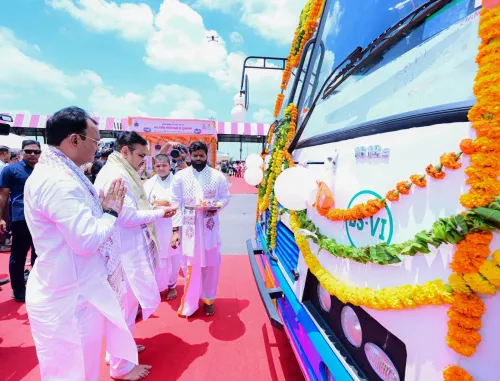
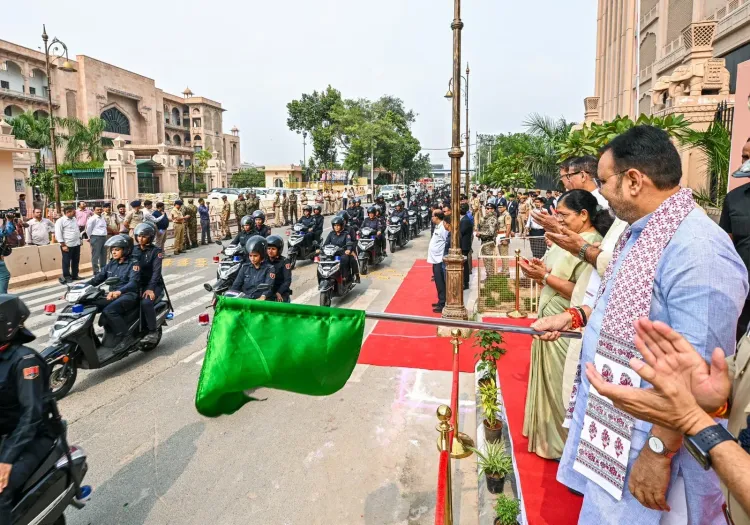
100 new Kalika Patrolling Units were flagged off by CM Bhajan Lal Sharma from Constitution Club, Jaipur on 18 October 2026 .
CM Sharma announced a fixed monthly travel allowance for all Kalika Patrolling Unit personnel to sustain operational readiness.
Women Youth CLG members from across Rajasthan joined the event in person and via video conferencing .
Rajasthan Minister of State for Home Jawahar Bedam was present at the launch.
The Kalika units are all-women police formations focused on patrolling and rapid response for women's security.
The launch aligns with a broader pattern of community-oriented policing with citizen liaison volunteers embedded alongside police units.
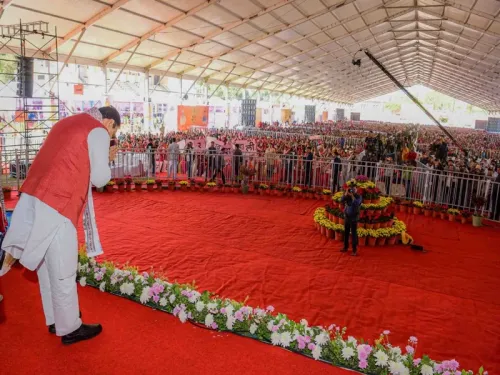
On the auspicious occasion of Navratri, Rajasthan Chief Minister Bhajan Lal Sharma flagged off 100 new Kalika Patrolling Units from Constitution Club, Jaipur on Sunday, 18 October 2026 — an expansion of the state's all-women police patrol force timed deliberately to coincide with the festival that celebrates feminine power.
100 new units, and a monthly allowance to back them up
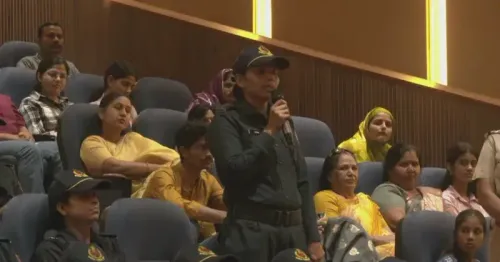
The launch was not just ceremonial. CM Sharma made a concrete financial announcement on the spot: Kalika Patrolling Unit members will now receive a fixed monthly travel allowance — a move aimed at sustaining the morale and operational readiness of the women officers who staff these units. Before the flag-off, the Chief Minister interacted directly with women Youth CLG (Community Liaison Group) members from across Rajasthan, both in person and via video conferencing, and with the women police personnel of the units themselves.
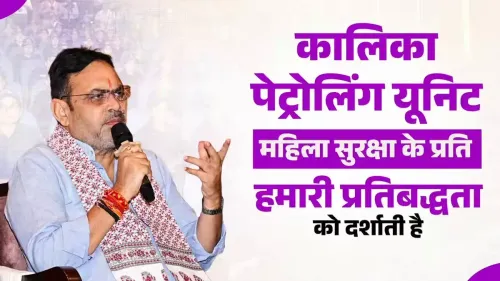
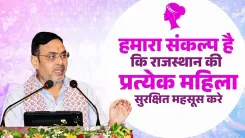
Speaking at the event, Sharma said the government is 'प्रदेश की प्रत्येक बहन-बेटी को पूर्णतः सुरक्षित, भयमुक्त और गरिमामय वातावरण उपलब्ध कराने के लिए कटिबद्ध है' — ('committed to providing every sister and daughter of the state a completely safe, fear-free, and dignified environment'). Rajasthan Minister of State for Home Jawahar Bedam was among the dignitaries present at the function.
Kalika Units and community policing in Rajasthan
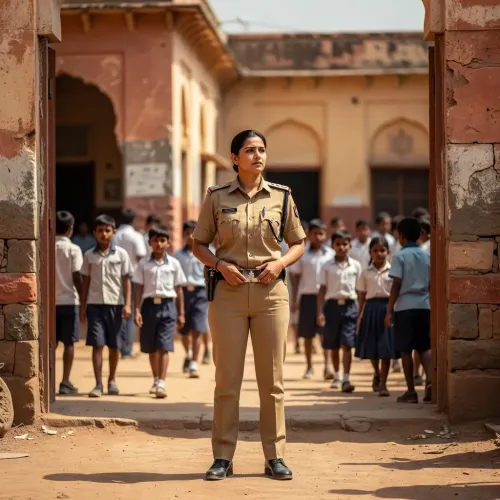
The Kalika Patrolling Units are specialised all-women police formations deployed for active patrolling and rapid response, with a specific mandate to enhance security for women and girls. The involvement of Youth CLG members — community liaison volunteers — signals the state's intent to embed these units within a broader, citizen-participatory policing model rather than run them purely as a top-down enforcement mechanism.
Rajasthan has a longer history of women-focused policing measures, including dedicated helplines and mahila police stations developed over the past decade. The current BJP government under Sharma, which took office in December 2023, has sought to build on that foundation with targeted expansions and visible public launches.
What the travel allowance means for deployment
The promise of a fixed monthly travel allowance addresses a practical friction point: women officers deployed on field patrolling units often bear personal commuting costs that deter consistent deployment, particularly in semi-urban and rural areas. By institutionalising that allowance, the government is signalling that these units are a structural commitment — not a festival-season gesture. Whether disbursement reaches field personnel promptly, and whether incident data from covered districts eventually shows measurable change, will be the real test of the announcement's staying power.
Point of View
Making it harder to dismiss as purely ceremonial. The inclusion of Youth CLG members reflects a growing consensus across Indian states that community co-ownership of policing, not just police numbers, is what shifts ground-level safety perceptions. How quickly the allowance is operationalised, and whether unit coverage is tracked publicly, will determine whether this launch is remembered as a turning point or a headline.
NationPress
18 Oct 2026
Frequently Asked Questions
What are Kalika Patrolling Units in Rajasthan?
Kalika Patrolling Units are specialised all-women police formations in Rajasthan deployed for active patrolling and rapid response to enhance safety for women and girls across the state.
How many Kalika Patrolling Units were launched on 18 October 2026?
Rajasthan CM Bhajan Lal Sharma flagged off 100 new Kalika Patrolling Units from Constitution Club, Jaipur on 18 October 2026 during the Navratri festival.
What is the travel allowance announced for Kalika Patrolling Units?
CM Bhajan Lal Sharma announced a fixed monthly travel allowance for Kalika Patrolling Unit members to support operational deployment and boost morale of the women officers.
What is a Youth CLG in Rajasthan police?
Youth CLG stands for Community Liaison Group — civilian volunteers who work alongside police to bridge the gap between local communities and law enforcement, particularly on women's safety issues.
Who is Jawahar Bedam?
Jawahar Bedam is Rajasthan's Minister of State for Home and was present at the Kalika Patrolling Units launch event in Jaipur on 18 October 2026.