CM Bhajan Lal Hosts Mann Ki Baat Episode 138 Listening Session
Synopsis
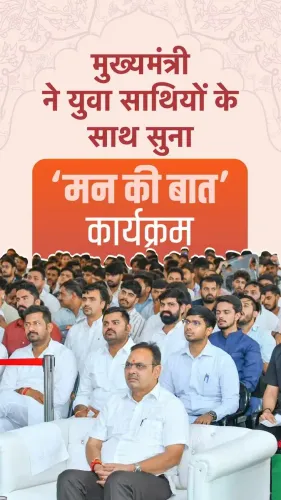
Rajasthan Chief Minister Bhajan Lal Sharma convened newly elected municipal councillors at his Jaipur residence on September 27 to listen to the 138th episode of PM Modi's Mann Ki Baat, which covered surgical strikes, the national Census, and the Nasha Mukt Bharat Abhiyan.
Key Takeaways
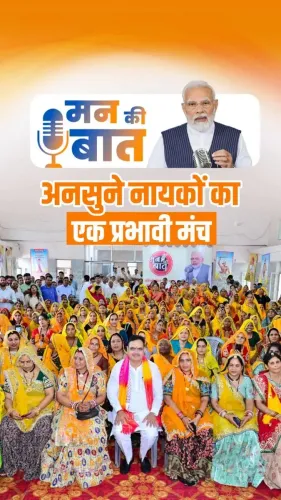
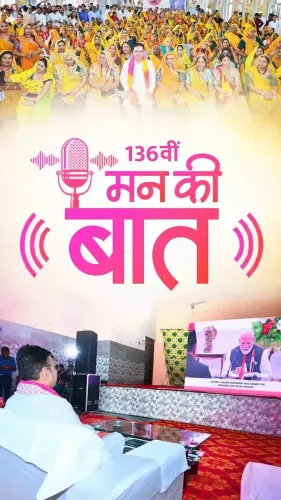
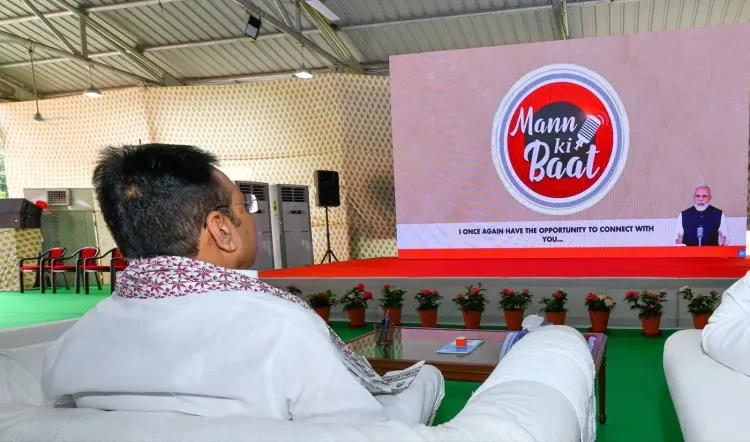
CM Bhajan Lal Sharma hosted newly elected nagar nigam councillors and party workers at his Jaipur residence for a collective Mann Ki Baat listening session on September 27, 2026 .
PM Modi's 138th Mann Ki Baat episode invoked the 2016 surgical strikes and expressed gratitude to Indian armed forces.
The Prime Minister also addressed the upcoming national Census as a key development planning tool.
Modi highlighted the Nasha Mukt Bharat Abhiyan , the central anti-drug campaign launched in August 2020 , urging a drug-free India.
The event follows a standard BJP practice of organising state-level listening sessions to align local leadership with central policy messaging.
Mann Ki Baat has run monthly since October 2014 , making episode 138 part of over a decade of direct citizen outreach by the Prime Minister.
At his official residence in Jaipur on Sunday, September 27, 2026, Rajasthan Chief Minister Bhajan Lal Sharma gathered newly elected municipal councillors and party workers to listen together to the 138th episode of Prime Minister Narendra Modi's monthly radio address, Mann Ki Baat — turning a national broadcast into a state-level political moment.
What PM Modi covered in episode 138
In his address, Prime Minister Narendra Modi invoked the memory of the 2016 surgical strikes across the Line of Control — India's cross-border military response to the Uri attack — expressing gratitude to the nation's armed forces for their courage and sacrifice. The strikes remain one of the most cited symbols of national security resolve in BJP political messaging.
Modi also spoke about the upcoming national Census, describing it as a foundational exercise for charting India's development direction, and renewed the call for a drug-free India through the central government's Nasha Mukt Bharat Abhiyan, the anti-drug campaign launched by the Ministry of Social Justice and Empowerment in August 2020. He rounded out the episode with reflections on public participation in nation-building.
CM Sharma's residence as a listening post
Sharma described the Prime Minister's address as 'ojaswi sambodhan' — an energising speech — saying it gives everyone 'a new energy and direction to contribute their best to nation-building.' The gathering at the Chief Minister's residence was notable for its audience: nagar nigam (municipal corporation) newly elected ward councillors, fresh from local body elections, alongside party workers.
This format — a senior state leader hosting a collective Mann Ki Baat session — is a well-established playbook within the BJP. State units regularly organise such listening events to signal alignment with central messaging on security, health, and social welfare, while simultaneously giving local-level workers a direct touch-point with the Prime Minister's voice.
Mann Ki Baat's reach and the BJP's grassroots machinery
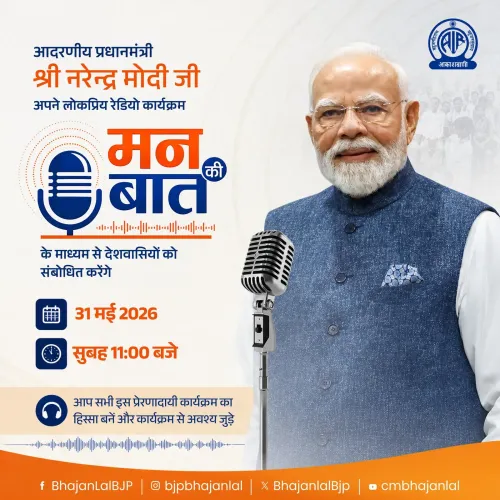
Mann Ki Baat was launched by Prime Minister Modi in October 2014 and has since become a cornerstone of his direct-communication strategy with citizens. Broadcast on All India Radio on the last Sunday of each month, the programme covers everything from individual citizen stories to major policy themes. By episode 138, it represents over a decade of uninterrupted monthly broadcasts.
Bringing newly elected municipal councillors into the fold through this kind of event serves a dual purpose: it orients them toward the Centre's flagship narrative priorities — surgical strikes, Census, Nasha Mukt Bharat — and embeds them in the larger BJP organisational culture before they settle into their ward-level roles.
With the next national Census on the horizon and the Nasha Mukt Bharat Abhiyan looking to deepen its reach into municipal and urban areas, the themes PM Modi chose for episode 138 land with particular relevance in a state like Rajasthan, where both urban governance and border-district security awareness carry political weight.
For Rajasthan's freshly elected councillors, Sunday's session was less a listening party and more an orientation — a signal that local governance, national security, and social reform are meant to run on the same track.
Point of View
And state leaders amplify it through orchestrated ground-level events. By including freshly elected municipal councillors, CM Sharma is doing organisational onboarding as much as civic outreach — embedding local representatives in the party's ideological calendar from day one. The choice of themes — military valour, Census, anti-drug work — reflects the Centre's ongoing effort to keep governance optics simultaneously security-forward and welfare-oriented. As Rajasthan moves toward deeper urban governance reforms, the alignment of new councillors with flagship central schemes will be worth watching.
NationPress
27 Sept 2026
Frequently Asked Questions
What is Mann Ki Baat and when did it start?
Mann Ki Baat is a monthly radio programme by Prime Minister Narendra Modi, broadcast on All India Radio on the last Sunday of each month. It was launched in October 2014 and has since become one of the longest-running direct citizen-communication initiatives by an Indian Prime Minister.
What did PM Modi talk about in Mann Ki Baat episode 138?
In the 138th episode, PM Modi recalled the 2016 surgical strikes and expressed gratitude to Indian soldiers, discussed the importance of the upcoming national Census for development planning, and called for strengthening the Nasha Mukt Bharat Abhiyan to build a drug-free society.
What is the Nasha Mukt Bharat Abhiyan?
Nasha Mukt Bharat Abhiyan is a central government anti-drug campaign launched by the Ministry of Social Justice and Empowerment in August 2020 . It aims to create awareness about drug abuse, support rehabilitation, and build drug-free communities across India.
Why did CM Bhajan Lal Sharma organise a Mann Ki Baat listening session?
CM Sharma hosted the session at his Jaipur residence to bring newly elected municipal councillors and party workers together to hear PM Modi's address, a practice common within the BJP to align state and local leadership with the Centre's policy and communication priorities.
What were the 2016 surgical strikes that PM Modi mentioned?
The 2016 surgical strikes were cross-border military operations conducted by the Indian Army across the Line of Control in September 2016, following the Uri terror attack. They are widely referenced in Indian political discourse as a symbol of the government's national security resolve.