CM Bhajan Lal joins Janjatiya Gaurav Divas, hails ₹30,000 cr tribal push
Synopsis
On Birsa Munda's birth anniversary, Rajasthan CM Bhajan Lal Sharma joined the Janjatiya Gaurav Divas event virtually as PM Modi announced ₹30,000 crore in tribal development projects, citing poverty reduction and curbed Naxalism as markers of progress.
Key Takeaways
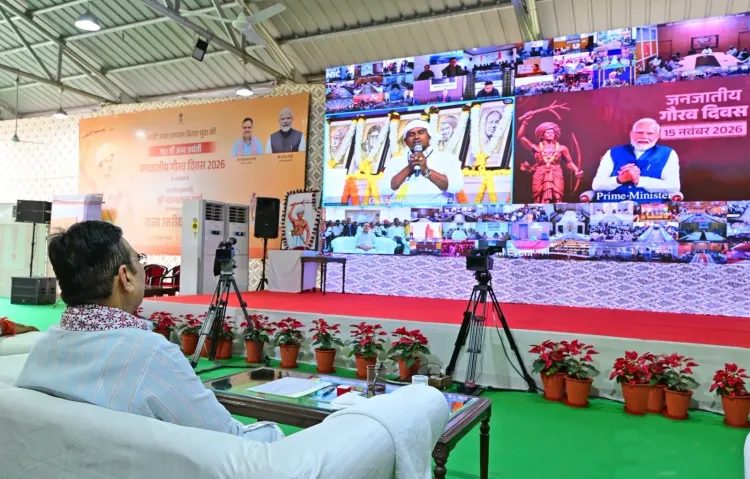
Rajasthan CM Bhajan Lal Sharma attended the Janjatiya Gaurav Divas programme virtually on 15 November 2026 , Birsa Munda's birth anniversary.
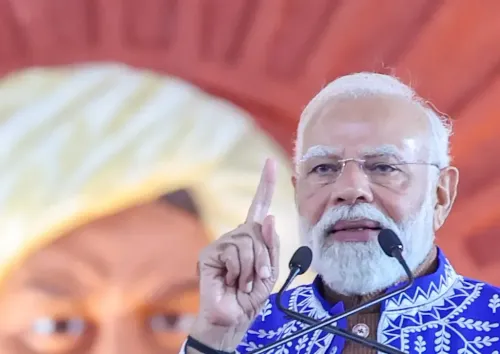
PM Narendra Modi inaugurated and laid the foundation for approximately ₹30,000 crore worth of development projects in tribal regions across multiple states.
Janjatiya Gaurav Divas was instituted by the Government of India in 2021 as an annual national observance on 15 November.
CM Sharma cited 50 crore-plus Indians exiting poverty and effective curbing of Naxalism as key achievements benefiting tribal areas.
Rajasthan's tribal belt — including Dungarpur, Banswara and Udaipur districts — is a primary stakeholder in central tribal welfare schemes like Vanbandhu Kalyan Yojana .
Sharma invoked the 'double engine sarkar' framework, linking the BJP's simultaneous central and state governments as the driver of tribal development in Rajasthan.
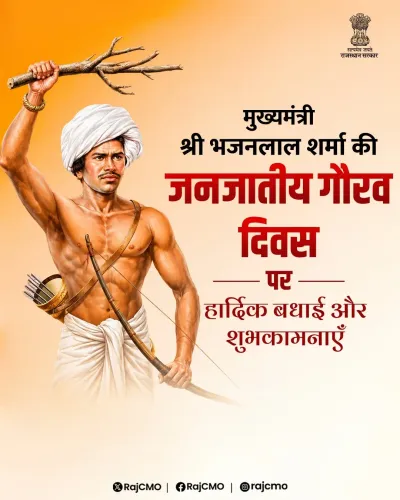
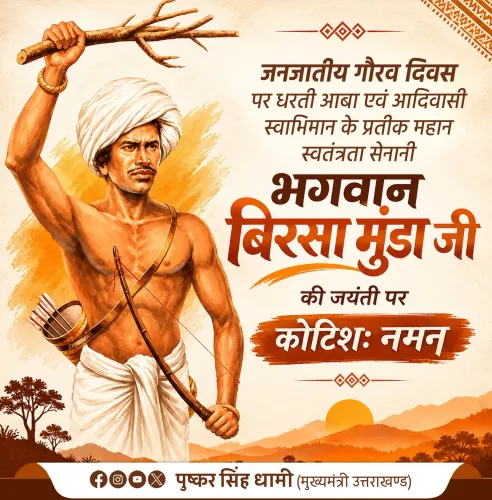
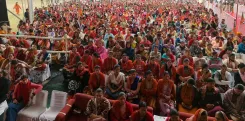
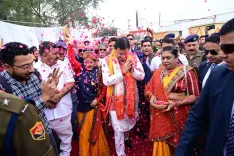
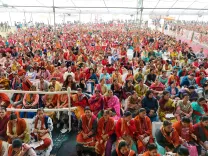
On the birth anniversary of Bhagwan Birsa Munda — the 19th-century tribal icon who defied British colonial rule and is still revered as Dharti Aaba (Father of the Earth) — Rajasthan Chief Minister Bhajan Lal Sharma joined the national Janjatiya Gaurav Divas programme virtually on Sunday, 15 November 2026, listening to Prime Minister Narendra Modi's address alongside tribal communities across the country.
₹30,000 crore in projects: what Modi announced
The centrepiece of this year's observance was Prime Minister Modi's inauguration and foundation-laying of development projects worth approximately ₹30,000 crore for tribal regions spanning multiple states. CM Sharma described the announcements as a reflection of the government's commitment to 'samman, swabhiman aur adhikar' — honour, self-respect and rights — for tribal communities. The projects cover the familiar pillars of tribal development: education, healthcare, employment and basic infrastructure in Scheduled Tribe areas.
Birsa Munda's legacy and the making of Janjatiya Gaurav Divas
The occasion is not merely ceremonial. The Government of India formally instituted Janjatiya Gaurav Divas in 2021, designating 15 November as an annual national day to commemorate Birsa Munda's birth anniversary and foreground tribal heritage in the mainstream political calendar. Munda, born in 1875 in the Chota Nagpur plateau, led the Ulgulan uprising against colonial land alienation and is a unifying symbol for tribal communities across Jharkhand, Odisha, West Bengal and Chhattisgarh. Making his birthday a national observance was itself a significant political gesture toward India's roughly 10 crore Scheduled Tribe population.
Poverty numbers and the Naxal narrative
CM Sharma's post also cited two headline claims made at the event: that more than 50 crore Indians have come out of poverty, and that Naxalism has been effectively checked. Both were framed as achievements with direct positive consequences for tribal districts, which have historically overlapped with the so-called 'Red Corridor.' The double engine sarkar framing — where BJP governments at the Centre and in the state operate in concert — was explicitly invoked as the mechanism delivering these gains to Rajasthan's tribal belt.
Rajasthan's stake in central tribal welfare
Rajasthan has a substantial Scheduled Tribe population concentrated in its southern districts — Dungarpur, Banswara, Udaipur and Pratapgarh — which together form one of the most economically marginalised belts in the state. Central schemes such as the Vanbandhu Kalyan Yojana, launched in 2014, have channelled funds into tribal sub-plan allocations for roads, schools and livelihoods in precisely these areas. By participating visibly in the national event, CM Sharma signals that Rajasthan intends to remain in step with the Centre's tribal welfare architecture.
The real test of Sunday's announcements lies in the district-level rollout — project timelines, contractor accountability, and whether the ₹30,000 crore reaches the last tribal hamlet or stalls in bureaucratic pipelines. That story will unfold in Rajasthan's upcoming budget sessions and in audit reports from the tribal districts themselves.
Point of View
Virtual participation and public amplification signal that Rajasthan's government views tribal welfare alignment with the Centre as both a governance priority and an electoral asset. The ₹30,000 crore figure, however, will face scrutiny on actual disbursal and project completion in a region where delivery gaps between announcement and ground reality have historically been wide.
NationPress
15 Nov 2026
Frequently Asked Questions
What is Janjatiya Gaurav Divas and why is it celebrated on 15 November?
Janjatiya Gaurav Divas is a national observance held every year on 15 November to mark the birth anniversary of tribal freedom fighter Bhagwan Birsa Munda . The Government of India formally instituted the day in 2021 to honour tribal heritage and highlight welfare measures for Scheduled Tribe communities.
What projects did PM Modi announce at Janjatiya Gaurav Divas 2026?
PM Narendra Modi inaugurated and laid the foundation for development projects worth approximately ₹30,000 crore across tribal regions in multiple states, covering education, healthcare, employment and basic infrastructure.
Who was Birsa Munda and why is he called Dharti Aaba?
Birsa Munda was a 19th-century tribal leader from the Munda community of the Chota Nagpur plateau who led the Ulgulan uprising against British colonial land alienation. He is called Dharti Aaba — Father of the Earth — in reverence for his role as a protector of tribal land and identity.
What is the Vanbandhu Kalyan Yojana?
The Vanbandhu Kalyan Yojana is a central government scheme launched in 2014 to channel infrastructure, education and livelihood support into Scheduled Tribe areas through tribal sub-plan allocations across states including Rajasthan.
Which districts in Rajasthan have a significant tribal population?
Rajasthan's tribal belt is concentrated in its southern districts — primarily Dungarpur, Banswara, Udaipur and Pratapgarh — which are among the state's most economically marginalised regions and are the primary beneficiaries of central tribal welfare programmes.