CM Dhami: 3 Lakh Women Writing New Stories via Lakhpati Didi
Synopsis
Uttarakhand CM Pushkar Singh Dhami says over 3 lakh women are achieving self-reliance through Lakhpati Didi Yojana, while Drone Didi, Solar Sakhi, Mahalakshmi Yojana and Sashakt Bahna Utsav further strengthen women's economic participation across the state.
Key Takeaways
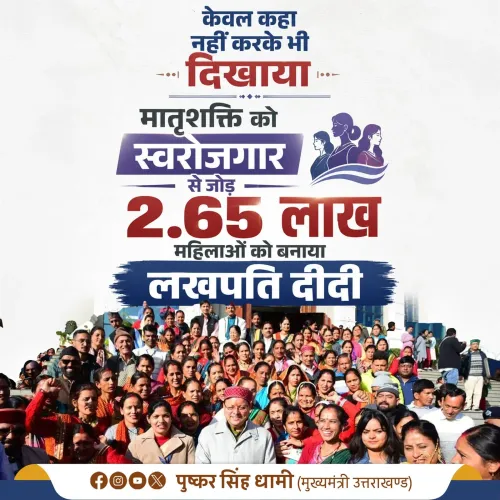
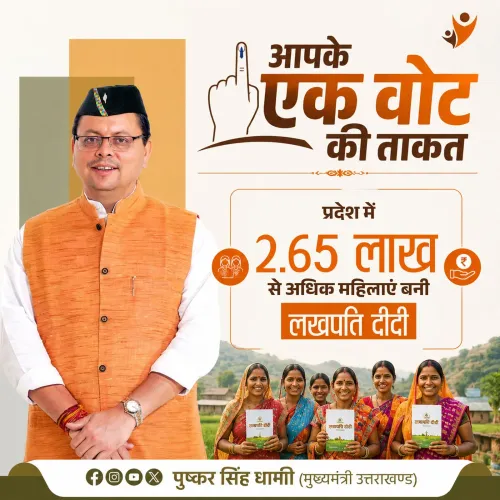
Over 3 lakh women in Uttarakhand are cited as beneficiaries of the Lakhpati Didi Yojana , per CM Dhami's post.
The Lakhpati Didi Yojana targets annual earnings of at least Rs 1 lakh for rural women through self-help groups under DAY-NRLM .
Drone Didi trains rural women in drone operations for agriculture and rural services; Solar Sakhi trains women as solar technicians and entrepreneurs.
Mahalakshmi Yojana and Sashakt Bahna Utsav are also cited by the CM as complementary state-level women empowerment initiatives.
Uttarakhand layers state-specific schemes onto the national DAY-NRLM framework launched in 2011 to reach women in remote Himalayan villages.
State budget allocations for 2027-28 will be a key indicator of whether these programmes are scaled further.
Across the villages of Uttarakhand, rural women are no longer just beneficiaries — they are pilots, solar technicians, and entrepreneurs. Uttarakhand Chief Minister Pushkar Singh Dhami on Sunday, 15 November 2026, highlighted how a cluster of women-focused livelihood schemes is reshaping economic participation across the state's hilly terrain.
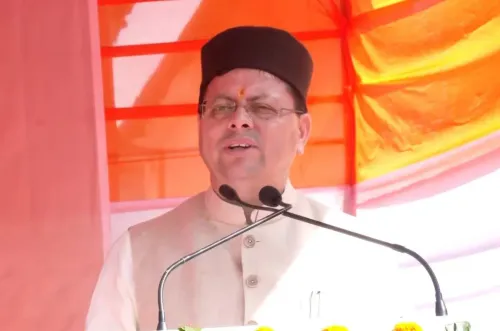
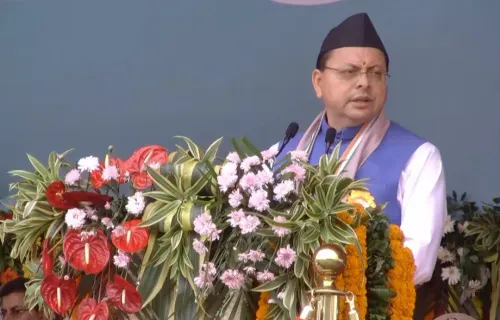
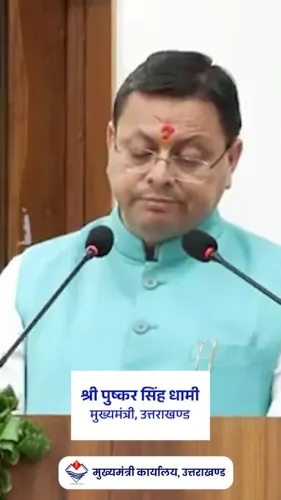
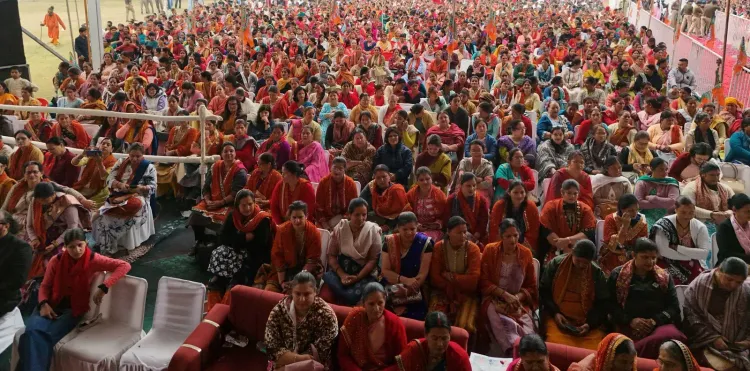
Posting on X, CM Dhami said that more than 3 lakh women in the state are today writing new stories of self-reliance through the Lakhpati Didi Yojana. He also cited Mahalakshmi Yojana, Drone Didi, Solar Sakhi, and Sashakt Bahna Utsav as initiatives collectively strengthening matrishakti — a term meaning the power of women — across Uttarakhand.
What Lakhpati Didi is building in Uttarakhand
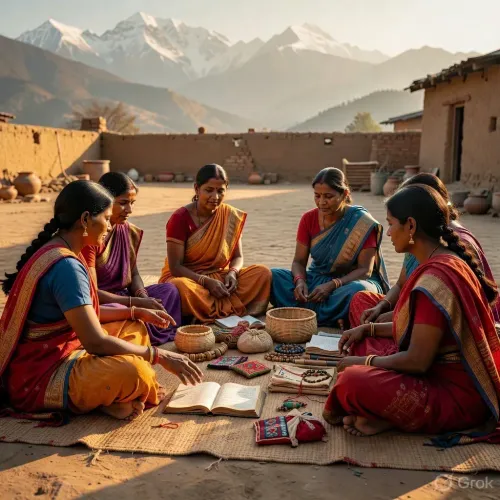
At the heart of the push is the Lakhpati Didi Yojana, a central government initiative under the Deendayal Antyodaya Yojana–National Rural Livelihoods Mission (DAY-NRLM), launched in 2011. Its stated goal is to enable women organised in self-help groups (SHGs) to earn at least Rs 1 lakh annually through sustainable livelihoods — moving the needle from subsistence support to measurable income outcomes. Uttarakhand has layered state-specific schemes on top of this national architecture to accelerate reach in its remote mountain villages.
Drone Didi, Solar Sakhi — technology as the new livelihood frontier
Two of the most visible add-ons are Drone Didi and Solar Sakhi. The Drone Didi programme trains rural women to operate drones for agricultural and rural service applications — giving them a skilled trade in a sector growing rapidly across India. Solar Sakhi trains women as solar technicians and micro-entrepreneurs, connecting clean energy access to women's economic agency in areas where grid power remains unreliable. Together, these programmes signal a deliberate shift: technology, long seen as a barrier for rural women, is being repositioned as their entry point.
A pattern bigger than one state
Uttarakhand's approach is not an isolated experiment. Across BJP-ruled states, a comparable playbook has emerged — combining SHG strengthening, skill training, and technology access into a layered stack built on NRLM's national foundation. What distinguishes Uttarakhand is the geography: delivering these programmes to dispersed Himalayan communities adds logistical complexity and raises the stakes for each beneficiary reached. The emphasis on aatmanirbharta — self-reliance — over one-time subsidies points to a longer policy horizon focused on durable income creation rather than headline welfare numbers.
With state budget discussions for 2027-28 on the horizon, the scale-up trajectory of these schemes — and whether the beneficiary count continues to climb — will be the clearest test of whether the momentum holds.
Point of View
Solar Sakhi — represents a qualitative shift that, if backed by credible beneficiary data, could strengthen Uttarakhand's position as a model for Himalayan-state rural development. The real test will be whether independently verified income outcomes match the scale of outreach being claimed.
NationPress
15 Nov 2026
Frequently Asked Questions
What is Lakhpati Didi Yojana and how does it work?
The Lakhpati Didi Yojana is a central government initiative under DAY-NRLM that enables rural women organised in self-help groups to earn at least Rs 1 lakh annually through sustainable livelihood activities. It focuses on skill training and market linkages rather than one-time cash transfers.
What is the Drone Didi scheme in Uttarakhand?
Drone Didi is a training programme that equips rural women with skills to operate drones, primarily for agricultural and rural service applications. It has been rolled out in multiple states including Uttarakhand as part of broader women empowerment efforts.
What is Solar Sakhi and who benefits from it?
Solar Sakhi is an initiative that trains women as solar technicians and micro-entrepreneurs to promote clean energy access in rural areas. Beneficiaries gain a skilled trade while improving energy connectivity in underserved communities.
How many women have benefited from Lakhpati Didi in Uttarakhand?
CM Pushkar Singh Dhami has stated that over 3 lakh women in Uttarakhand are writing new stories of self-reliance through the Lakhpati Didi Yojana, though this figure has not been independently verified from official NRLM data.
What is DAY-NRLM and when was it launched?
The Deendayal Antyodaya Yojana–National Rural Livelihoods Mission (DAY-NRLM) was launched in 2011 by the central government to promote self-help groups and create sustainable income opportunities for rural women across India.