CM Dhami: Uttarakhand Meets 2.65 Lakh Lakhpati Didi Target
Synopsis
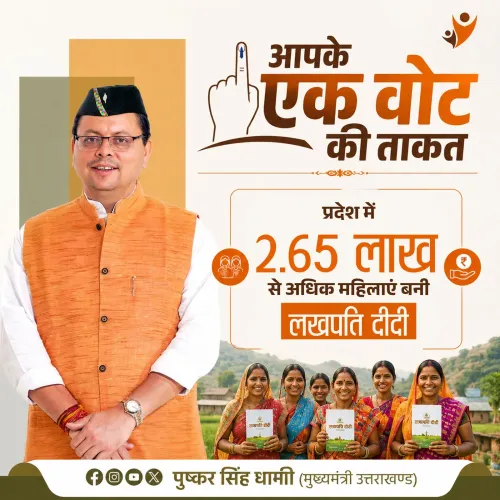
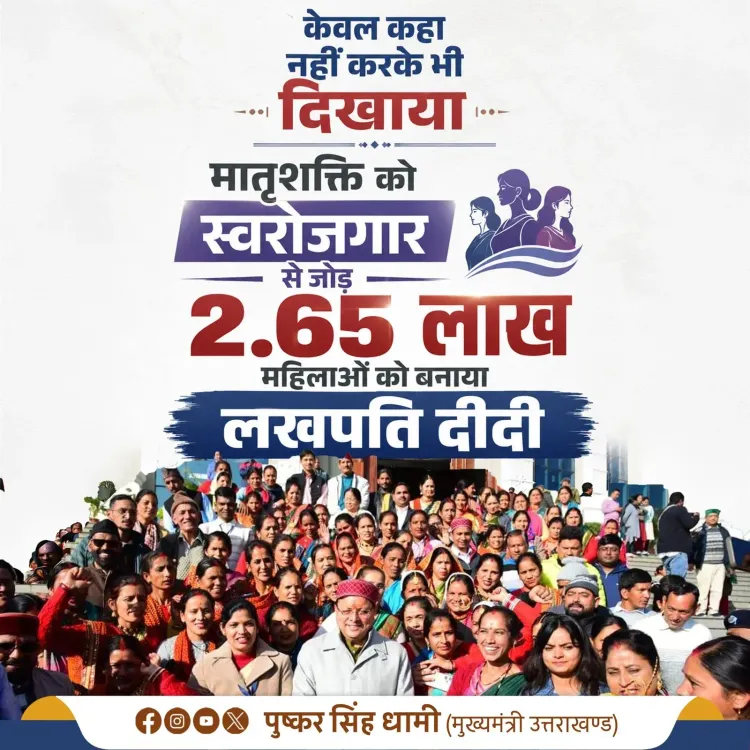
Uttarakhand CM Pushkar Singh Dhami declared on 3 July 2026 that the state has successfully made 2.65 lakh women 'Lakhpati Didis' under the DAY-NRLM framework, calling it proof of the government's commitment to women's economic self-reliance and empowerment.
Key Takeaways
Uttarakhand CM Pushkar Singh Dhami announced on 3 July 2026 that the state's Lakhpati Didi target has been met.
A total of 2.65 lakh women in Uttarakhand have been enrolled as Lakhpati Didis, meaning each earns at least Rs 1 lakh annually .
The scheme operates under the Deendayal Antyodaya Yojana-National Rural Livelihoods Mission (DAY-NRLM) , launched nationally in 2011 .
CM Dhami framed the goal as making women 'empowered partners' of a self-reliant Uttarakhand, not merely scheme beneficiaries.
Future scrutiny will focus on whether Uttarakhand's 2026-27 budget expands coverage beyond the current target.
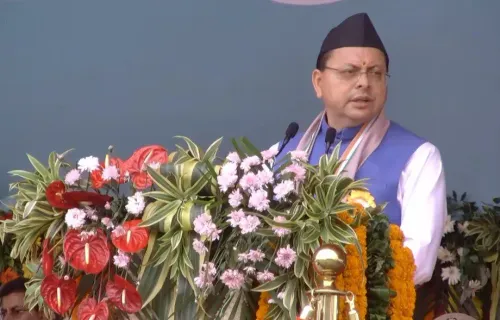
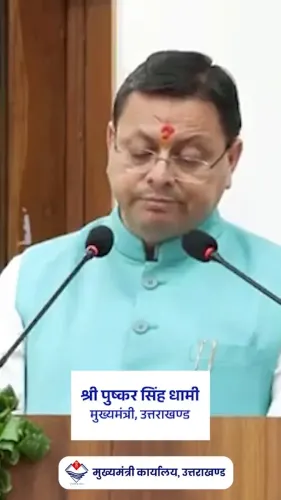
Uttarakhand Chief Minister Pushkar Singh Dhami announced on Friday, 3 July 2026 that the state has successfully met its target of making 2.65 lakh women 'Lakhpati Didis', declaring it a milestone in the government's commitment to women's economic empowerment and self-reliance.
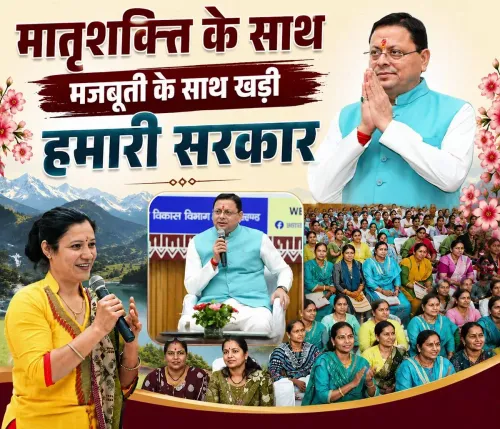
Posting in Hindi on X, CM Dhami said the government is working 'with full commitment for the honour, self-respect, and economic empowerment of women' (mātṛśakti ke sammān, svābhimān aur āarthik sashaktīkaraṇ ke lie). He emphasised that the state's goal is not merely to make women beneficiaries of schemes, but to make them 'empowered partners of a self-reliant Uttarakhand' (ātmanirbhar Uttarākhaṇḍ kī sashakt bhāgīdār).
Context
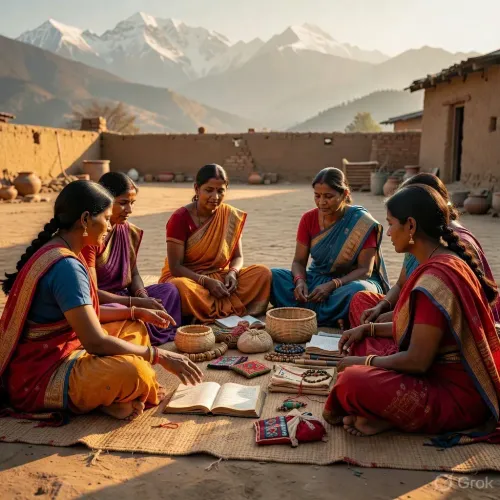
The Lakhpati Didi initiative is a national programme designed to help women in self-help groups (SHGs) earn at least Rs 1 lakh annually through sustainable livelihood activities. Uttarakhand, a BJP-governed state, has been implementing the scheme under the broader Deendayal Antyodaya Yojana-National Rural Livelihoods Mission (DAY-NRLM) framework. CM Dhami's post marks the state's public declaration that its numerical target under this programme has been achieved.
Policy Backdrop
DAY-NRLM, launched in 2011, is the central government's flagship framework for promoting rural livelihoods by organising women into self-help groups and connecting them to income-generating opportunities, credit, and markets. The Lakhpati Didi scheme was subsequently layered onto this infrastructure as a targeted income threshold goal. BJP-ruled states have increasingly highlighted state-level Lakhpati Didi achievement figures as a key governance metric, linking local delivery to the national self-reliance agenda.
Stakeholders and Impact
The primary beneficiaries are rural women and SHG members across Uttarakhand, a state with a significant proportion of its female population dependent on agriculture and allied activities in hilly terrain. Reaching the 2.65 lakh milestone means these women have, by the state's account, crossed the Rs 1 lakh annual income threshold — a marker of financial independence. For the Dhami government, the announcement reinforces its positioning on women's welfare ahead of any future electoral or policy cycles.
What's Next
Attention will now turn to Uttarakhand's state budget allocations and annual action plans for 2026-27 to see whether the Lakhpati Didi coverage target is expanded beyond 2.65 lakh. Central ministry reviews of state-wise DAY-NRLM progress will also be a key indicator of how Uttarakhand's reported achievement is benchmarked against other states. Sustained income levels and livelihood continuity for enrolled women will be the longer-term test of the programme's depth.
Point of View
The pressure now shifts to verifying income sustainability at the household level, a dimension that aggregate enrolment figures alone cannot capture. The announcement also sets a baseline against which any future expansion of the programme in the state will be measured.
NationPress
2 Oct 2026
Frequently Asked Questions
What is the Lakhpati Didi scheme in Uttarakhand?
The Lakhpati Didi scheme aims to help women in self-help groups earn at least Rs 1 lakh annually through sustainable livelihoods. In Uttarakhand, CM Pushkar Singh Dhami announced on 3 July 2026 that the state has successfully enrolled 2.65 lakh women under this initiative.
How many Lakhpati Didis has Uttarakhand produced?
Uttarakhand has met its target of making 2.65 lakh women Lakhpati Didis, as announced by Chief Minister Pushkar Singh Dhami on 3 July 2026.
What is DAY-NRLM and how does it relate to Lakhpati Didi?
DAY-NRLM, or Deendayal Antyodaya Yojana-National Rural Livelihoods Mission, is a central government scheme launched in 2011 to support rural women's self-help groups. The Lakhpati Didi programme is implemented within this framework, targeting an annual income of at least Rs 1 lakh per enrolled woman.
Who is Pushkar Singh Dhami?
Pushkar Singh Dhami is the Chief Minister of Uttarakhand and a BJP leader who has held the post since 2021. He has prioritised welfare delivery and women's economic empowerment as key governance themes.
What happens after Uttarakhand meets its Lakhpati Didi target?
After meeting the 2.65 lakh target, the focus shifts to whether Uttarakhand will expand coverage in its 2026-27 budget and annual action plans, and whether enrolled women sustain the Rs 1 lakh annual income threshold over time.