CM Bhajan Lal hails PM Modi's gifting of Rajasthan GI crafts in Manila
Synopsis
Rajasthan CM Bhajan Lal Sharma praised PM Modi for presenting GI-tagged Nathdwara Pichwai paintings and Jaipur Blue Pottery as diplomatic gifts to US President Donald Trump and Australian PM Anthony Albanese during a Manila engagement, calling it a proud moment for Rajasthan's artisans and cultural legacy.
Key Takeaways
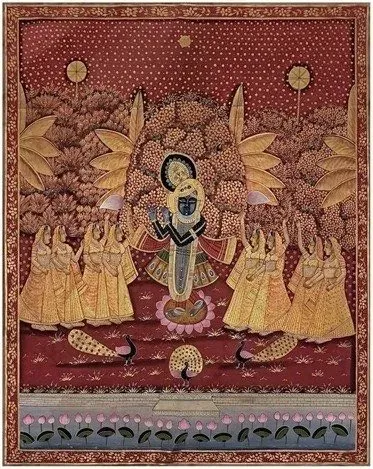
PM Modi gifted a GI-tagged golden Pichwai painting from Nathdwara to US President Donald Trump at Manila .
Australian PM Anthony Albanese received GI-certified Jaipur Blue Pottery as a diplomatic gift.
Both crafts are protected under India's Geographical Indications of Goods Act, 1999 .
Rajasthan CM Bhajan Lal Sharma publicly praised PM Modi for elevating the state's artisanal traditions on a global platform.
India's practice of gifting GI-tagged regional crafts at high-level diplomatic meetings forms a consistent soft-power strategy.
Such diplomatic visibility can directly benefit artisan livelihoods in craft hubs like Nathdwara and Jaipur .
When a Pichwai painting from Nathdwara and a piece of Jaipur Blue Pottery crossed diplomatic tables in Manila, they carried centuries of Rajasthani craft with them — and Rajasthan Chief Minister Bhajan Lal Sharma made sure the moment did not pass unnoticed. On Wednesday, 18 November 2026, Sharma posted on X to celebrate Prime Minister Narendra Modi's choice of two of the state's most storied GI-tagged artworks as diplomatic gifts to world leaders.
Sharma wrote: 'Rajasthan ki samridh kala aur gauravshali sanskritik virasat aaj vishwabhar mein apni vishisht pahchaan bana rahi hai' — 'Rajasthan's rich art and glorious cultural heritage is carving a unique identity across the world today.'A golden Pichwai for Washington, Blue Pottery for Canberra
According to the CM's post, Prime Minister Narendra Modi presented US President Donald Trump with a golden Pichwai painting from Nathdwara — a town in Rajasthan's Rajsamand district whose intricately detailed devotional canvases have earned a Geographical Indication tag under India's Geographical Indications of Goods (Registration and Protection) Act, 1999. Australian Prime Minister Anthony Albanese received a piece of Jaipur Blue Pottery, another GI-certified Rajasthani craft famed for its Persian-influenced turquoise glaze and hand-drawn motifs.
Both gifts were exchanged on the sidelines of the Manila engagement — a vivid illustration of how individual state traditions can travel to the highest rungs of global diplomacy when backed by a consistent foreign-policy gifting strategy.
GI tags: the quiet passport for Rajasthan's craftsmen
India's GI framework, in force since 1999, gives legal protection to place-linked crafts, shielding artisans from imitation and building export credibility. Rajasthan's artisans — concentrated in towns like Nathdwara, Jaipur, and Sanganer — have been among the most visible beneficiaries, with their products now recognised in government procurement, cultural diplomacy, and global retail.
Indian diplomatic gifting of GI-tagged crafts is not new, but it has grown more systematic. From handwoven silks to blue-glazed ceramics, regional artworks have served as soft-power currency at bilateral meetings, multilateral summits, and state visits — turning a local artisan's workshop into an indirect participant in foreign policy.
Sharma's gratitude and what it signals for Rajasthan's craft economy
Sharma's public appreciation — directed warmly at the Prime Minister — reflects the state government's stake in keeping Rajasthan's heritage front-of-mind on the national and international stage. Such diplomatic visibility can spur export inquiries, craft tourism, and artisan income in ways that no domestic campaign alone can replicate.
The CM's post calls for continued recognition and respect for Rajasthan's art on the global stage, signalling that the BJP-led state government sees cultural diplomacy as a live tool — not just a ceremonial gesture — for economic uplift of its craftsmen.
When a head of state unwraps a gift and asks where it came from, the answer — 'a small workshop in Nathdwara' — does more for Rajasthan's artisans than any trade fair brochure ever could.
Point of View
Amplifying this moment is both a gesture of political alignment with the Centre and a canny reminder that Rajasthan's BJP government is invested in its craftsmen's international profile. The broader pattern — using GI-protected regional products at the highest diplomatic levels — signals an increasingly deliberate integration of India's intellectual-property framework with its foreign-policy toolkit. As more Rajasthan GI tags come up for registration, expect the state to push for further diplomatic showcasing as a lever for craft exports and cultural tourism.
NationPress
18 Nov 2026
Frequently Asked Questions
What is a Nathdwara Pichwai painting?
A Pichwai painting is a large devotional cloth artwork originating from Nathdwara in Rajasthan's Rajsamand district, depicting scenes of Lord Shrinathji. It holds a Geographical Indication tag, legally protecting it as a craft unique to that region.
What is Jaipur Blue Pottery and why is it special?
Jaipur Blue Pottery is a Rajasthani craft with Persian and Central Asian roots, characterised by its distinctive turquoise-blue glaze and hand-painted floral motifs. It has received a GI tag, recognising it as a heritage craft of Jaipur.
Why did PM Modi gift Rajasthan crafts in Manila?
India's diplomatic gifting tradition uses GI-tagged regional artworks to project cultural soft power and highlight artisan communities. Gifting Rajasthani crafts to world leaders gives the products global visibility and supports the broader craft economy.
What is a Geographical Indication (GI) tag in India?
A GI tag, granted under the Geographical Indications of Goods (Registration and Protection) Act, 1999 , certifies that a product originates from a specific region and possesses qualities linked to that origin, offering legal protection against imitation.
What did Rajasthan CM Bhajan Lal Sharma say about PM Modi's gifting?
CM Bhajan Lal Sharma posted on X expressing gratitude to PM Modi for gifting GI-tagged Nathdwara Pichwai paintings and Jaipur Blue Pottery to world leaders at Manila, calling it a proud moment that gives Rajasthan's art and craftsmen global recognition.