CM Bhajan Lal Meets Legal Representatives on Rajasthan Justice Reform
Synopsis
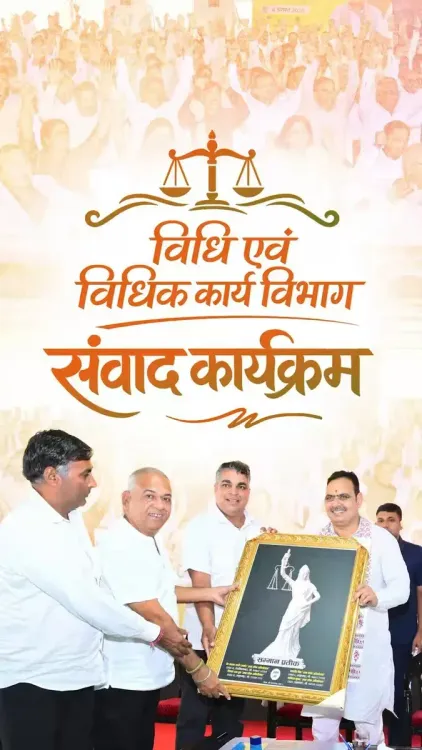
Rajasthan CM Bhajan Lal Sharma met legal and judicial representatives on 8 August 2026, pledging to make the state's justice system more capable, effective, and people-oriented — a step that could precede concrete policy action on court pendency and infrastructure.
Key Takeaways
Rajasthan CM Bhajan Lal Sharma held a dialogue with legal and judicial sector representatives on 8 August 2026 .
The discussion covered 'various subjects related to the justice system' in Rajasthan.
Sharma stated his government is committed to making the justice system 'more capable, effective, and people-oriented.' State governments control local court infrastructure and administrative machinery — key levers in reducing case pendency.
The consultation is a standard precursor to potential government orders, budget allocations, or pilot projects on judicial reform.
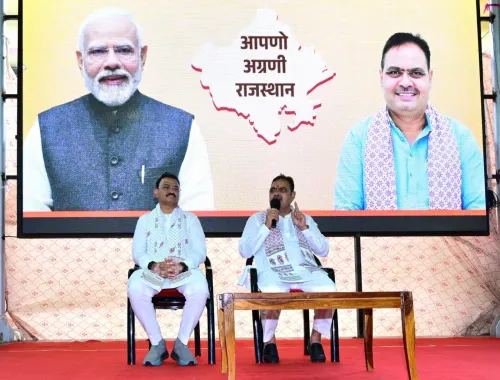
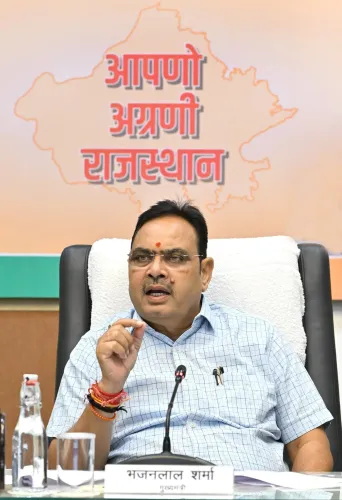
Rajasthan Chief Minister Bhajan Lal Sharma sat down with representatives from the legal and judicial sector on Saturday, 8 August 2026, opening a dialogue on strengthening the state's justice delivery system — a signal that the government is treating court efficiency as a governance priority, not a footnote.
Sharma said his government engaged with legal professionals on 'various subjects related to the justice system,' adding that the administration is working 'with full commitment to make the justice system in Rajasthan more capable, effective, and people-oriented.' The phrase janoनमुखी ('people-oriented') is deliberate — it frames judicial reform not as a procedural exercise but as a service-delivery obligation to ordinary litigants.
Why State Governments Are in the Judicial Reform Conversation
India's justice system operates on a federal split: the Supreme Court and High Courts fall under central oversight, but state governments control local court infrastructure, building and staff budgets, and the administrative machinery that determines whether a case moves or stalls. Rajasthan, like most large states, carries a significant pendency burden across its district and subordinate courts. That makes chief ministerial engagement with the legal community more than symbolic — it is one of the few levers a state government actually controls. Bhajan Lal Sharma took office after the BJP's victory in the December 2023 Rajasthan assembly elections, inheriting a governance agenda that includes modernising public services. Consultations with bar associations and judicial stakeholders are a standard early step before any state-level policy move — whether that means fast-track courts, legal aid expansion, or infrastructure upgrades for district courts.Legal Professionals as Policy Interlocutors
The choice to consult legal representatives — rather than announce a top-down directive — reflects a consultative approach that typically precedes concrete orders or budget allocations. Lawyers and bar council members bring ground-level intelligence on where the system chokes: inadequate courtroom infrastructure, shortage of support staff, delays in process service, or gaps in legal aid for marginalised litigants. Their input shapes what a government can realistically promise and deliver. What follows this dialogue is the real test. Rajasthan watchers should track whether the consultation translates into government orders, a dedicated budget line in the next state allocation, or pilot projects targeting high-pendency districts — the markers that separate a productive meeting from a press moment.Point of View
Who is still consolidating his first full term, visible engagement with the legal community signals seriousness on rule-of-law issues without requiring immediate legislative action. The 'people-oriented' framing is politically significant — it shifts the narrative of court reform from elite proceduralism to grassroots access. Whether this translates into measurable policy will be the benchmark by which the consultation is ultimately judged.
NationPress
8 Aug 2026
Frequently Asked Questions
What did Rajasthan CM Bhajan Lal Sharma discuss with legal representatives?
CM Bhajan Lal Sharma discussed various subjects related to the justice system in Rajasthan, with a focus on making it more capable, effective, and accessible to ordinary people.
When did CM Bhajan Lal meet legal and judicial representatives?
The meeting took place on Saturday, 8 August 2026.
What powers does the Rajasthan government have over the justice system?
State governments in India control local court infrastructure, budgets for district and subordinate courts, and administrative support — key factors in determining how quickly cases are resolved.
Who is Bhajan Lal Sharma?
Bhajan Lal Sharma is the Chief Minister of Rajasthan and a BJP leader who assumed office after the party's victory in the December 2023 state assembly elections.
What could follow from this judicial reform dialogue in Rajasthan?
Possible next steps include government orders on court modernisation, dedicated budget allocations for judicial infrastructure, or pilot projects targeting high-pendency districts across Rajasthan.