CM Bhajan Lal Holds NITI Aayog Meet on District Development
Synopsis
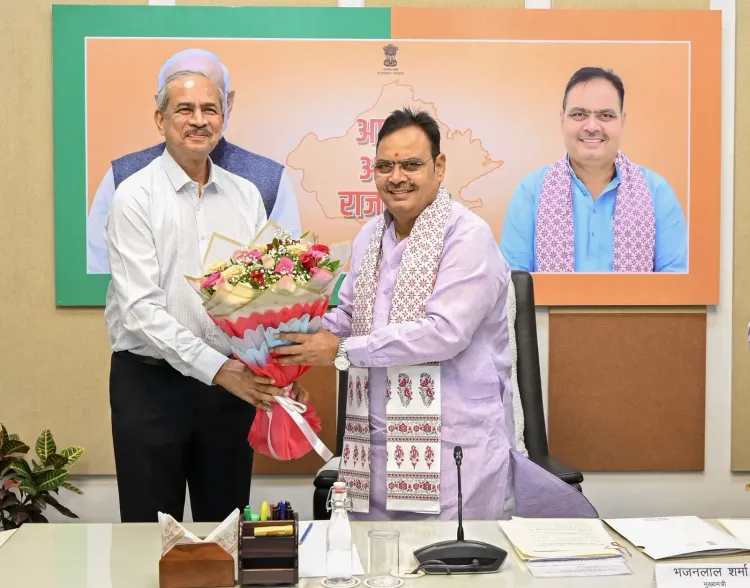
Rajasthan CM Bhajan Lal Sharma met NITI Aayog Member Prof. K. V. Raju on 22 June 2026 to shape a district-based development model that will tailor plans to local needs, aiming to boost employment, investment, and inclusive growth across the state.
Key Takeaways
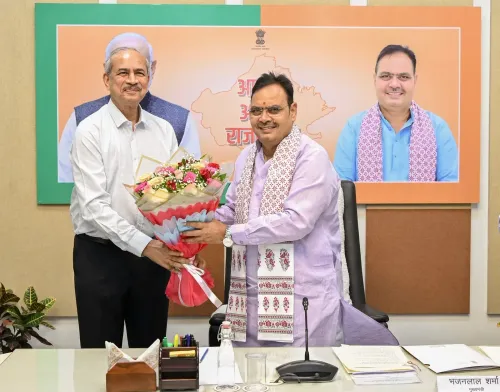
CM Bhajan Lal Sharma chaired a meeting at the Chief Minister's residence on 22 June 2026 with NITI Aayog Member Prof.
Raju and senior officials.
The meeting focused on a district-based development model to realise the 'Viksit Rajasthan' vision.
Each district will prepare plans covering aspirational sub-divisions , customised to local needs, resources, and potential.
The model aims to generate new employment, investment, and economic opportunities at the local level .
The framework aligns with the central government's Viksit Bharat @2047 vision and NITI Aayog's Aspirational Districts Programme launched in 2018.
The Rajasthan government has stated its commitment to making the state self-reliant, prosperous, and a leading state through balanced and sustainable development.
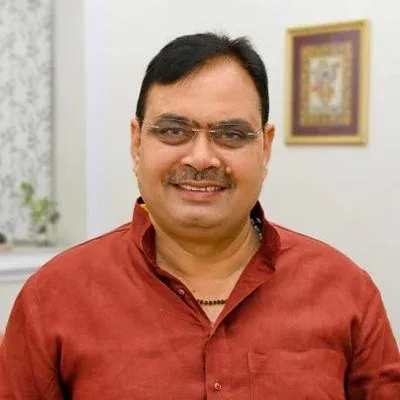
Rajasthan Chief Minister Bhajan Lal Sharma on Monday, 22 June 2026, chaired a meeting at the Chief Minister's residence with NITI Aayog Member Prof. K. V. Raju and senior administrative officials to deliberate on a district-based development model aimed at realising the vision of a 'Viksit Rajasthan' (Developed Rajasthan).
Posting on X, CM Sharma stated: 'इस मॉडल के अंतर्गत प्रत्येक जिले में आकांक्षी उपखंडों को जोड़ते हुए उनकी स्थानीय आवश्यकताओं, संसाधनों एवं संभावनाओं के अनुरूप विकास योजनाएँ तैयार की जाएंगी' — meaning that under this model, each district will prepare development plans aligned with the local needs, resources, and potential of its aspirational sub-divisions. He added that the initiative would generate new momentum for economic activity and create opportunities for employment, investment, and prosperity at the local level.
Context
The meeting centred on translating the 'Viksit Rajasthan' vision into concrete, ground-level action through a district-specific planning framework. Prof. K. V. Raju, a NITI Aayog member with expertise in agriculture and rural development, participated alongside relevant administrative officers, signalling a collaborative approach between the state government and the national policy body.
Rajasthan, India's largest state by area, has been governed by the BJP since December 2023, when Bhajan Lal Sharma assumed office as Chief Minister. Addressing uneven regional development across the state's 50 districts has been a stated priority of his administration.
Policy Backdrop
NITI Aayog launched the Aspirational Districts Programme in 2018 to accelerate development in India's most backward districts through real-time data monitoring and convergence of central and state schemes. The district-based model discussed at Monday's meeting proposes to extend this logic to aspirational sub-divisions within each district, deepening the granularity of planning.
This approach aligns directly with the Viksit Bharat @2047 vision unveiled by the central government in 2023, which calls on states to develop action plans that contribute to transforming India into a developed nation by the centenary of its independence. The Rajasthan government's framework appears designed to dovetail state-level ambitions with this national roadmap under the cooperative federalism model that NITI Aayog has championed since its establishment in 2015.
Stakeholders and Impact
The primary beneficiaries of the proposed model are rural and semi-urban communities in Rajasthan's aspirational sub-divisions — areas that have historically lagged in indicators such as health, education, and income. District administrations will be tasked with crafting tailored plans, giving local officials greater ownership over development outcomes.
Local entrepreneurs and small businesses stand to gain from the envisaged increase in investment and economic activity at the block and district level. CM Sharma underscored that his government is 'committed to making Rajasthan self-reliant, prosperous, and a leading state' through balanced, inclusive, and sustainable development.
What's Next
The immediate focus will be on translating Monday's discussions into formal district-level development plans, with attention to how aspirational sub-divisions are identified and prioritised. Observers will watch whether Rajasthan formally integrates its framework with the Aspirational Districts Programme in the coming fiscal year, which would unlock additional central government monitoring support and resources.
If implemented effectively, the model could position Rajasthan as a template for other large states seeking to bridge intra-state regional disparities — a challenge that remains central to India's broader inclusive-growth agenda.
Point of View
Data-driven planning architecture for Rajasthan — one that borrows institutional credibility from NITI Aayog while asserting state-level ownership. Bringing a NITI Aayog member directly into the Chief Minister's residence for a working session on sub-district planning is a deliberate political signal: the BJP administration is keen to demonstrate governance momentum ahead of the next electoral cycle. The district-based model also fits neatly into the cooperative federalism narrative that the central government has cultivated, allowing the state to align local ambitions with the Viksit Bharat @2047 framework without ceding policy autonomy. Whether the model produces measurable outcomes will depend on the quality of district-level execution — historically the weakest link in India's decentralised development experiments.
NationPress
21 Sept 2026
Frequently Asked Questions
What did CM Bhajan Lal Sharma discuss with NITI Aayog on 22 June 2026?
CM Bhajan Lal Sharma met NITI Aayog Member Prof. K. V. Raju at the Chief Minister's residence to discuss a district-based development model for Rajasthan, focusing on tailoring plans to the local needs, resources, and potential of aspirational sub-divisions within each district.
What is the Viksit Rajasthan vision?
Viksit Rajasthan, meaning 'Developed Rajasthan', is the Bhajan Lal Sharma government's overarching development goal for the state, aligned with the central government's Viksit Bharat @2047 vision that aims to make India a developed nation by 2047.
What is the Aspirational Districts Programme and how does it relate to this meeting?
The Aspirational Districts Programme was launched by NITI Aayog in 2018 to accelerate development in India's most backward districts through real-time monitoring and scheme convergence. The district-based model discussed in Monday's meeting extends this logic to aspirational sub-divisions, deepening the planning framework within Rajasthan.
Who is Prof. K. V. Raju of NITI Aayog?
Prof. K. V. Raju is a Member of NITI Aayog, India's premier policy think tank, with expertise in agriculture and rural development. He participated in the 22 June 2026 meeting with CM Bhajan Lal Sharma to shape Rajasthan's district-level development strategy.
How will the district-based development model benefit people in Rajasthan?
According to CM Sharma, the model will generate new economic momentum and create local opportunities for employment, investment, and prosperity by designing development plans specific to each district's and aspirational sub-division's own resources and requirements.