CM Bhajan Lal orders restoration of Deeg's Van Bihari temple

Synopsis
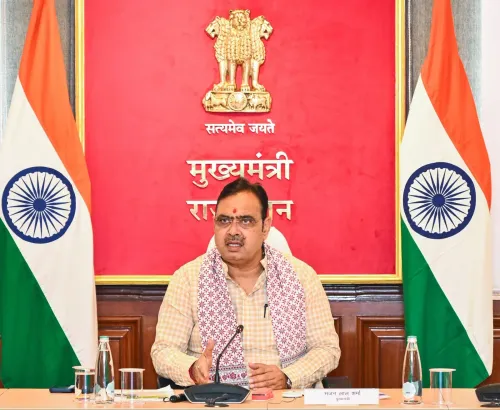
Rajasthan CM Bhajan Lal Sharma visited the ancient Shri Van Bihari Ji temple in Deeg on 29 July 2026, inspected the Asht Dwar and Airavat Kund, and directed officials to restore and beautify the Govardhan Parikrama corridor and surrounding heritage sites.
Key Takeaways
Bhajan Lal Sharma visited the Shri Van Bihari Ji temple in Deeg, Bharatpur district on 29 July 2026 .
He inspected the Asht Sakha Govind Swami Ji Baithak , the Asht Dwar , and the historic Airavat Kund .
Sharma issued on-site directives to officials for renovation, beautification, and conservation of the temple complex and Govardhan Parikrama path.
He framed heritage preservation as a sacred duty to future generations , not merely an administrative task.
The visit signals potential state budget attention for the Govardhan Parikrama corridor , a major Vaishnav pilgrimage circuit.
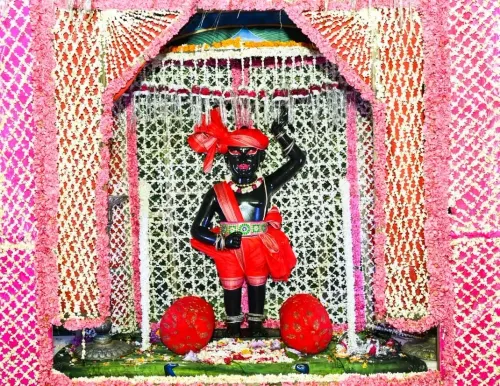
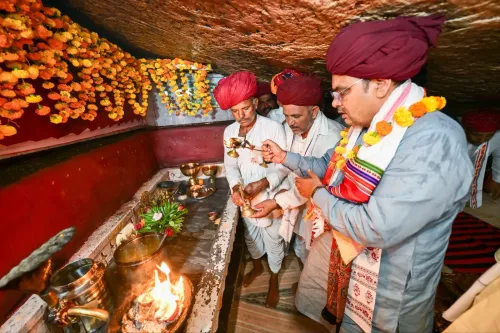
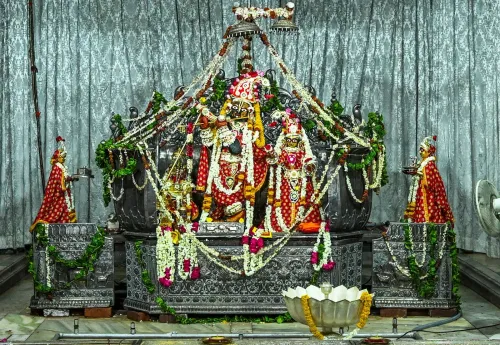
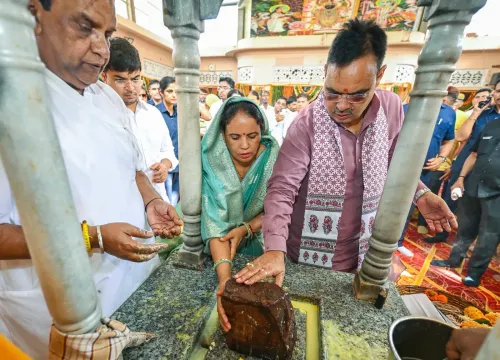
At the ancient Shri Van Bihari Ji temple in Deeg's Govardhan Parikrama zone, Rajasthan Chief Minister Bhajan Lal Sharma performed rituals and prayers on Wednesday, 29 July 2026 — and left with a directive that could reshape one of the region's most storied pilgrimage corridors.
Sharma offered prayers at the historic temple, then inspected the Shri Asht Sakha Govind Swami Ji ki Pavitra Baithak (the sacred assembly hall of the Eight Companions), the Asht Dwar (eight gateways), and the historic Airavat Kund — a heritage water body tied to the mythology of Lord Krishna's divine elephant. On the spot, he issued directives to officials to undertake renovation, beautification, and conservation of the temple complex, the Govardhan Parikrama path, the Baithak site, and Airavat Kund.
What Sharma saw — and what he ordered
The Govardhan Parikrama route in Deeg, Bharatpur district, draws tens of thousands of devotees annually. The Van Bihari Ji temple, situated within this circuit, is among the older shrines in the area and holds significance for Vaishnav pilgrims. Sharma's walkthrough of the Asht Dwar and Airavat Kund suggests the inspection covered the broader heritage precinct, not just the main sanctum.
The instructions to officials covered four specific zones: the temple premises, the Parikrama path, the Baithak site, and Airavat Kund. Rajasthan governments have periodically directed such conservation works at temples and kunds as part of cultural heritage and religious tourism efforts — but a Chief Ministerial visit with on-site directives typically accelerates district-level action and signals potential budget allocation.
The heritage argument Sharma made
Sharma framed the conservation push in explicitly generational terms, saying in his post: 'Hamari aadhyatmik evam saanskritik dharoharon ka sanrakshan keval hamari zimmedari hi nahin, balki aane wali peedhiyon ke prati hamara paavan dayitva bhi hai' — 'Preserving our spiritual and cultural heritage is not merely our responsibility, but a sacred duty towards generations to come.' He added that Rajasthan, by the grace of Lord Krishna, must continue on a path of progress, prosperity, and public welfare, with happiness and peace in the life of every resident.
The closing invocation — 'Jai Shri Krishna!' — underscored the devotional register of the visit, which doubled as a policy signal on heritage conservation.
Point of View
Sharma anchors a governance message — state investment in religious tourism infrastructure — inside a frame of spiritual duty, making it politically resonant with the Vaishnav pilgrim base of the Braj region. The Govardhan Parikrama corridor straddles Rajasthan and Uttar Pradesh, so any visible upgrade in the Deeg stretch also carries subtle inter-state optics. Whether the directives translate into budgeted projects or remain aspirational will be the real test.
NationPress
29 Jul 2026
Frequently Asked Questions
Which temple did CM Bhajan Lal Sharma visit in Deeg?
He visited the ancient Shri Van Bihari Ji temple located in the Govardhan Parikrama zone of Deeg, Bharatpur district, Rajasthan , on 29 July 2026.
What is Airavat Kund in Deeg?
Airavat Kund is a historic water body in Deeg associated with the mythology of Lord Krishna's divine elephant Airavat. CM Sharma inspected it during his visit and directed officials to conserve and restore it.
What did Bhajan Lal Sharma order at the Deeg temple?
Sharma directed officials to carry out renovation, beautification, and conservation of the Van Bihari Ji temple complex, the Govardhan Parikrama path, the Asht Sakha Baithak site, and Airavat Kund.
What is the Govardhan Parikrama route?
The Govardhan Parikrama is a circumambulation route around Govardhan Hill, sacred to Vaishnav devotees of Lord Krishna. The Deeg section in Rajasthan forms part of this pilgrimage corridor.
Why is Deeg significant in Rajasthan?
Deeg is a historical town in Bharatpur district, Rajasthan , known for its Jat-era palaces, step-wells, gardens, and religious sites, including temples along the Govardhan Parikrama circuit.