CM Himanta marks Tiger Day, cites Nameri's fourfold tiger rise

Synopsis
On International Tiger Day, Assam CM Himanta Biswa Sarma highlighted the state's conservation gains — led by Nameri Tiger Reserve's reported fourfold tiger increase from 3 to 12 — crediting anti-poaching drives, corridor preservation, and technology-based surveillance across Kaziranga, Manas, Orang, and Nameri.
Key Takeaways
Nameri Tiger Reserve reportedly saw its tiger count rise from 3 to 12 , the sharpest proportional gain cited by CM Sarma on International Tiger Day, July 29, 2026 .
Assam hosts four Project Tiger reserves : Kaziranga , Manas , Orang , and Nameri — all cited by Sarma as 'secure sanctuaries' for the Royal Bengal Tiger.
The 2018 All-India Tiger Estimation placed Assam's tiger population at 190 individuals across its reserves, against a national total of 2,967 .
Assam's conservation strategy combines tech-driven surveillance , drone monitoring, and anti-poaching enforcement with active habitat corridor preservation.
Kaziranga and Manas are both UNESCO World Heritage Sites ; Manas is also a recovery model after insurgency-related wildlife loss in the 1990s.
The next All-India Tiger Estimation report will be the key metric to validate whether Assam's population gains are sustained and range-wide.
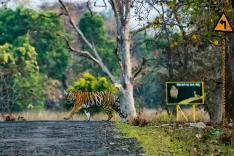
On International Tiger Day, Assam Chief Minister Himanta Biswa Sarma held up his state as a model for the rest of India — pointing to technology-driven surveillance, active corridor preservation, and rigorous anti-poaching enforcement as the engines behind a steady climb in wild tiger numbers. The headline figure: Nameri Tiger Reserve, once home to just 3 tigers, now shelters 12 — a fourfold jump that Sarma called 'an incredible transformation.'
Nameri's fourfold surge — and what it signals
Nameri Tiger Reserve, tucked in the foothills of Arunachal Pradesh along Assam's northern edge, was notified under India's Project Tiger programme in 2000. For years it remained a quieter, lower-profile reserve compared to the more celebrated Kaziranga and Manas. The claimed leap from 3 to 12 tigers — if borne out by the next national census — would mark one of the sharpest proportional recoveries in the country's northeastern tiger landscape. Sarma's call-out of Nameri is deliberate: it frames the reserve's turnaround as proof that sustained, tech-assisted management can work even in smaller, less-resourced habitats.
Assam's four reserves and the Project Tiger backbone
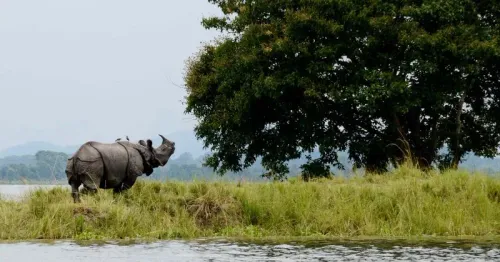
India launched Project Tiger in 1973 — one of the world's earliest and most ambitious single-species conservation programmes — and Assam eventually came to host four of its designated reserves: Kaziranga, Manas, Orang, and Nameri. Kaziranga National Park, a UNESCO World Heritage Site, is already globally recognised as one of the densest tiger habitats on earth, doubling as the last stronghold of the one-horned rhinoceros. Manas National Park — also a UNESCO site — had a more turbulent story: insurgency-related degradation through the 1990s stripped it of much of its wildlife, and its recovery since the 2000s stands as a textbook case of what sustained political will and community engagement can achieve.
The 2018 All-India Tiger Estimation recorded 2,967 tigers nationally, with Assam contributing 190 individuals across its reserves — a number the state has been working to push higher through camera-trap networks, drone-based monitoring, and tighter coordination between forest guards and local communities along reserve fringes.
The corridor question that will define the next chapter
Wildlife ecologists have long argued that isolated reserves, however well-protected, hit a ceiling. Genetic diversity, prey availability, and territorial pressure all demand that tigers move between habitats. Assam's four reserves are geographically spread, and the corridors linking them — through tea-garden belts, agricultural land, and riverine forest — remain contested and partially fragmented. The next All-India Tiger Estimation report and any new corridor notifications will be the real test of whether Assam's numbers represent a genuine, sustainable recovery or a localised spike inside protected boundaries.
For now, on July 29, 2026, Sarma's message is clear: Assam is not waiting for national headlines to validate its conservation story. The Royal Bengal Tiger is coming back — and the state intends to keep it that way.
Point of View
Apolitical win it can carry into any national conversation about northeastern development. The framing aligns with a broader BJP federal strategy of linking ecological stewardship to strong-state administration. However, the credibility of the Nameri claim will hinge entirely on the next national tiger census; until then, the figure sits in the space between political assertion and verified data. Assam's corridor fragmentation problem — unaddressed in the post — remains the structural challenge that no single reserve's success story can paper over.
NationPress
29 Jul 2026
Frequently Asked Questions
How many tigers are in Nameri Tiger Reserve in 2026?
Assam Chief Minister Himanta Biswa Sarma stated on International Tiger Day 2026 that Nameri Tiger Reserve now has 12 tigers , up from just 3 a few years ago — a fourfold increase he attributed to anti-poaching drives and technology-based monitoring. This figure has not yet been independently verified by a national census.
Which tiger reserves are in Assam?
Assam has four Project Tiger reserves : Kaziranga National Park , Manas National Park , Orang National Park , and Nameri Tiger Reserve . Kaziranga and Manas are both UNESCO World Heritage Sites .
What is Project Tiger and when was it launched?
Project Tiger is a centrally sponsored wildlife conservation scheme launched by the Government of India in 1973 . It established dedicated tiger reserves across the country, provided funding for habitat management and anti-poaching, and is credited with reversing the sharp decline in India's tiger population through the 20th century.
What is India's total tiger population?
The last official All-India Tiger Estimation , conducted in 2018 , counted 2,967 tigers nationally. Assam alone accounted for 190 tigers across its four reserves. An updated national census is awaited.
Why is Manas National Park significant for tiger conservation?
Manas National Park is a UNESCO World Heritage Site in Assam that suffered severe wildlife loss during insurgency-related conflict in the 1990s. Its recovery since the early 2000s — through sustained protection and community engagement — is widely cited as one of India's most successful wildlife restoration stories.