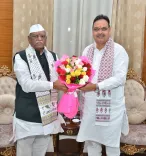
CM Bhajan Lal Sharma greets Rajasthan on third Shravan Somvar
Synopsis
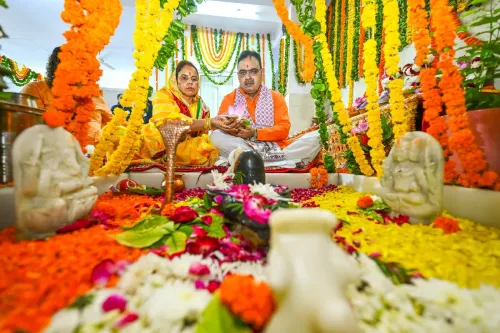
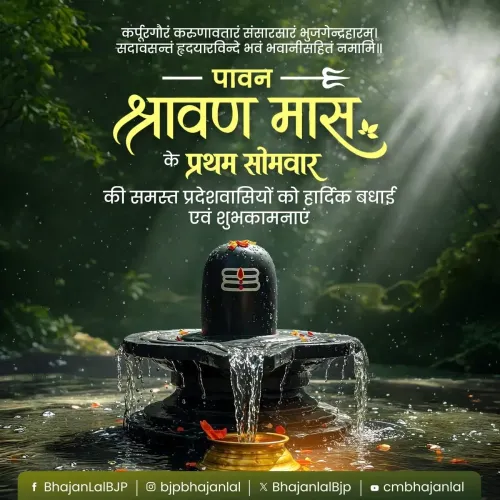
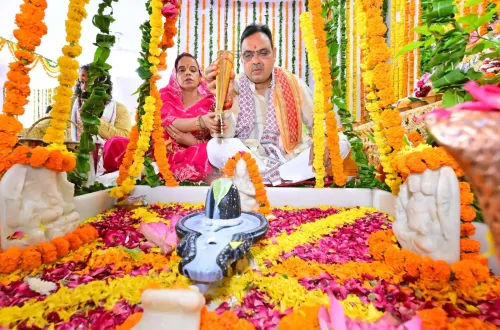
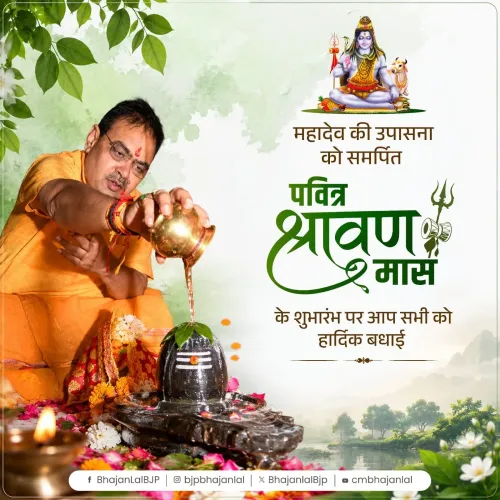
Rajasthan Chief Minister Bhajan Lal Sharma greeted state residents on the third Shravan Somvar, praying that Lord Shiva's grace bring happiness, prosperity, health, and spiritual energy to all.
Key Takeaways
Rajasthan CM Bhajan Lal Sharma posted Shravan Somvar greetings on 17 August 2026 .
The message was addressed to all residents of Rajasthan on the third Monday of the sacred Shravan month.
He invoked the blessings of Lord Shiva (Bholenath) for happiness, prosperity, good health, peace, and spiritual energy.
The post closed with the Shaivite chant 'Har-Har Mahadev' , a hallmark of BJP cultural messaging.
Shravan Mondays are among the most auspicious days in the Hindu calendar, with heightened temple activity across Rajasthan.
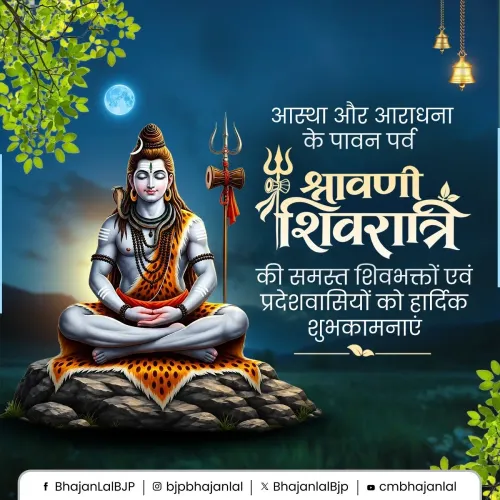
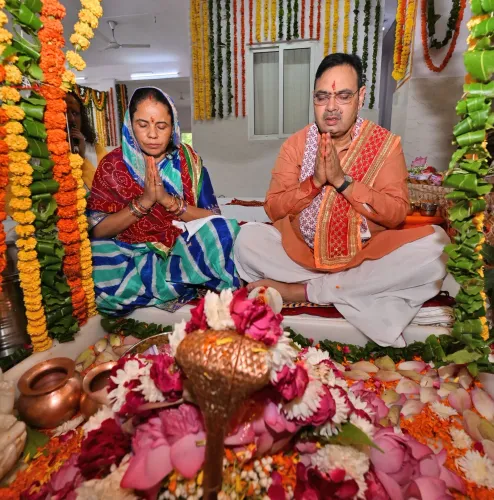
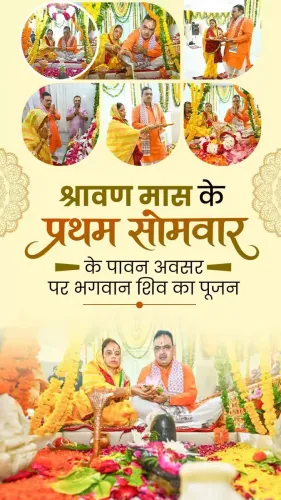
On the third Monday of the sacred month of Shravan, Rajasthan Chief Minister Bhajan Lal Sharma extended warm wishes to the people of the state, invoking the blessings of Lord Shiva for peace, prosperity, and spiritual well-being.
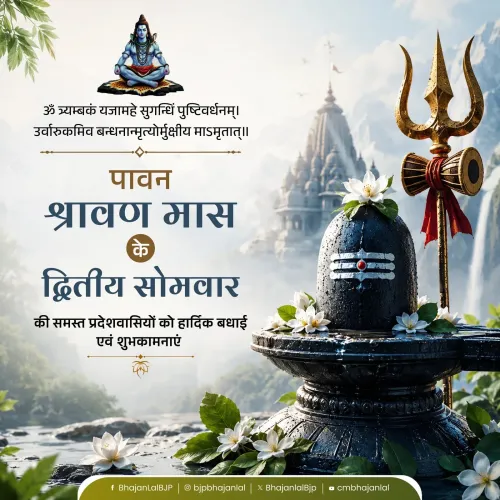
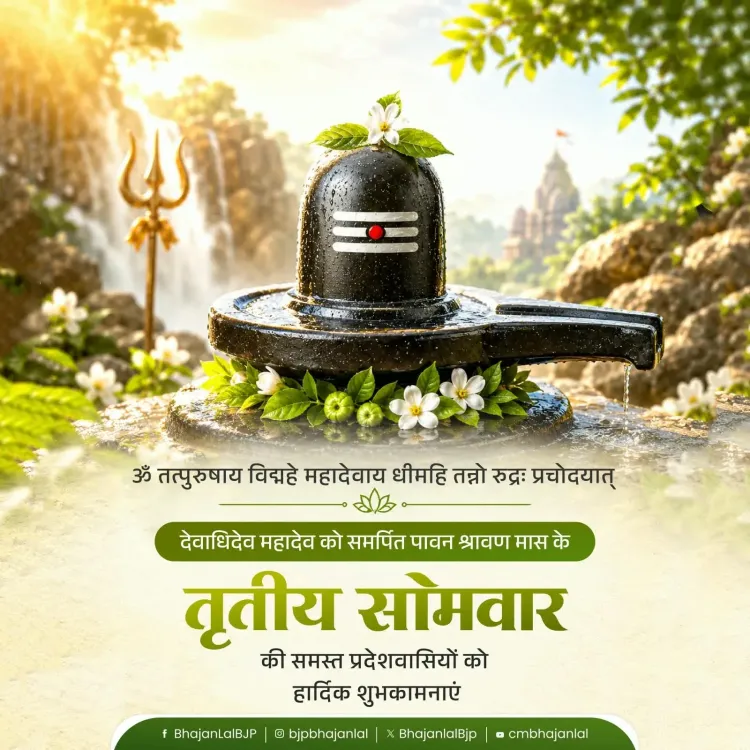
In his message posted on Monday, 17 August 2026, the Chief Minister wrote: 'देवाधिदेव महादेव को समर्पित पावन श्रावण मास के तृतीय सोमवार की समस्त प्रदेशवासियों को हार्दिक शुभकामनाएं!' — 'Heartfelt greetings to all residents of the state on the third Monday of the holy month of Shravan, dedicated to Mahadev, the lord of all gods.' He prayed that the boundless grace of Bholenath bring happiness, prosperity, good health, peace, and spiritual energy into every life, closing with the Shaivite invocation 'Har-Har Mahadev.'
Shravan is among the most revered months in the Hindu lunar calendar, dedicated entirely to the worship of Lord Shiva. Its Mondays — known as Shravan Somvars — draw millions of devotees to temples across India, with special prayers, fasting, and ritual offerings of water and milk to Shiva lingams. The month holds particular resonance in Rajasthan, where Shaivite traditions run deep across both urban mandirs and rural shrines.
For BJP-led state governments, such public observances are a consistent feature of political communication — connecting elected leadership to the cultural and religious rhythms of their constituencies. Chief ministers across parties routinely mark major Hindu, Muslim, Sikh, Christian, and Jain occasions through official channels, but the Shravan Somvar greeting carries specific weight in a state where temple footfall surges visibly each Monday of the month.
Point of View
These high-frequency festival greetings serve as low-cost, high-visibility outreach to a devout and politically engaged base. The pattern signals that religious-cultural communication will remain a structural feature of the Sharma government's public calendar, with bigger observances like Navratri and Mahashivratri likely to see more elaborate messaging.
NationPress
17 Aug 2026
Frequently Asked Questions
Why is Shravan month important for Hindus?
Shravan is the holiest month in the Hindu lunar calendar, dedicated to Lord Shiva. Devotees fast, visit temples, and offer water and milk to Shiva lingams, especially on Mondays (Somvars), which are considered the most auspicious days of the month.
Who is Bhajan Lal Sharma?
Bhajan Lal Sharma is a BJP leader who became Chief Minister of Rajasthan in December 2023 . He is the first person with that name to hold the post and represents the Sanganer constituency.
What did Rajasthan CM say on Shravan Somvar 2026?
CM Sharma extended greetings to all Rajasthan residents on the third Shravan Monday, praying that Lord Shiva's grace bring happiness, prosperity, good health, peace, and spiritual energy to every life.
What does 'Har-Har Mahadev' mean?
'Har-Har Mahadev' is a traditional Shaivite chant meaning 'Praise be to Mahadev (Lord Shiva).' It is widely used as a devotional invocation, particularly during Shravan and Mahashivratri.
Do Indian chief ministers routinely post festival greetings?
Yes. State chief ministers across parties regularly issue greetings for major religious and cultural occasions via social media. For BJP leaders, Shaivite festivals like Shravan Somvar and Mahashivratri are especially prominent in their public communications.