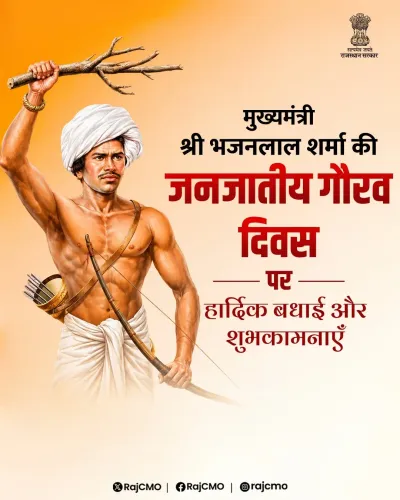
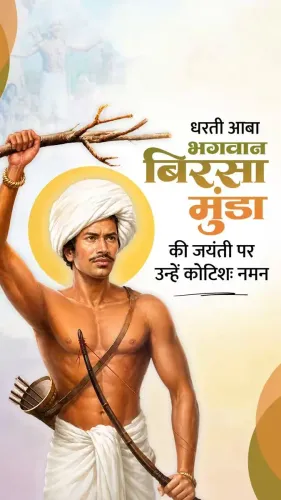
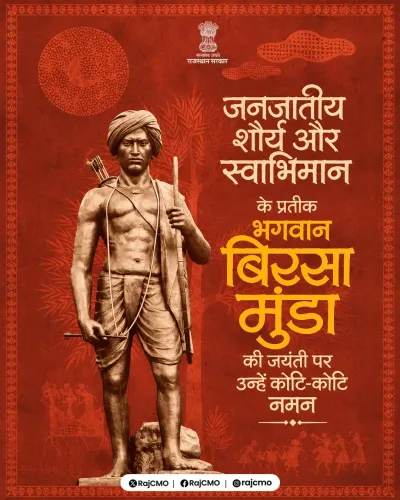
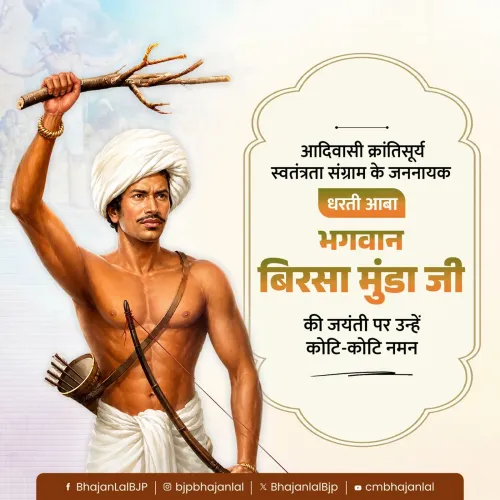
CM Bhajan Lal Sharma honours Birsa Munda's 151st birth anniversary
Synopsis
On Birsa Munda's 151st birth anniversary, Rajasthan CM Bhajan Lal Sharma hosted the state-level Janjatiya Gaurav Divas at CM Niwas, hailed the tribal icon's legacy of sacrifice, and pledged expanded education, health, and employment opportunities for Rajasthan's tribal communities.
Key Takeaways
Rajasthan CM Bhajan Lal Sharma hosted and addressed the state-level Janjatiya Gaurav Divas programme at Mukhyamantri Niwas, Jaipur on 15 November 2026 .
The event marked the 151st birth anniversary of tribal freedom fighter Bhagwan Birsa Munda , who led the Ulgulan movement against British land policies in the late 19th century.
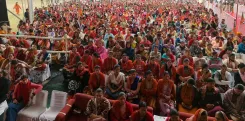
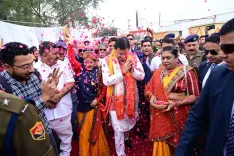
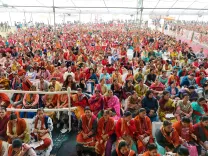
CM Sharma held a personal interaction with tribal youth and addressed a large gathering, calling Birsa Munda's life an inspiration for national service.
The government reaffirmed its commitment to education, healthcare, employment, and development for tribal communities in Rajasthan.
Babulal Kharadi , Minister of State for Tribal Area Development and Home Defence, attended alongside other elected representatives and dignitaries.
Janjatiya Gaurav Divas was formally instituted by the Government of India in 2021 to honour tribal contributions to India's freedom struggle.
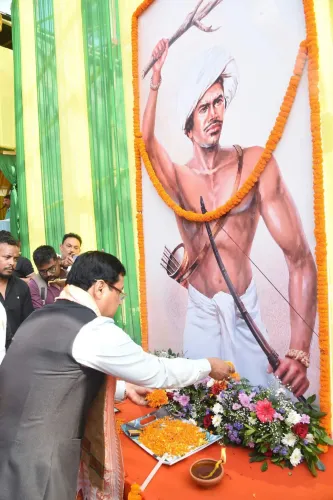
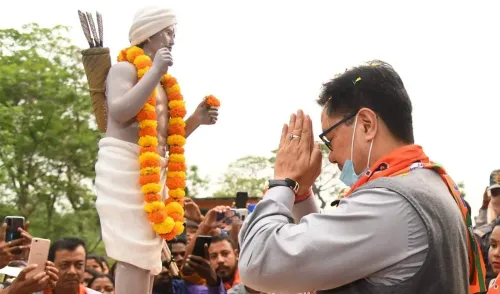
A hundred and fifty-one years after his birth in the forests of Chotanagpur, Bhagwan Birsa Munda drew hundreds to Mukhyamantri Niwas, Jaipur, on Sunday, 15 November 2026 — his legacy summoning tribal youth, ministers, and dignitaries to a celebration that was equal parts remembrance and resolve. Rajasthan Chief Minister Bhajan Lal Sharma hosted and addressed the state-level Janjatiya Gaurav Divas programme, marking the occasion with a direct, personal exchange with energetic young members of the tribal community.
What CM Sharma said — and why it landed
Speaking at the event, CM Sharma called Birsa Munda's life a symbol of sacrifice, struggle, and 'indomitable courage' — adamya sahas — in defence of tribal self-respect, culture, and rights. 'His life inspires all of us towards national service and the upliftment of society,' he said, addressing the gathering in Hindi. The framing was deliberate: Birsa Munda not merely as a historical figure, but as an active moral compass for governance today.
The Chief Minister also reaffirmed the state government's commitment to preserving the rich traditions and culture of tribal communities while simultaneously expanding access to education, healthcare, employment, and development in tribal regions. Minister of State for Tribal Area Development and Home Defence Babulal Kharadi was present alongside other elected representatives and dignitaries.
Who was Birsa Munda — and why 15 November matters
Born on 15 November 1875 in Ulihatu, in present-day Jharkhand, Birsa Munda led the Ulgulan ('The Great Tumult') movement against British land-grab policies that were dispossessing Adivasi communities across Chotanagpur. He died in British custody in 1900, aged just 25, but left behind a mobilised consciousness that tribal rights advocates still cite today.
In 2021, the Government of India formally declared 15 November as Janjatiya Gaurav Divas — a national day of honour for tribal freedom fighters — institutionalising what had long been a community observance into a state-recognised occasion. The move signalled a broader political effort to place Adivasi contributions to India's freedom struggle on par with more widely taught narratives.
Rajasthan's tribal geography — and what the government has pledged
Rajasthan is home to substantial Bhil, Meena, and Garasia populations concentrated in the southern and southeastern districts. The state has aligned its welfare architecture with national tribal development priorities, and events like today's serve a dual function: cultural affirmation and policy signalling. CM Sharma's pledge to open 'new opportunities in education, health, employment, and development' for tribal areas — reiterated from the dais — sets a public benchmark for the government's tribal outreach agenda.
Minister Kharadi's presence underlined the institutional weight behind the event: as the cabinet face of tribal area development, his participation signals that the commitments made today are expected to have bureaucratic follow-through, not just rhetorical resonance.
One hundred and twenty-five years after Birsa Munda's death, his birth anniversary is no longer just a date on a calendar — it has become an annual stress-test of how seriously governments take the promises made in his name.
Point of View
A constituency that has historically leaned towards regional parties and the Congress. By hosting the event personally at the Chief Minister's residence and pairing tribute with welfare pledges, CM Sharma is signalling that Rajasthan's tribal belt — home to Bhil, Meena, and Garasia communities — is a governance priority, not just an electoral afterthought. The presence of Tribal Area Development Minister Babulal Kharadi adds institutional weight, suggesting the government wants to convert symbolic recognition into measurable delivery. How effectively those pledges translate into ground-level outcomes will ultimately determine whether Janjatiya Gaurav Divas registers as a turning point or simply as a well-attended annual ritual.
NationPress
15 Nov 2026
Frequently Asked Questions
What is Janjatiya Gaurav Divas and why is it celebrated on 15 November?
Janjatiya Gaurav Divas is a national observance held every year on 15 November to honour tribal freedom fighters, particularly Birsa Munda , who was born on that date in 1875 . The Government of India formally instituted the day in 2021 to recognise tribal communities' contributions to India's independence struggle.
Who was Birsa Munda?
Birsa Munda was a tribal leader born on 15 November 1875 in Ulihatu, in present-day Jharkhand. He led the Ulgulan ('The Great Tumult') movement against British policies that were dispossessing Adivasi communities of their land. He died in British custody in 1900 at the age of 25 and is revered as a symbol of tribal resistance and self-respect.
What did Rajasthan CM Bhajan Lal Sharma announce for tribal communities?
CM Bhajan Lal Sharma reaffirmed the Rajasthan government's commitment to expanding access to education, healthcare, employment, and development for tribal communities, while also pledging to preserve their rich cultural traditions. Specific new scheme details were not disclosed from the event.
Which tribal communities live in Rajasthan?
Rajasthan is home to significant Bhil, Meena, and Garasia tribal populations, concentrated largely in the southern and southeastern districts of the state. These communities are central to the state's tribal development and welfare agenda.
Who is Babulal Kharadi?
Babulal Kharadi is Rajasthan's Minister of State for Tribal Area Development and Home Defence . He attended the Janjatiya Gaurav Divas programme at CM Niwas on 15 November 2026 alongside CM Sharma and other dignitaries.