CM Bhajan Lal Sharma launches ₹924 cr projects in Pratapgarh
Synopsis
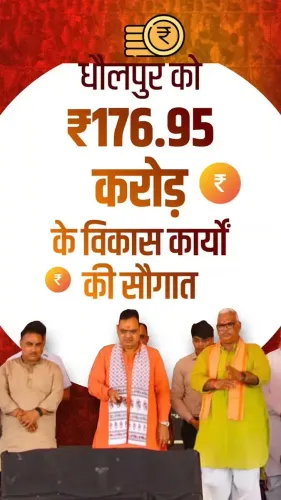
Rajasthan CM Bhajan Lal Sharma inaugurated 1,452 development projects worth over ₹924 crore in Pratapgarh, signed a cooperative MoU to expand tribal market access, and launched 'Vangiri' brand Adiparag honey on September 26, 2026.
Key Takeaways
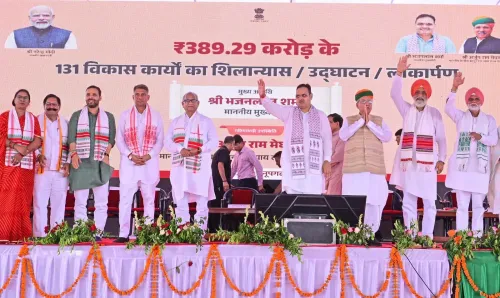
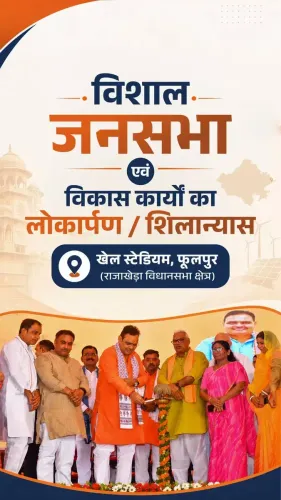
1,452 development works worth over ₹924 crore were inaugurated or foundation-stoned across multiple Rajasthan districts at Pratapgarh's Dussehra Maidan.
A formal MoU was signed between Rajasthan Janjati Kshetriya Vikas Sahakari Sangh Limited and Rajasthan State Cooperative Consumer Federation Limited to connect tribal produce with wider markets.
The 'Vangiri' brand was launched, with Adiparag honey as its debut product, giving tribal forest produce a structured commercial identity.
Tribal Area Development Minister Babulal Kharadi , Revenue Minister Hemant Meena , and Cooperative Minister Dak attended the Pratapgarh event.
The initiative is framed within the Centre's Vanbandhu Kalyan Yojana framework, reflecting BJP's national policy priority on tribal economic inclusion.
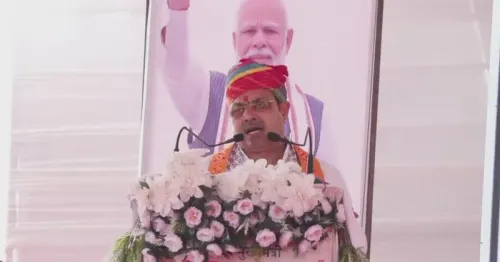
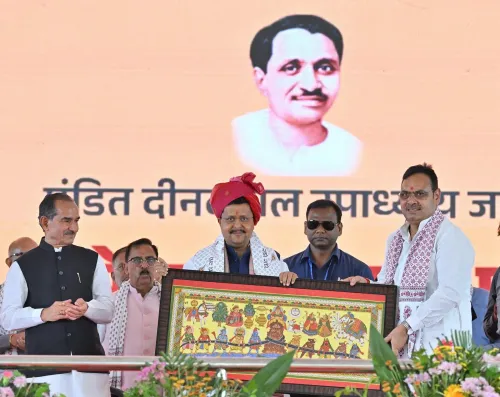
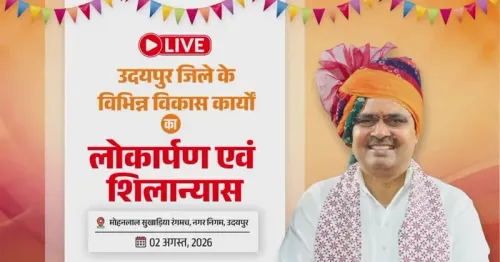
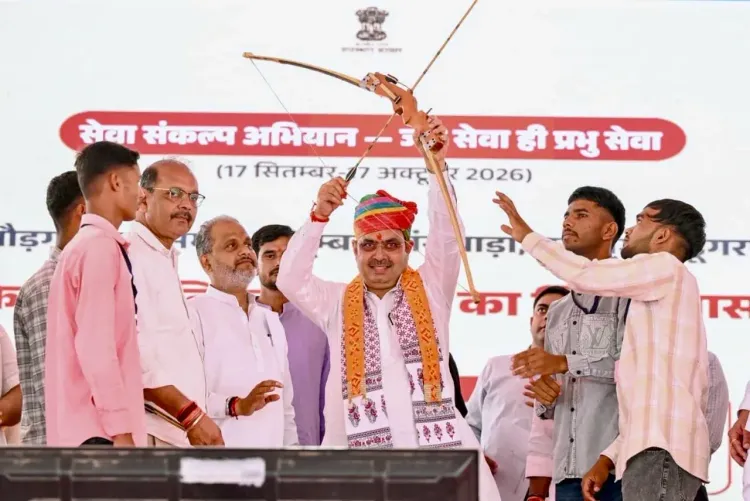
On the sacred ground of Pratapgarh's Dussehra Maidan, Rajasthan Chief Minister Bhajan Lal Sharma on Saturday, September 26, 2026, inaugurated and laid the foundation stones for 1,452 development works worth over ₹924 crore spanning multiple districts — and then unveiled a honey brand aimed at putting tribal livelihoods on the national market map.
₹924 crore across 1,452 works: what moved ground today
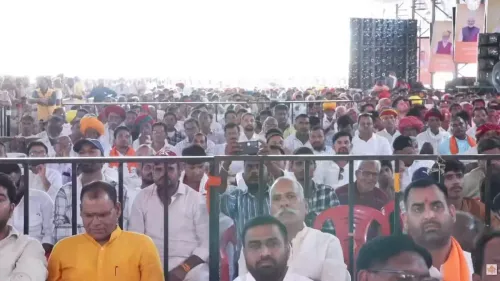
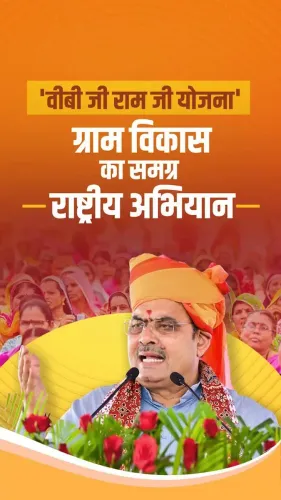
The scale of what was greenlit in Pratapgarh is significant. 1,452 projects — a mix of inaugurations and fresh foundation stones — spread across several districts of Rajasthan, with a combined outlay exceeding ₹924 crore. Sharma addressed the gathering at the Dussehra Maidan, describing the assembled crowd with the traditional reverence 'devtulya janata-janardan' (the public as divine). The event was a convergence of infrastructure muscle and grassroots economic ambition in one of Rajasthan's most tribal-heavy southern districts.
The MoU that could reshape tribal produce markets
Beyond bricks and mortar, the day's most consequential move was a formal Memorandum of Understanding signed between the Rajasthan Janjati Kshetriya Vikas Sahakari Sangh Limited (Rajasthan Tribal Area Development Cooperative Federation) and the Rajasthan State Cooperative Consumer Federation Limited. The pact is designed to plug a chronic gap: tribal producers in Rajasthan have long struggled to reach buyers beyond local haats and weekly markets. By routing tribal goods through the state's cooperative consumer network, the MoU creates a structured supply chain where none existed before.
Pratapgarh district, which sits in southern Rajasthan with a sizeable Scheduled Tribe population, is among the primary beneficiaries. The logic mirrors a pattern the BJP has deployed in other states — pairing infrastructure spending with cooperative linkages to embed tribal communities in formal market structures rather than leaving them dependent on middlemen.
'Vangiri' brand and the launch of Adiparag honey
The ceremonial highlight was the launch of 'Adiparag' honey under the newly unveiled 'Vangiri' brand — a state-backed label intended to give tribal forest produce a premium, recognisable identity. Forest honey harvested by tribal communities is high-quality but has historically sold at distress prices in unbranded form. A dedicated brand, backed by the cooperative network, is the mechanism the government is betting on to change that equation. The name 'Vangiri' evokes the forest itself — a deliberate branding choice to signal origin and authenticity.
Sharma credited the initiative to the guidance of Prime Minister Narendra Modi, framing it within the national commitment to tribal 'honour, prosperity and all-round development.' Tribal Area Development Minister Babulal Kharadi, Revenue Minister Hemant Meena, and Cooperative Minister Dak were among the senior figures present at the event.
Where this fits in Rajasthan's tribal development arc
The Rajasthan government's approach — bundling infrastructure announcements with livelihood and market-access initiatives in a single high-profile event — has become a recognisable template under Chief Minister Sharma. The Vanbandhu Kalyan Yojana, introduced at the Centre in 2014, laid the policy foundation for exactly this kind of integrated tribal outreach. What today's Pratapgarh event adds is a commercial layer: if Vangiri honey finds shelf space in cooperative outlets and beyond, it becomes a replicable model for other tribal forest products across the state.
The real test begins now — whether the MoU translates into working supply chains and whether a branded honey reaches a consumer in Jaipur or Delhi before the next election cycle does.
Point of View
While the cooperative MoU and Vangiri brand launch embed a longer-term economic narrative in tribal constituencies. With Rajasthan's Scheduled Tribe population concentrated in the south and east of the state, this is also electoral ground-preparation — Pratapgarh and surrounding seats are competitive. The real policy signal is the cooperative-to-market pipeline: if Vangiri honey succeeds commercially, it offers the government a replicable template across other tribal forest products. Watch for whether the MoU produces measurable price gains for tribal producers within the next crop cycle.
NationPress
26 Sept 2026
Frequently Asked Questions
What projects did CM Bhajan Lal Sharma inaugurate in Pratapgarh on September 26 2026?
CM Bhajan Lal Sharma inaugurated and laid foundation stones for 1,452 development works valued at over ₹924 crore spanning several Rajasthan districts at the Dussehra Maidan in Pratapgarh.
What is the Vangiri brand launched in Rajasthan?
'Vangiri' is a new state-backed brand for tribal forest products in Rajasthan. Its first product, Adiparag honey , was launched in Pratapgarh on September 26, 2026, to give tribal-harvested honey a premium, recognisable market identity.
What MoU was signed for tribal welfare in Rajasthan today?
An MoU was signed between the Rajasthan Janjati Kshetriya Vikas Sahakari Sangh Limited and the Rajasthan State Cooperative Consumer Federation Limited to channel tribal produce into wider markets through the state cooperative network.
Which ministers attended the Pratapgarh tribal development event?
Tribal Area Development Minister Babulal Kharadi , Revenue Minister Hemant Meena , and Cooperative Minister Dak attended the September 26 event alongside CM Bhajan Lal Sharma.
What is the Vanbandhu Kalyan Yojana and how does it connect to Rajasthan tribal schemes?
The Vanbandhu Kalyan Yojana is a central government scheme introduced in 2014 to address the socio-economic needs of tribal communities across India. Rajasthan's cooperative-and-infrastructure approach to tribal development is aligned with this national framework.