CM Bhajan Lal launches ₹2,636 cr projects at Dadia Seva Sankalp Sabha
Synopsis
Rajasthan CM Bhajan Lal Sharma launched 929 development projects worth ₹2,636 crore and transferred ₹400 crore to 36 lakh DBT beneficiaries at the Seva Sankalp Sabha in Dadia on Deendayal Upadhyay's birth anniversary, also flagging off the panchayat election campaign rath.
Key Takeaways
929 development projects worth ₹2,636 crore were inaugurated and foundation stones laid at the Dadia event on 25 September 2026 . ₹400 crore was transferred via Direct Benefit Transfer to 36 lakh welfare scheme beneficiaries across Rajasthan.
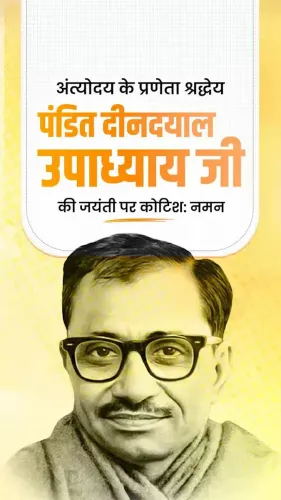
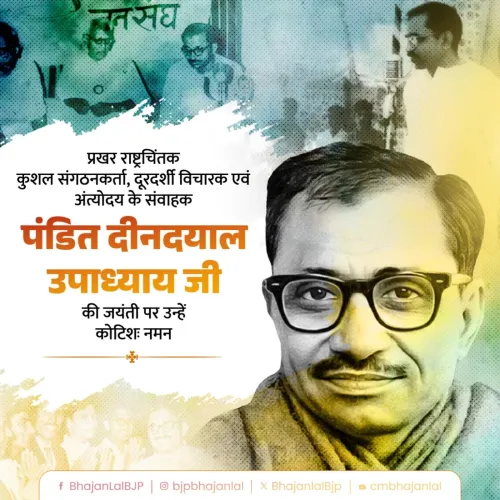
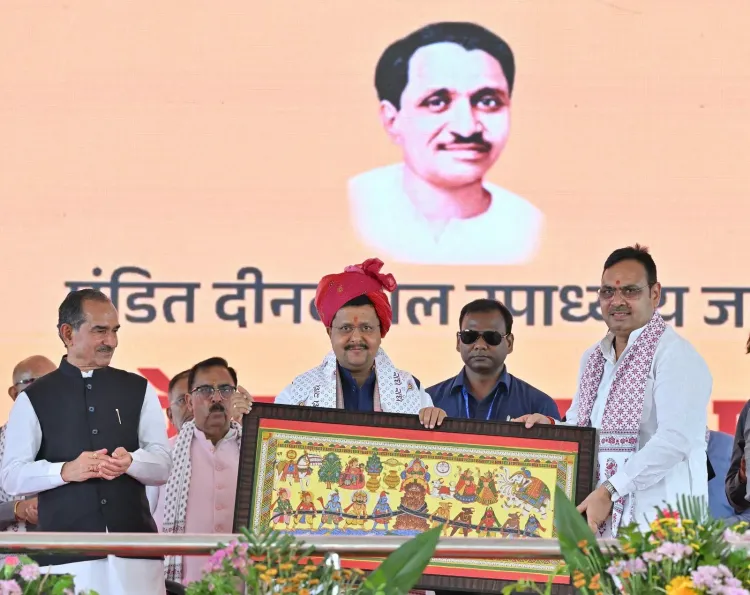
The event was held on the birth anniversary of Pandit Deendayal Upadhyay , founding member of the Bharatiya Jana Sangh and proponent of the Antyodaya philosophy.
BJP National President Nitin Nabin , Deputy CMs Diya Kumari and Dr Prem Bairwa , and state BJP chief Madan Rathore were present.
CM Sharma congratulated councillors on the recent municipal body election mandate and flagged off the panchayat election campaign rath .
The gathering also marked Prime Minister Narendra Modi 's 25 years in public office, counting from his Gujarat Chief Ministership in 2001.
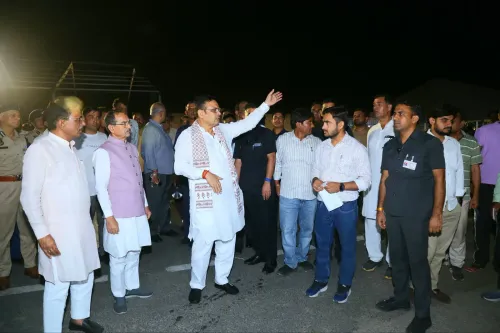
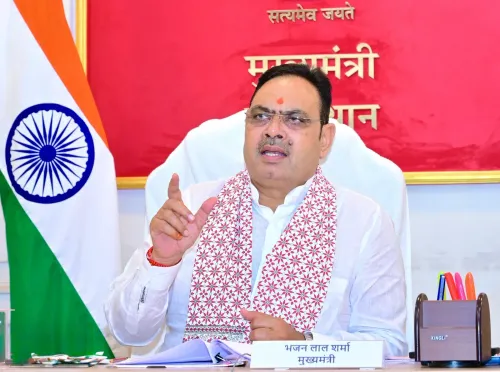
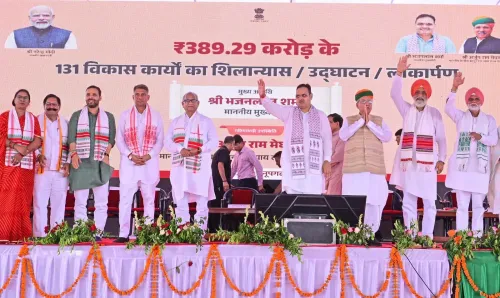
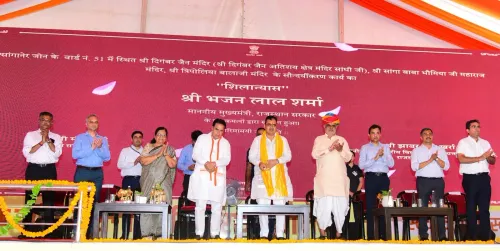
On the birth anniversary of Pandit Deendayal Upadhyay and marking Prime Minister Narendra Modi's 25 years of public service, Rajasthan Chief Minister Bhajan Lal Sharma turned a single afternoon in Dadia into a governance offensive — inaugurating and laying foundation stones for 929 development projects worth ₹2,636 crore while simultaneously wiring ₹400 crore in direct benefits to 36 lakh welfare beneficiaries across the state.
A day built around Deendayal Upadhyay's Antyodaya vision
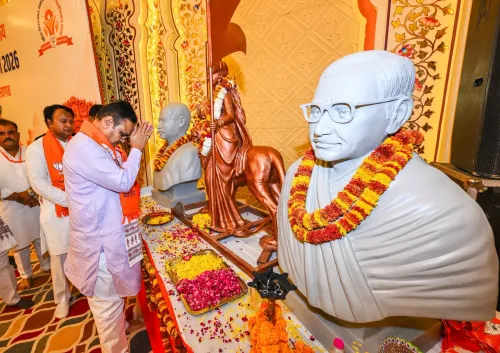
The event — branded the 'Seva Sankalp Sabha' — was anchored in the BJP's ideological touchstone: Antyodaya, the philosophy of uplifting the last person in the queue, first articulated by Pandit Deen Dayal Upadhyay, the founding member of the Bharatiya Jana Sangh whose birth anniversary falls on 25 September. CM Sharma stated that his government 'draws inspiration from Upadhyay ji's ideas to work with continuous commitment towards the development, dignity and welfare of every section of the state.'
BJP National President Nitin Nabin shared the stage, lending the gathering a central-party imprimatur that elevated it well beyond a routine state function. Deputy Chief Ministers Diya Kumari and Dr Prem Bairwa, along with Rajasthan BJP State President Madan Rathore, were also present — a near-full deployment of the state's top leadership in one place.
₹2,636 crore across 929 projects — and ₹400 crore via DBT
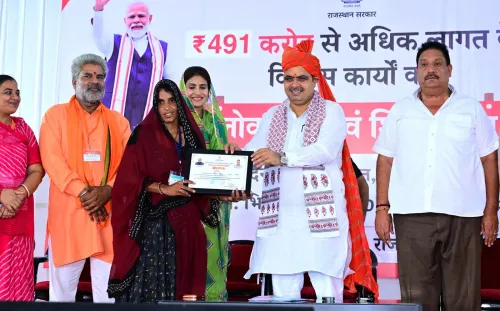
The twin announcements were designed to land as one: a brick-and-mortar promise through the 929 project inaugurations and foundation-stone layings, and an immediate cash reality through the Direct Benefit Transfer of ₹400 crore to 36 lakh beneficiaries of various welfare schemes. The DBT mechanism, scaled nationally since 2014, is designed to eliminate intermediaries and reduce leakages — a frequent BJP talking point that the Rajasthan government is now visibly embedding into its own governance narrative.
Together, the two numbers — ₹2,636 crore in infrastructure and ₹400 crore in direct welfare — make the state's headline figure for the day a combined ₹3,036 crore. That is not incidental arithmetic; it is the political grammar of a government demonstrating both long-term investment and short-term relief in a single frame.
Municipal mandate, panchayat campaign, and the green flag
CM Sharma used the occasion to congratulate all councillors, people's representatives, and party workers who secured what he described as a 'historic mandate' in the recent Rajasthan municipal body elections. He then flagged off the panchayat election campaign rath — a mobile outreach vehicle — signalling that the organisational machinery is already shifting to the next electoral contest.
The sequencing is deliberate: celebrate a recent urban victory, distribute welfare funds, inaugurate local infrastructure, and immediately redirect energy toward rural panchayat elections. It is a pattern that BJP-ruled states have refined across multiple electoral cycles — governance events that double as organisational mobilisation exercises, all wrapped in an ideological anniversary that gives the day a larger-than-politics frame.
Modi's 25-year milestone as the event's second anchor
The gathering also marked a milestone the BJP is leaning into nationally: 25 years of Prime Minister Narendra Modi in public office, counting from his assumption of the Gujarat Chief Ministership in 2001. By folding that anniversary into a state-level development event, the Rajasthan government linked its own governance record to the Prime Minister's longer political arc — a framing that reinforces both Centre-state alignment and the party's broader continuity narrative.
With 929 projects now on the clock and panchayat elections on the horizon, the real test will be delivery on the ground — not the ceremony, but the construction sites.
Point of View
A national leader's milestone provides political cover, and simultaneous infrastructure and cash-transfer announcements provide the voter-facing substance. For CM Bhajan Lal Sharma, who has been seeking to establish a visible delivery record since the party's 2023 state election win, the ₹3,036 crore combined headline is significant optics ahead of panchayat elections. The immediate flagging off of the campaign rath signals the government is not separating governance from electioneering — a dual-track strategy that has worked well for BJP-ruled states in recent cycles. The real measure, however, will be how many of the 929 projects reach completion before the next major electoral reckoning.
NationPress
25 Sept 2026
Frequently Asked Questions
What is the Seva Sankalp Sabha held in Dadia, Rajasthan?
The Seva Sankalp Sabha is a public event organised by the Rajasthan government and the BJP on 25 September 2026 in Dadia, coinciding with the birth anniversary of Pandit Deendayal Upadhyay and 25 years of PM Narendra Modi's public service. CM Bhajan Lal Sharma inaugurated 929 projects worth ₹2,636 crore and transferred ₹400 crore to 36 lakh DBT beneficiaries at the event.
How much money was transferred via DBT to Rajasthan beneficiaries at the Dadia event?
₹400 crore was transferred directly to 36 lakh beneficiaries of various welfare schemes through the Direct Benefit Transfer mechanism at the Seva Sankalp Sabha in Dadia on 25 September 2026.
Who is Pandit Deendayal Upadhyay and why is his birth anniversary significant for the BJP?
Pandit Deendayal Upadhyay was the founding member of the Bharatiya Jana Sangh and the proponent of Antyodaya — the philosophy of prioritising the welfare of society's last and least-privileged person. His birth anniversary on 25 September is observed by the BJP as a day to reinforce its ideological roots and governance commitments.
What is the panchayat election campaign rath flagged off by CM Bhajan Lal Sharma?
The panchayat election campaign rath is a mobile outreach vehicle flagged off by CM Bhajan Lal Sharma at the Dadia event to launch campaigning ahead of the upcoming Rajasthan panchayat elections. It signals the BJP's organisational mobilisation for rural local body polls.
Which senior BJP leaders attended the Seva Sankalp Sabha in Dadia?
BJP National President Nitin Nabin, Rajasthan Deputy Chief Ministers Diya Kumari and Dr Prem Bairwa, and Rajasthan BJP State President Madan Rathore attended the event alongside CM Bhajan Lal Sharma.