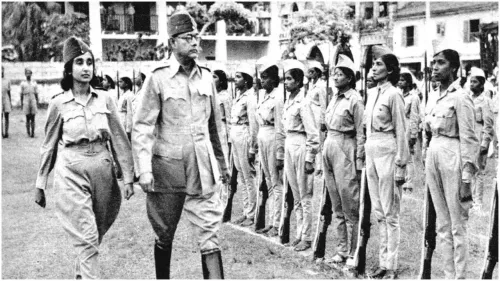
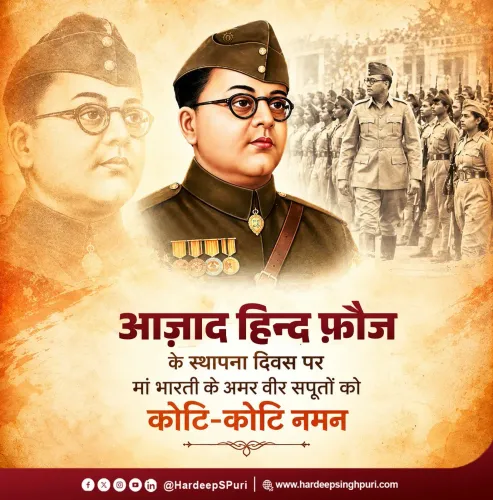
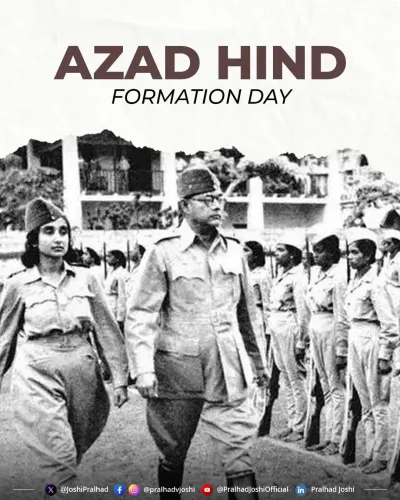
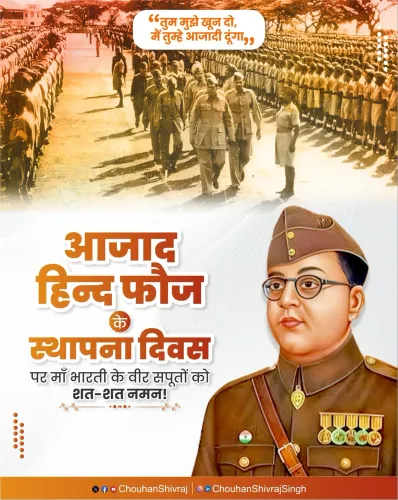
CM Bhajan Lal Sharma Pays Tribute on Azad Hind Fauj Foundation Day
Synopsis
On the 83rd Foundation Day of the Azad Hind Fauj, Rajasthan Chief Minister Bhajan Lal Sharma offered tribute to the INA's martyrs and soldiers, quoting the movement's iconic marching anthem and honouring their sacrifice for India's freedom.
Key Takeaways
21 October 2026 marks the Foundation Day of the Azad Hind Fauj , observed annually across India.
On 21 October 1943 , Netaji Subhas Chandra Bose proclaimed the Provisional Government of Free India in Singapore and reorganised the INA as its army.
Rajasthan CM Bhajan Lal Sharma quoted the INA's marching anthem 'Kadam kadam badhaye ja' in his tribute message on X.
The INA fought British and Allied forces across Southeast Asia and raised the tricolour at Moirang, Manipur in 1944.
BJP governments have consistently highlighted Bose and the INA to broaden India's official freedom-struggle narrative.
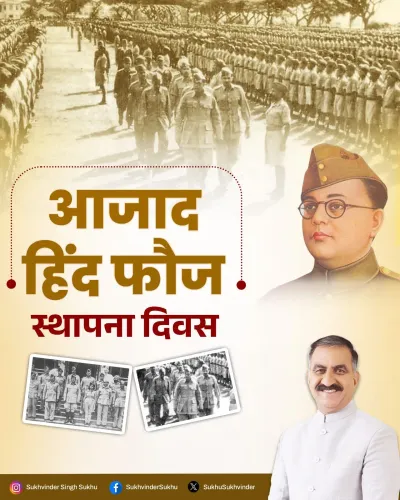
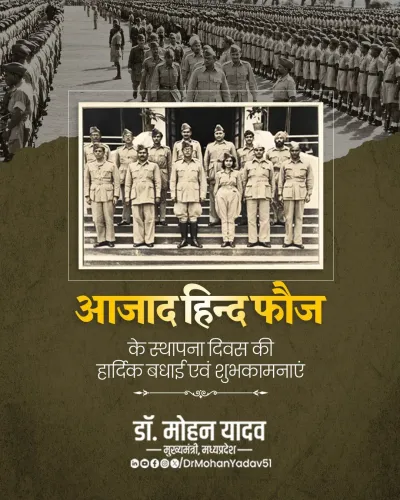
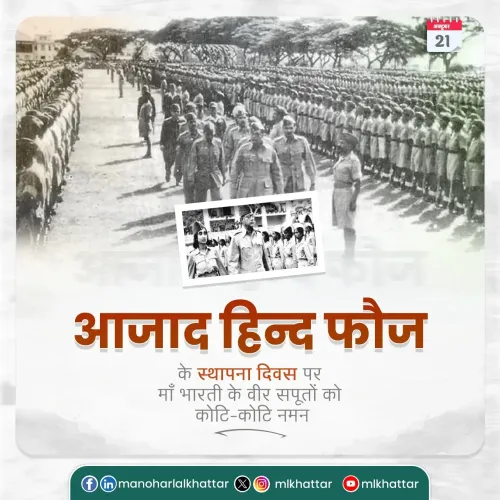
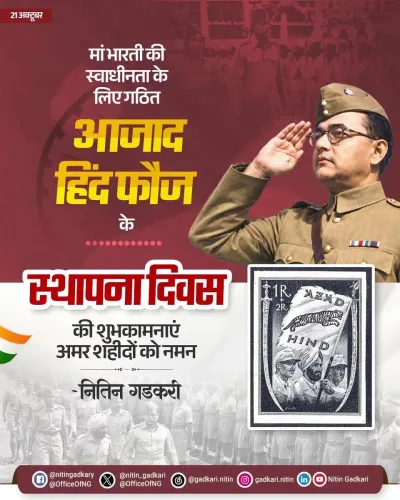
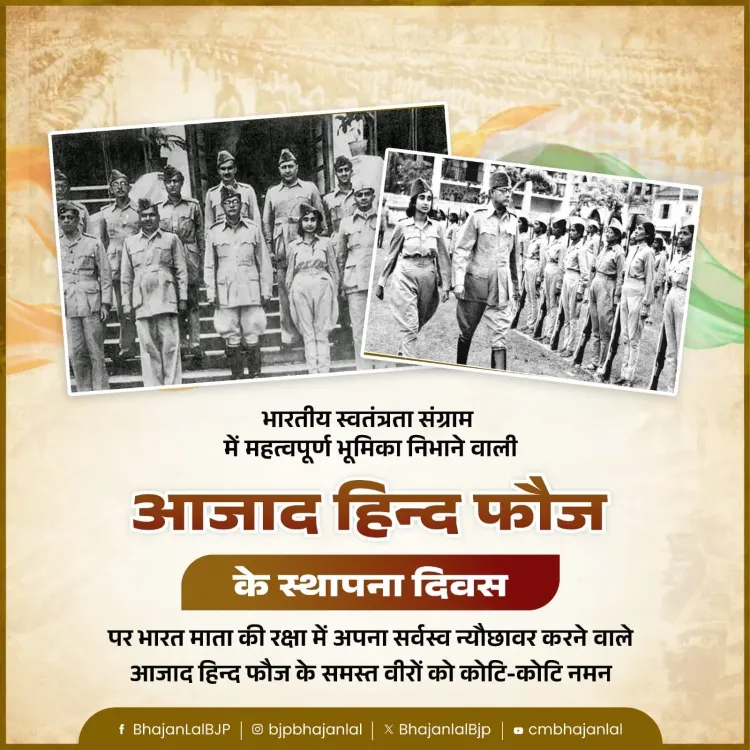
Eighty-three years after Netaji Subhas Chandra Bose raised the flag of a free India on foreign soil, the sacrifices of the Azad Hind Fauj still echo in official memory. Rajasthan Chief Minister Bhajan Lal Sharma on Wednesday, 21 October 2026 paid tribute to the soldiers of the Indian National Army on the Foundation Day of the Azad Hind Fauj, invoking the movement's iconic marching anthem to honour every fighter who gave their all for India's freedom.
Quoting the stirring lines 'Kadam kadam badhaye ja, khushi ke geet gaye ja' ('March on step by step, sing songs of joy'), CM Sharma offered what he called koti-koti naman — a crore-fold salute — to all the 'immortal martyrs and brave soldiers' who consecrated themselves to Ma Bharati ki swadhinta, the independence of Mother India.
The Day That Shook British India: 21 October 1943
On 21 October 1943, Netaji Bose proclaimed the Provisional Government of Free India (Arzi Hukumat-e-Azad Hind) in Singapore and reorganised the Indian National Army — the Azad Hind Fauj — as its armed force. The government was immediately recognised by the Axis powers and declared war on Britain and the United States, marking one of the boldest gestures of defiance in the entire independence movement.
The INA went on to fight British and Allied forces through Southeast Asia and the northeastern frontier of India, planting the tricolour briefly on Indian soil at Moirang in Manipur in 1944. Thousands of soldiers — many of them former prisoners of war — chose the hazardous path of the INA over the comparative safety of British captivity. Their campaign ultimately faltered militarily, but its moral force reverberated across the subcontinent and put the question of armed nationalist resistance squarely on the table.
Why BJP Governments Keep the INA in the Frame
CM Sharma's message is part of a consistent pattern of annual official remembrance — but it carries a particular political texture. BJP governments at the state and central levels have made a deliberate effort to foreground Bose and the INA in India's freedom-struggle narrative, broadening the pantheon of independence heroes beyond the Gandhi-Nehru mainstream long associated with the Congress party.
The Azad Hind Fauj's story — armed, uncompromising, rooted in nationalist fervour — lends itself naturally to that reframing. By leading with the INA's anthem and invoking its martyrs, Sharma places Rajasthan's official voice squarely within that tradition of remembrance on a day that has no new policy announcement, only the weight of history.
Point of View
Uncompromising nationalism on equal ceremonial footing with non-violent resistance. CM Sharma's invocation of the INA anthem is both a genuine act of remembrance and a soft ideological signal, reinforcing which heroes his government chooses to elevate. With no new policy attached, the statement's real work is symbolic: staking a claim on national memory. That contest over whose freedom fighters the republic officially celebrates is one of contemporary India's quieter but most persistent political fault lines.
NationPress
21 Oct 2026
Frequently Asked Questions
When was the Azad Hind Fauj founded?
The Azad Hind Fauj (Indian National Army) was reorganised and formalised on 21 October 1943 , when Netaji Subhas Chandra Bose proclaimed the Provisional Government of Free India in Singapore.
What is the significance of 21 October in Indian history?
21 October 1943 is the day Subhas Chandra Bose established the Provisional Government of Azad Hind and constituted the Azad Hind Fauj as its armed wing, making it one of the most consequential acts of armed nationalist resistance during the independence movement.
What is the INA marching song 'Kadam kadam badhaye ja'?
'Kadam kadam badhaye ja, khushi ke geet gaye ja' — 'March on step by step, sing songs of joy' — was the iconic marching anthem of the Azad Hind Fauj, symbolising the soldiers' resolve and spirit during World War II.
Why do BJP leaders pay tribute to the Azad Hind Fauj?
BJP governments have consistently highlighted Netaji Bose and the INA to broaden the official narrative of India's freedom struggle beyond the Congress-era mainstream, recognising armed nationalist resistance alongside non-violent movements.
What did Bhajan Lal Sharma say on Azad Hind Fauj Foundation Day 2026?
Rajasthan CM Bhajan Lal Sharma quoted the INA's marching anthem and offered a koti-koti naman — a crore-fold salute — to all martyrs and brave soldiers who gave their all for India's independence.