CM Bhajan Lal Sharma Performs Gopashtami Puja at CM Residence
Synopsis
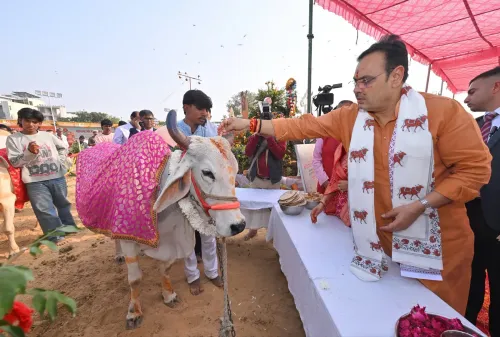
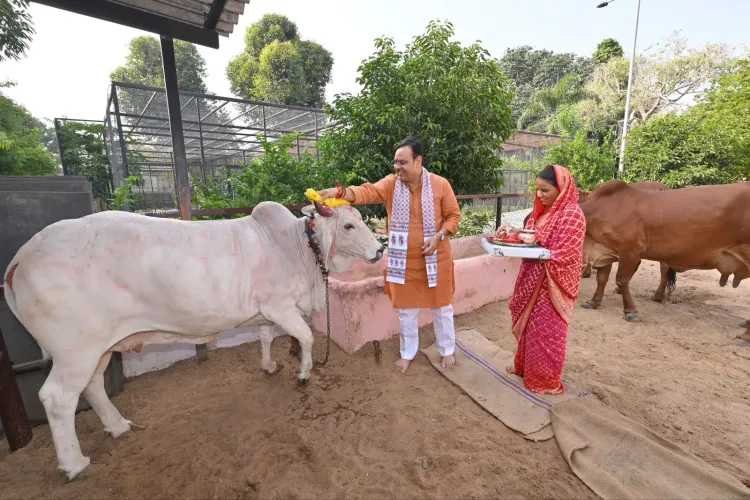
On Gopashtami, Rajasthan CM Bhajan Lal Sharma performed cow worship at his official Jaipur residence, fed jaggery to the cow, and reaffirmed his government's commitment to cow service and protection in Rajasthan.
Key Takeaways
CM Bhajan Lal Sharma performed Gopashtami puja at the Chief Minister's residence in Jaipur on November 17, 2026 .
The ceremony included cow worship and feeding jaggery ( gud ) to the cow, a traditional Gopashtami ritual.
Sharma prayed for the peace, prosperity, and happiness of Rajasthan .
He reaffirmed the government's commitment to gauseva (cow service) and cow protection.
Gopashtami falls on the eighth day of Kartik Shukla Paksha and is dedicated to cow reverence across north India.
Rajasthan maintains a legal ban on cow slaughter under state animal welfare law and Article 48 of the Constitution.
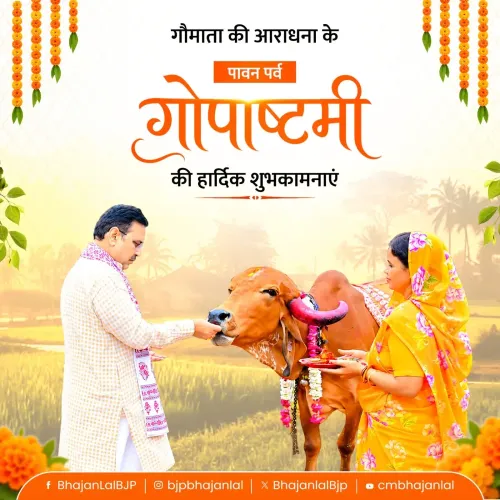
On the auspicious occasion of Gopashtami, Rajasthan Chief Minister Bhajan Lal Sharma marked the festival with a formal cow-worship ceremony at the Chief Minister's residence in Jaipur on Tuesday, November 17, 2026 — feeding jaggery to the cow and praying for the peace and prosperity of the state.
Sharing the moment on X, CM Sharma wrote: 'आज गोपाष्टमी के पावन अवसर पर मुख्यमंत्री निवास पर गौमाता की पूजा-अर्चना कर उन्हें गुड़ खिलाया तथा प्रदेश की सुख-समृद्धि एवं खुशहाली की कामना की।' ('Today, on the holy occasion of Gopashtami, I performed prayers for the cow mother at the Chief Minister's residence, offered her jaggery, and prayed for the happiness and prosperity of the state.') He added that the cow remains an inseparable part of the state's faith, culture, and traditions, and that his government remains 'always committed to cow service and cow protection.'
What Gopashtami Marks — and Why It Resonates in Rajasthan
Gopashtami falls on the eighth day of the bright fortnight of the Hindu month of Kartik and is dedicated to the worship and welfare of cows. The festival is widely observed across north India, with devotees bathing, decorating, and feeding cows as an act of reverence. For Rajasthan — a state with deep pastoral traditions and a large livestock-farming community — the occasion carries both religious and agricultural weight.
Rajasthan maintains a longstanding legal ban on cow slaughter, consistent with the directive principles of Article 48 of the Indian Constitution and state-level animal welfare provisions. Under successive BJP administrations in the state, cow protection has featured as a consistent governance theme alongside cultural messaging.
BJP's Pattern of Festival-Linked Official Ceremonies
CM Sharma, who took office in December 2023, has continued a practice common to BJP-led state governments: marking major Hindu festivals with official ceremonies at the Chief Minister's residence or public sites. These events serve simultaneously as acts of personal faith and as public signals of the administration's cultural priorities.
Cow protection and the upkeep of state-run gaushalas (cow shelters) have remained recurring commitments in Rajasthan's governance statements. Whether the Gopashtami observance translates into concrete budget allocations or new welfare schemes for gaushalas in the upcoming assembly session will be the next measure of the government's stated commitment.
Point of View
Giving such ceremonies a policy anchor beyond ritual. The gesture is especially legible in Rajasthan, where livestock farming intersects with pastoral communities that form a significant part of the BJP's base. The real test of the stated commitment, however, will come in budget allocations for state-run gaushalas — a detail worth watching in the next assembly session.
NationPress
17 Nov 2026
Frequently Asked Questions
What is Gopashtami and when is it celebrated?
Gopashtami is a Hindu festival dedicated to cow worship, observed on the eighth day (Ashtami) of the bright fortnight of the month of Kartik. In 2026 it falls on November 17.
What did Rajasthan CM Bhajan Lal Sharma do on Gopashtami 2026?
CM Bhajan Lal Sharma performed cow-worship rituals at his official residence in Jaipur, offered jaggery to the cow, and prayed for the prosperity and happiness of Rajasthan.
What is Rajasthan's cow protection policy?
Rajasthan maintains a legal ban on cow slaughter consistent with Article 48 of the Indian Constitution and state-level animal welfare laws. The BJP-led government has repeatedly reaffirmed its commitment to gauseva and cow protection.
When did Bhajan Lal Sharma become Chief Minister of Rajasthan?
Bhajan Lal Sharma was sworn in as Chief Minister of Rajasthan in December 2023 after the BJP won the state assembly elections.