CM Himanta lays foundation of Assam's second Sainik School in Karbi Anglong
Synopsis
Chief Minister Himanta Biswa Sarma laid the foundation stone of Assam's second Sainik School at Langvoku, Karbi Anglong, on 17 November 2026. The ₹336 crore Defence Ministry-funded school will cover 44,000 sq m, house 640 cadets, and be built by the State PWD within 30 months.
Key Takeaways
Assam's second Sainik School will be located at Langvoku, Karbi Anglong — a tribal hill district with historically low armed-forces representation.
The project is funded at ₹336 crore by the Ministry of Defence and will be executed by the State PWD .
The campus spans 44,000 square metres and is designed to accommodate 640 cadets in full residential infrastructure.
Construction is targeted for completion within 30 months from the foundation stone laying on 17 November 2026 .
The foundation stone was laid as part of the Grand Silver Jubilee celebrations of Karbi Anglong district.
Assam's first Sainik School, at Goalpara , was established in 1964 — over six decades before this second institution.
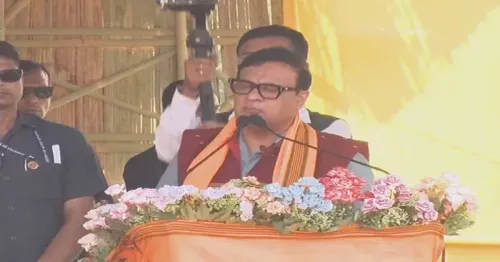
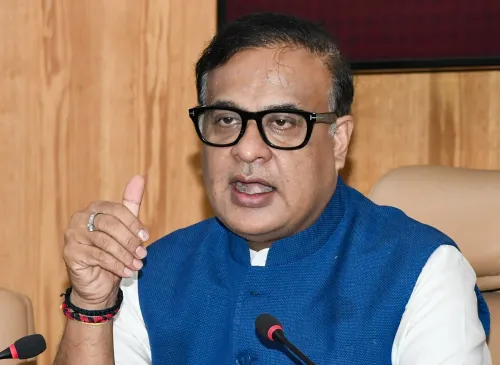
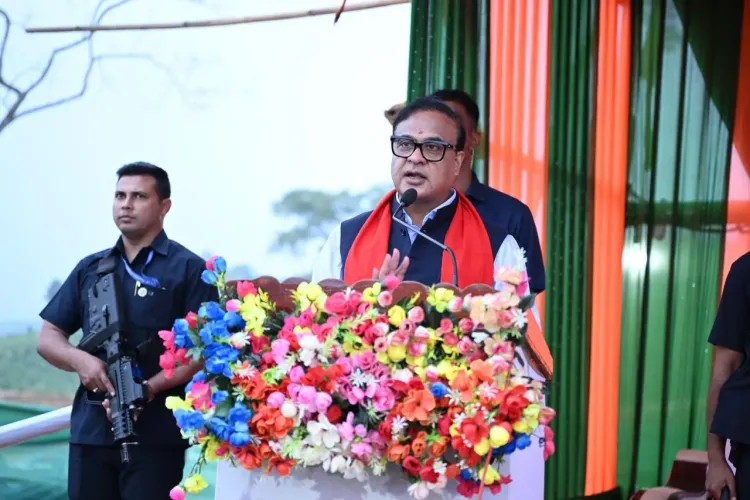
A new chapter opened for Karbi Anglong on Tuesday, 17 November 2026 — the district's Grand Silver Jubilee — as Chief Minister Dr. Himanta Biswa Sarma laid the foundation stone of Assam's second Sainik School at Langvoku, planting a ₹336 crore institution on tribal hill terrain where defence ambitions had long outpaced opportunity.
A ₹336 crore campus on 44,000 sq m — what's being built
The facility will be funded entirely by the Ministry of Defence and executed on the ground by the State Public Works Department, across 44,000 square metres of land at Langvoku. The school is designed to house 640 cadets, giving it the full-scale residential infrastructure — classrooms, hostels, sports grounds, and training facilities — that the Sainik Schools network is known for. The 30-month construction window means the first admissions cycle could open as early as mid-2029, if the timeline holds.
Karbi Anglong's Silver Jubilee and the symbolism of the site
Karbi Anglong, a predominantly tribal hill district in central Assam, was marking its 25th anniversary as a district when CM Sarma chose the occasion to announce the school — a deliberate pairing of civic milestone with long-term investment. The district has historically had lower representation in the armed forces compared to the plains, and a Sainik School here directly addresses that gap. It is a rare alignment of anniversary politics and genuine infrastructure delivery.
From Goalpara 1964 to Langvoku 2026 — Assam's Sainik School arc
Sainik School Goalpara, established in 1964, has been Assam's only such institution for over six decades — a single feeder for a state of more than 35 million people spread across hills, plains, and river islands. The Northeast has long been underrepresented in National Defence Academy entries relative to its population, a gap the central government has acknowledged through its phased expansion of the Sainik Schools Society. Langvoku is part of that national push: central funding, state execution, tribal geography — the template is being replicated across hill districts in several states.
Central-state collaboration and what comes next
The project's funding architecture — Defence Ministry money, State PWD delivery — reflects a model the Centre has increasingly used to accelerate defence education infrastructure without routing everything through a single agency. For Assam, it means no drain on the state exchequer while the CM's office gets visible ownership of the outcome. The real test arrives in 30 months: whether the campus rises on schedule, and when the first cohort of Karbi Anglong's youth steps into uniform.
Sixty-two years after Goalpara, Assam's hill districts are finally getting a Sainik School of their own — the next generation of cadets won't have to travel to the plains to begin their journey toward national service.
Point of View
A region of persistent strategic importance. If the 30-month timeline is met, the school becomes a template other hill-district governments across India will want to replicate.
NationPress
17 Nov 2026
Frequently Asked Questions
Where is Assam's second Sainik School being built?
Assam's second Sainik School will be built at Langvoku in Karbi Anglong district , a tribal hill district in central Assam.
What is the budget for the new Sainik School in Karbi Anglong?
The school has a sanctioned cost of ₹336 crore , funded entirely by the Ministry of Defence .
How many cadets will the Langvoku Sainik School accommodate?
The school is designed to accommodate 640 cadets in a full residential campus spread across 44,000 square metres .
When will the new Sainik School in Assam be completed?
Construction is expected to be completed within 30 months of the foundation stone laying on 17 November 2026 , with the State PWD executing the project.
What is the first Sainik School in Assam?
Sainik School Goalpara is Assam's first such institution, established in 1964 under the Sainik Schools Society.