CM DK Shivakumar Lays Foundation for ₹2,000 Cr Bengaluru Flood Works

Synopsis
Chief Minister DK Shivakumar laid the foundation stone for ₹2,000 crore stormwater drain and flood-management works under the Greater Bengaluru Authority at Gunjur, Mahadevapura on 17 November 2026, under the World Bank-assisted Karnataka Water Security and Disaster Resilience Program.
Key Takeaways
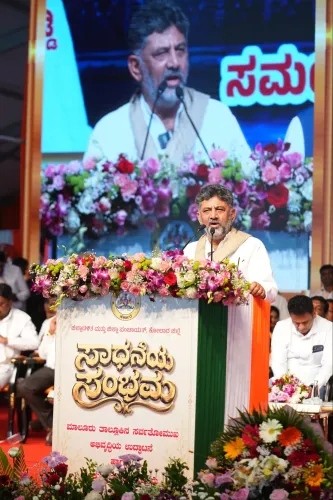
Chief Minister DK Shivakumar laid the foundation stone on 17 November 2026 at Atal Bihari Vajpayee Ground, Gunjur, Mahadevapura .
The project is valued at ₹2,000 crore and covers stormwater drains and flood-management infrastructure across the Greater Bengaluru Authority (GBA) jurisdiction.
Funding comes under the Karnataka Water Security and Disaster Resilience Program , backed by the World Bank .
Bengaluru Urban Development Minister Krishna Byre Gowda and GBA Commissioner Maheshwar Rao were among senior officials present at the launch.
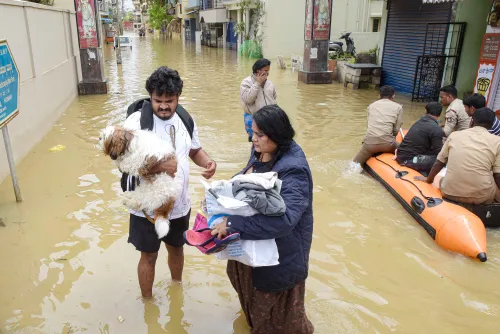
The project is intended to address recurrent monsoon flooding in Bengaluru, most acutely felt in areas like Mahadevapura , exacerbated by rapid urbanisation and drainage deficiencies.
Every monsoon, large swathes of Bengaluru go under — and on Tuesday, 17 November 2026, the government moved to change that. The Chief Minister's Office of Karnataka announced that Chief Minister Sri D.K. Shivakumar laid the foundation stone for ₹2,000 crore worth of stormwater drain and flood-management works under the Greater Bengaluru Authority (GBA), at the Atal Bihari Vajpayee Ground in Gunjur, Mahadevapura.
A World Bank-Backed Bet on Bengaluru's Drainage Crisis
The projects fall under the Karnataka Water Security and Disaster Resilience Program, a World Bank-assisted initiative designed to improve water management and disaster preparedness across the state. The choice of Mahadevapura — an eastern Bengaluru constituency that has repeatedly borne the brunt of monsoon inundation — as the launch venue is pointed: it is among the city's most flood-vulnerable zones, where unplanned urbanisation and choked drains have turned seasonal rains into annual crises.
According to the official post, the works will 'provide relief from monsoon flooding while strengthening Bengaluru's infrastructure for the safety and smooth lives of citizens.' The ₹2,000 crore outlay will fund stormwater drain construction and flood-management development works across the GBA's jurisdiction — a metropolitan footprint that extends well beyond the old BBMP boundaries.
Who Was in the Room — and Why It Matters
The ceremony drew a cross-section of Bengaluru's governing establishment. Bengaluru Urban Development Minister Sri Krishna Byre Gowda, Rajya Sabha MP Sri Mansoor Ali Khan, MLA Smt. Manjula Arvind Limbavali, MLC Sri A.P. Ranganath, former Minister Sri H. Nagesh, and GBA Commissioner Sri Maheshwar Rao were all present. That combination of elected representatives and GBA's top administrative officer signals the state's intent to push this project through the full implementation chain — from political endorsement down to on-ground execution.
The Flood History That Made This Project Inevitable
Bengaluru's flood problem is not new, but its scale has grown sharply. The 2022 monsoon season triggered one of the city's worst flooding episodes in decades, inundating IT corridors, residential layouts and arterial roads alike — exposing decades of lake encroachment, inadequate stormwater infrastructure and the city's failure to keep pace with explosive population growth. That crisis accelerated Karnataka's push for a large-scale, externally funded drainage overhaul, with World Bank financing eventually locking in under the statewide water security and resilience programme.
Bengaluru now generates roughly ₹1 lakh crore in annual GST and anchors India's technology export economy. A city that floods every July is a liability the state — and the nation — can no longer absorb quietly.
What Needs to Happen Next
Foundation stones are, famously, easier to lay than drains to build. The real test for this ₹2,000 crore programme will be tendering timelines, contractor mobilisation, and whether physical progress is visible before the 2027 monsoon arrives. The GBA's ability to coordinate across multiple civic jurisdictions — itself a relatively recent institutional experiment — will also be on trial. For Mahadevapura residents who have sandbagged their doorways three monsoons running, the numbers on a signboard matter far less than dry roads in July.
Point of View
000 crore foundation-laying fits into a decade-long pattern of Karnataka governments responding to Bengaluru's flood crisis with large capital outlays — the difference this time is the World Bank's institutional backing, which typically demands more rigorous project design and outcome monitoring than purely state-funded schemes. Launching the event in Mahadevapura, a bellwether constituency for urban infrastructure grievances, carries obvious political logic ahead of future electoral cycles. The creation of the Greater Bengaluru Authority as the implementing agency also tests whether a newer, broader governance body can deliver where BBMP repeatedly struggled. If the works visibly reduce flooding by 2027-28, it becomes a powerful governance-dividend narrative; if they stall, it reinforces longstanding scepticism about Bengaluru's infrastructure promises.
NationPress
17 Nov 2026
Frequently Asked Questions
What is the ₹2,000 crore Bengaluru flood project launched by DK Shivakumar?
It is a stormwater drain and flood-management development project worth ₹2,000 crore under the Greater Bengaluru Authority, funded through the World Bank-assisted Karnataka Water Security and Disaster Resilience Program. The foundation stone was laid on 17 November 2026 at Gunjur, Mahadevapura.
What is the Karnataka Water Security and Disaster Resilience Program?
It is a World Bank-assisted state government initiative aimed at improving water management and disaster preparedness across Karnataka, including large-scale urban drainage and flood-resilience infrastructure in Bengaluru.
Why does Bengaluru face such severe flooding every monsoon?
Bengaluru's flooding is driven by rapid, often unplanned urbanisation, encroachment on natural lakes and drainage channels, and stormwater infrastructure that has not kept pace with the city's population growth — problems that worsened significantly through the 2010s and triggered a severe crisis during the 2022 monsoon.
What is the Greater Bengaluru Authority (GBA)?
The GBA is a civic body overseeing urban planning, infrastructure and development across the broader Bengaluru metropolitan region, with a jurisdiction that extends beyond the older BBMP boundaries.
Which areas of Bengaluru will benefit from these flood-management works?
The works cover the entire GBA jurisdiction, with the launch held in Mahadevapura — one of eastern Bengaluru's most flood-prone constituencies — signalling priority attention to the city's most inundation-affected zones.