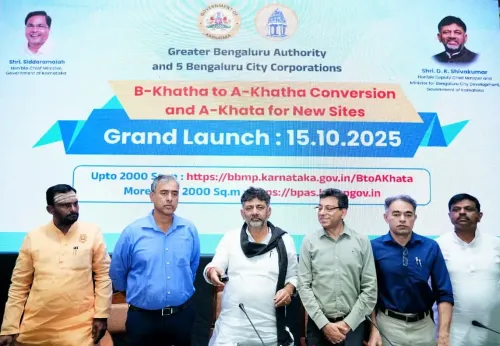
Karnataka CM's Office: BDA Announces 4 Measures for Bengaluru
Synopsis
The Bangalore Development Authority has announced four relief measures — house regularisation, incentive sites, marginal land allotment and an Absolute Sale Deed Mela — aimed at benefiting around 20,000 allottees and easing long-standing property documentation backlogs in Bengaluru.
Key Takeaways
The BDA has announced four measures covering house regularisation, incentive sites for landowners, marginal land allotment and an Absolute Sale Deed Mela.
Approximately 20,000 BDA allottees in Bengaluru are expected to benefit from the package.
The Absolute Sale Deed Mela is a time-bound camp to help allottees execute long-pending property documentation in one place.
The announcement fits into Karnataka's recurring pattern of BDA procedural reform, tracing back to the Akrama-Sakrama scheme first notified in 2013 .
Formal BDA notifications detailing eligibility criteria and the mela schedule are still awaited.
Bengaluru's relentless growth has long outpaced the paperwork meant to govern it — and on Monday, 9 November 2026, the Chief Minister's Office of Karnataka announced that the Bangalore Development Authority (BDA) is stepping in with four targeted measures designed to bring relief to an estimated 20,000 allottees across the city.
Four Measures, One Goal: Cutting Through the BDA Backlog
The package covers four distinct fronts: the regularisation of eligible houses, the offer of incentive sites for landowners, the allotment of adjoining marginal land, and a dedicated Absolute Sale Deed Mela — a one-stop drive to push through long-pending sale deed documentation for allottees. Together, the measures are framed as an effort to 'simplify processes, provide relief to citizens and make BDA services more accessible.'
For thousands of Bengaluru residents, the sale deed and marginal land questions are not abstract bureaucratic categories — they represent years of limbo on property titles that banks, courts and municipal offices require before anything else can move.
The BDA's Long-Running Land Tangle
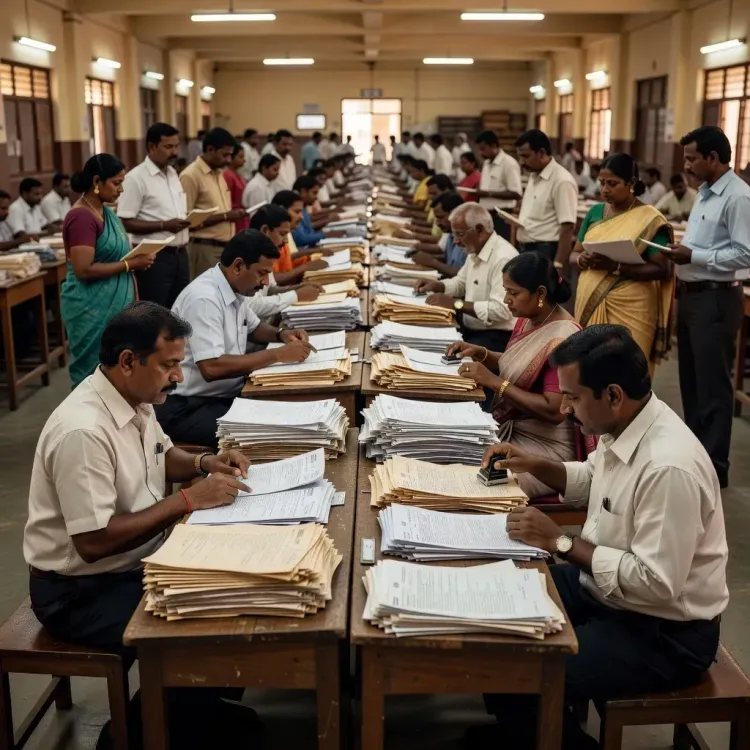
The Bangalore Development Authority is the statutory body responsible for planning, land acquisition and housing layouts across Bengaluru, India's largest IT hub. Rapid urbanisation has placed the authority under sustained pressure, generating a backlog of unresolved title questions, marginal plot disputes and unexecuted sale deeds that have piled up over decades.
Karnataka has periodically attempted to clear this backlog through administrative drives. The state's Akrama-Sakrama regularisation scheme, first notified in 2013, sought to legalise certain unauthorised constructions under BDA and local planning authorities; it has been extended and revisited multiple times since. Monday's announcement fits squarely into that lineage — incremental administrative easing rather than wholesale legislative reform.
What the Absolute Sale Deed Mela Signals
The 'Mela' format — a camp-style, time-bound event for citizens to execute documents in one place — has become a recognisable instrument in Karnataka's governance toolkit for reaching layout allottees who might otherwise never navigate the BDA's regular office channels. For the roughly 20,000 allottees the government says will benefit, the mela represents a rare window to convert long-held possession into documented ownership.
The specifics — eligibility cut-offs, application windows and the confirmed mela schedule — are yet to be detailed in formal BDA notifications. Those documents will determine whether the announced relief translates into tangible change on the ground, or becomes another deferred promise in the city's dense land-records archive.
Bengaluru's development story has always been one of speed versus system. The question now is whether this round of BDA reform moves fast enough to match the city it is meant to serve.
Point of View
But the real test will come when formal eligibility criteria are published — previous regularisation drives have often narrowed in scope once details emerged. The 20,000-beneficiary figure is politically significant in a city that is both Karnataka's economic engine and an increasingly mobilised electoral constituency. Whether these measures meaningfully advance Bengaluru's land-records modernisation or serve primarily as a signal of responsiveness will depend on the follow-through visible in formal BDA notifications over the coming weeks.
NationPress
9 Nov 2026
Frequently Asked Questions
What are the four BDA measures announced for Bengaluru?
The BDA has announced regularisation of eligible houses, incentive sites for landowners, allotment of adjoining marginal land, and a special Absolute Sale Deed Mela to help around 20,000 allottees complete long-pending property documentation.
What is the BDA Absolute Sale Deed Mela?
The Absolute Sale Deed Mela is a camp-style, time-bound event organised by the Bangalore Development Authority where eligible allottees can execute their sale deed documents in one place, cutting through the usual bureaucratic delays at BDA offices.
How many people will benefit from the new BDA measures?
The Chief Minister's Office of Karnataka states that around 20,000 BDA allottees are expected to benefit from the four announced measures.
What is the BDA's role in Bengaluru?
The Bangalore Development Authority is the statutory body responsible for urban planning, land acquisition and housing layout development across Bengaluru, Karnataka's capital and India's largest IT hub.
Is this BDA regularisation related to the Akrama-Sakrama scheme?
The new BDA house regularisation measure follows a similar logic to Karnataka's Akrama-Sakrama scheme, first notified in 2013, which sought to legalise certain unauthorised constructions. Monday's measures are part of a broader pattern of incremental administrative reform rather than a new legislative initiative.