Karnataka CM Office holds live consultation on Apartment Bill 2026

Synopsis
The Chief Minister's Office of Karnataka on 15 July 2026 held a live public consultation with apartment association representatives on the proposed Karnataka Apartment (Ownership and Management) Bill, 2026, signalling a participatory approach to the draft legislation that could reshape housing governance across the state.
Key Takeaways
The Chief Minister's Office of Karnataka conducted a live interactive session on 15 July 2026 with apartment association representatives.
The session focused on the proposed Karnataka Apartment (Ownership and Management) Bill, 2026 .
The consultation was broadcast publicly via a live stream, reflecting a participatory pre-legislative process.
The bill is intended to govern ownership rights, maintenance responsibilities, and management of multi-unit residential complexes in Karnataka.
Karnataka's move follows similar apartment ownership law updates in Maharashtra , Tamil Nadu , and Delhi .
Key next steps include introduction of the bill in the Karnataka legislature and notification of model bye-laws for associations.
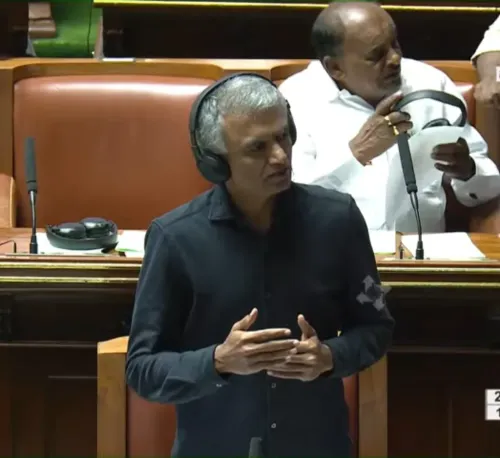
The Chief Minister's Office of Karnataka on Wednesday, 15 July 2026, announced a live interactive session with representatives of apartment associations across the state to discuss the proposed Karnataka Apartment (Ownership and Management) Bill, 2026. The session was streamed live, signalling the government's intent to gather stakeholder feedback before the legislation moves forward.
Context
The post, shared in Kannada, reads: 'LIVE NOW: ಕರ್ನಾಟಕ ಅಪಾರ್ಟ್ಮೆಂಟ್(ಮಾಲೀಕತ್ವ ಮತ್ತು ನಿರ್ವಹಣೆ) ವಿಧೇಯಕ-2026' — translated: 'Live now: Dialogue programme with representatives of apartment associations regarding the Karnataka Apartment (Ownership and Management) Bill, 2026.' The government chose to broadcast the consultation publicly, underlining a participatory approach to the draft legislation.
Apartment associations — resident welfare bodies representing flat owners in multi-unit residential complexes — are among the primary stakeholders expected to be most directly affected by the proposed law. Bengaluru, as one of India's fastest-growing urban centres, hosts thousands of such complexes, making the bill particularly consequential for the city's residents.
Policy Backdrop
The proposed bill sits alongside the central Real Estate (Regulation and Development) Act, 2016 (RERA), which established mandatory project registration and escrow accounts for apartment sales across India. While RERA governs the pre-sale and construction phase, state-level apartment ownership statutes typically address post-possession matters — maintenance responsibilities, common-area rights, corpus fund management, and dispute resolution between residents and builders.
Karnataka's move in 2026 follows similar legislative exercises undertaken by Maharashtra, Tamil Nadu, and Delhi, all of which have updated their apartment ownership frameworks in recent years to reduce litigation over builder handovers and society governance. The pattern reflects a broader national effort to fill regulatory gaps that RERA alone does not address.
Stakeholders and Impact
The consultation directly involves representatives of apartment owners associations — bodies that manage day-to-day affairs of residential complexes, collect maintenance charges, and liaise with developers over common infrastructure. Any new law governing ownership and management would redefine their legal standing, powers, and accountability mechanisms.
Real estate developers are also key stakeholders, as provisions around handover of common areas, corpus fund transfers, and builder liability are typically contested points in such legislation. Residents in cities like Bengaluru, Mysuru, and Hubballi-Dharwad stand to gain clearer legal recourse for disputes that currently drag through consumer forums and civil courts.
What's Next
The live consultation is a pre-legislative step; the bill's introduction in the Karnataka legislature and subsequent notification of model bye-laws for associations remain the key milestones to watch. Feedback gathered from apartment association representatives during sessions like this typically informs final drafting before a bill is tabled.
If passed, the Karnataka Apartment (Ownership and Management) Bill, 2026 could set a template for how Indian states modernise apartment governance frameworks in tandem with RERA, potentially influencing similar efforts in other states still operating on older statutes.
Point of View
Live-streamed consultation on the Apartment (Ownership and Management) Bill, 2026 is a deliberate signal of inclusive policymaking at a time when urban housing governance has become politically salient. With Bengaluru's apartment-dwelling electorate growing rapidly, engaging resident welfare associations before tabling legislation reduces the risk of post-enactment litigation and public backlash. This approach mirrors a broader national trend of states using pre-legislative consultations to build consensus on urban property laws that sit in the gaps left by central RERA. How faithfully the final bill reflects the associations' inputs will be the real test of this participatory exercise.
NationPress
13 Oct 2026
Frequently Asked Questions
What is the Karnataka Apartment Ownership and Management Bill 2026?
The Karnataka Apartment (Ownership and Management) Bill, 2026 is a proposed state law aimed at governing the ownership rights, maintenance responsibilities, and management structures of multi-unit residential apartment complexes in Karnataka.
How does the Karnataka apartment bill differ from RERA?
The central RERA framework primarily covers the pre-sale and construction phase of real estate projects, while the Karnataka Apartment Bill, 2026 is expected to address post-possession issues such as common-area rights, corpus fund management, and dispute resolution between residents and builders.
Who are the stakeholders in the Karnataka Apartment Bill 2026?
The primary stakeholders include apartment owners associations (resident welfare bodies), flat owners in multi-unit complexes, and real estate developers. The bill is especially significant for residents of large cities like Bengaluru, Mysuru, and Hubballi-Dharwad.
Why is Karnataka introducing a new apartment management law?
Karnataka is updating its apartment governance framework to fill regulatory gaps not covered by central RERA, reduce litigation over builder handovers and corpus funds, and align with similar legislative exercises already undertaken by Maharashtra, Tamil Nadu, and Delhi.
What happens after the Karnataka apartment association consultation?
Feedback from the live consultation with apartment association representatives is expected to inform the final drafting of the bill, which must then be introduced and passed in the Karnataka legislature before model bye-laws for associations are notified.