Telangana CM Revanth Reddy meets Chhattisgarh CM for Sammakka Sagar NOC
Synopsis
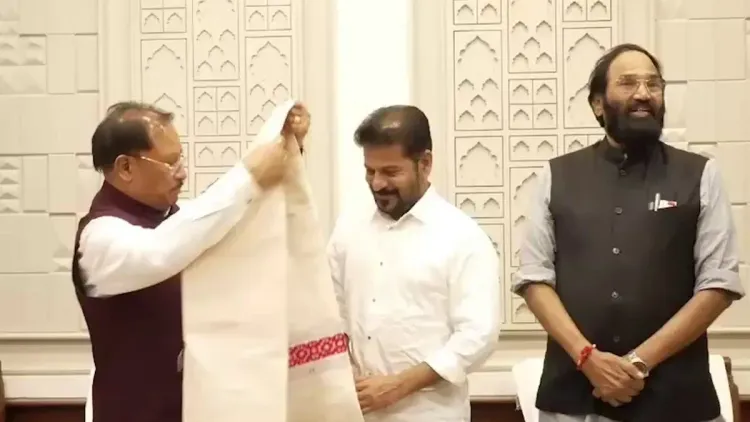
Telangana CM A. Revanth Reddy and Irrigation Minister N. Uttam Kumar Reddy met Chhattisgarh CM Vishnu Deo Sai in Raipur on 17 November 2026, urging an early NOC for the completed 6.94 TMC Sammakka Sagar Barrage at Tupakulagudem, Mulugu. Sai assured early action.
Key Takeaways
Revanth Reddy and Irrigation Minister N.
Uttam Kumar Reddy met Chhattisgarh CM Vishnu Deo Sai in Raipur on 17 November 2026 .
The meeting sought a statutory NOC for the Sammakka Sagar Barrage at Tupakulagudem, Mulugu district , a completed 6.94 TMC structure on the Godavari.
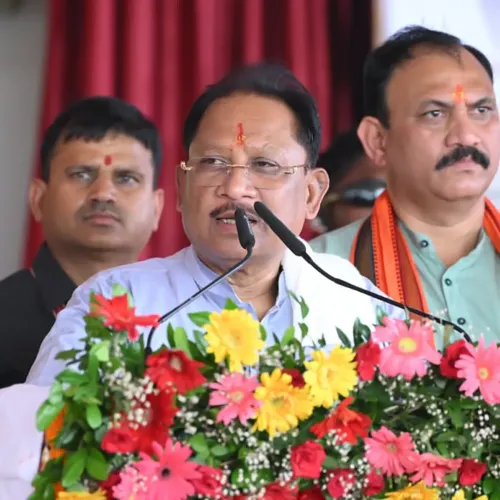
CM Vishnu Deo Sai responded positively and assured early action on the NOC and other clearances.
Telangana has offered to compensate Chhattisgarh landholders affected by the barrage's submergence zone.
The barrage, once cleared, will serve irrigation and drinking water needs in the drought-prone, tribal-majority Mulugu belt.
The visit is part of a continuing pattern of Telangana–Chhattisgarh inter-state coordination on Godavari basin water infrastructure following the 2014 bifurcation .
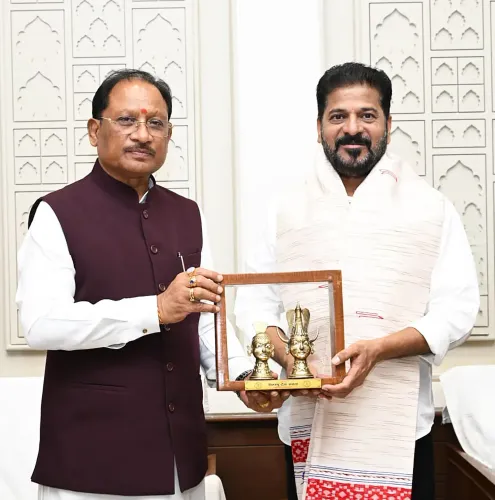
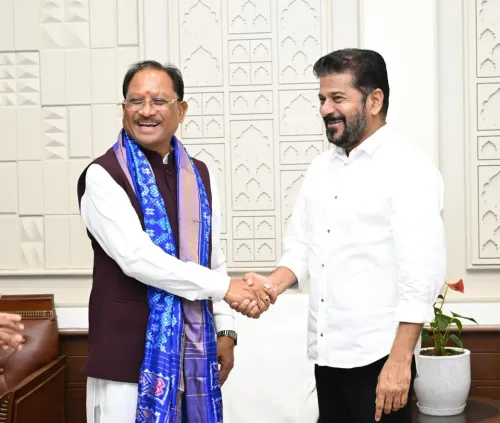
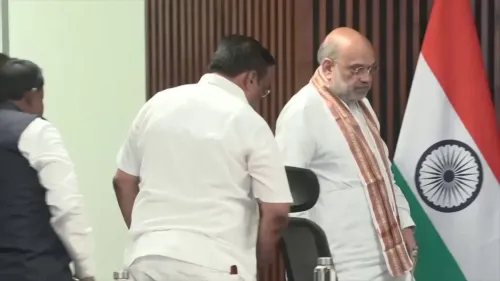
A completed barrage sitting silent for want of a signature — that is the pinch point Telangana Chief Minister A. Revanth Reddy flew to Raipur on Tuesday, 17 November 2026 to resolve, meeting Chhattisgarh Chief Minister Vishnu Deo Sai and personally urging him to fast-track the No-Objection Certificate for the Sammakka Sagar Barrage at Tupakulagudem, Mulugu district.
What the barrage promises — and what is holding it back
The 6.94 TMC Sammakka Sagar Barrage straddles the Godavari River and was built to deliver irrigation and drinking water to the drought-prone, tribal heartland of Mulugu district. The structure is complete. What it still lacks is the statutory NOC from Chhattisgarh — the upstream state whose territory the Godavari also passes through — without which the project cannot be formally operationalised.
Irrigation Minister N. Uttam Kumar Reddy accompanied CM Revanth Reddy to the Raipur meeting, signalling that Telangana is treating the clearance as an urgent infrastructure priority rather than a routine diplomatic courtesy. Telangana has also placed a concrete offer on the table: full compensation for any land parcels in Chhattisgarh affected by the barrage's backwaters.
Vishnu Deo Sai's positive response — and what it means in practice
Chhattisgarh CM Vishnu Deo Sai responded 'positively' and 'assured early action,' according to the Chief Minister's Office of Telangana. In the language of inter-state water diplomacy, that is a meaningful step — a public assurance by the upstream CM creates political accountability to follow through. The two states now face a narrower, more defined task: converting that assurance into formal NOC documentation and any linked environmental clearances.
Shared river basins like the Godavari routinely require exactly this kind of high-level engagement. After the 2014 bifurcation of Andhra Pradesh, Telangana accelerated multiple Godavari basin irrigation schemes to address regional water deficits — but each project that reaches across a state boundary requires upstream sign-off, making these bilateral meetings a recurring feature of Telangana's water infrastructure calendar.
Who stands to gain in Mulugu's tribal belt
Mulugu district is a tribal-majority region that has historically struggled with both drought and drinking-water scarcity. The Sammakka Sagar Barrage was conceived specifically to address those twin deficits — its namesake, Sammakka, is a revered tribal deity whose annual jatara (festival) draws millions to this very landscape. Unlocking the barrage's storage would give farmers assured irrigation water and give communities a reliable domestic supply through dry seasons when rain fails.
Farmers and tribal households in the district are the most direct beneficiaries, but the land-compensation offer also matters to Chhattisgarh landholders whose fields may fall within the submergence zone — Telangana's readiness to settle those claims removes one of the more common friction points in inter-state water negotiations.
The clearance clock starts now
With CM Sai's positive response on record, the spotlight shifts to the bureaucratic machinery: when will Chhattisgarh issue the formal NOC, and how quickly can the linked statutory clearances follow? Revanth Reddy's public appeal 'in the larger public interest' frames delay as a cost borne by vulnerable communities — a framing that keeps pressure on both administrations to move fast.
A barrage built, compensations offered, and an assurance given: the last mile is paperwork — but in Indian water infrastructure, that last mile has often been the longest.
Point of View
Telangana signals this is a governance priority, not a bureaucratic errand. Vishnu Deo Sai's public assurance, while encouraging, also sets a political clock — if the NOC stalls, Telangana can point to a broken commitment. The land-compensation offer further narrows Chhattisgarh's grounds for delay, suggesting Hyderabad has prepared this push carefully.
NationPress
17 Nov 2026
Frequently Asked Questions
What is the Sammakka Sagar Barrage and where is it located?
The Sammakka Sagar Barrage is a 6.94 TMC water storage structure built on the Godavari River at Tupakulagudem in Mulugu district , Telangana. It is designed to meet irrigation and drinking water needs in the drought-prone, tribal-majority region.
Why does Telangana need an NOC from Chhattisgarh for a barrage in Telangana?
Because the Godavari River is an inter-state river flowing through both Chhattisgarh and Telangana, any structure whose backwaters could affect the upstream state requires a statutory No-Objection Certificate from that state before the project can be formally operationalised.
What was the outcome of Revanth Reddy's meeting with Vishnu Deo Sai in Raipur?
Chhattisgarh CM Vishnu Deo Sai responded positively to the request and assured 'early action' on issuing the NOC and other statutory clearances for the Sammakka Sagar Barrage .
How will Telangana compensate Chhattisgarh for land affected by the barrage?
Telangana has stated it is ready to provide monetary compensation for land parcels in Chhattisgarh that fall within the submergence zone of the Sammakka Sagar Barrage , removing a key friction point in the negotiations.
Who benefits from the Sammakka Sagar Barrage project?
The primary beneficiaries are farmers and tribal communities in Mulugu district , Telangana — a drought-prone, tribal-majority area that the barrage is designed to supply with both irrigation water and reliable drinking water.