Nadda shares President Murmu's call for stronger ICMR malaria push
Synopsis
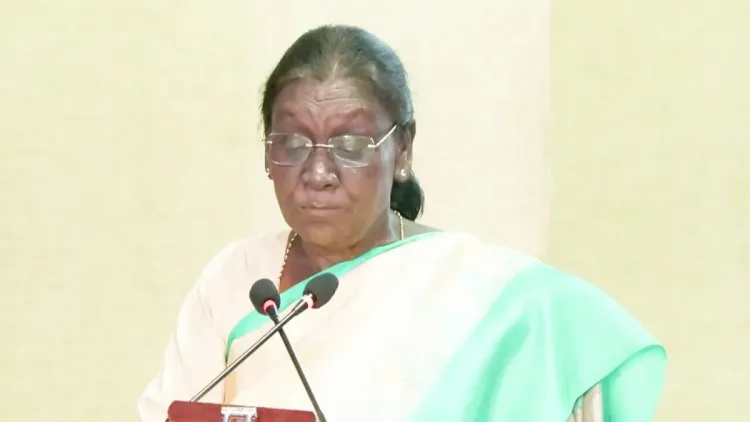
President Draupadi Murmu praised ICMR's contribution to an indigenous malaria vaccine being developed in Bhubaneswar and urged the council to expand its work on dengue, as Union Health Minister J. P. Nadda amplified the remarks in the context of India's 2030 malaria elimination goal.
Key Takeaways
Union Health Minister J.
Nadda shared President Draupadi Murmu's statement on November 17, 2026 praising ICMR 's disease-research record.
The National Institute of Malaria Research has contributed to an indigenous malaria vaccine under development at the National Institute of Health Research, Bhubaneswar .
India's National Framework for Malaria Elimination 2016–2030 targets zero indigenous malaria cases by 2030 .
ICMR has previously contributed to national programmes against TB, leprosy, kala-azar and COVID-19 .
President Murmu called on ICMR to now play an 'effective role' in diagnosing and controlling dengue .
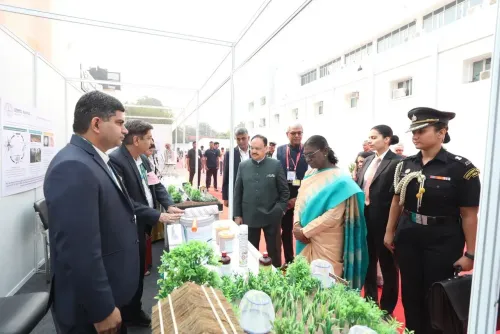
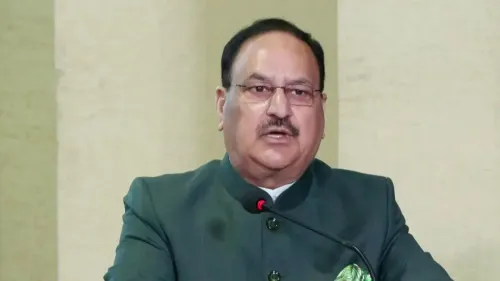
India's drive to eliminate malaria by 2030 got a presidential endorsement on Tuesday, November 17, 2026, as Union Health Minister J. P. Nadda amplified remarks by President Draupadi Murmu crediting ICMR for anchoring the country's fight against its most stubborn infectious diseases — and urging the council to take on dengue next.
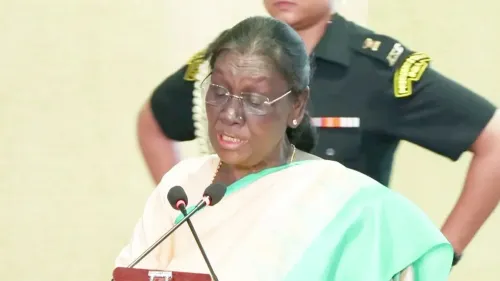
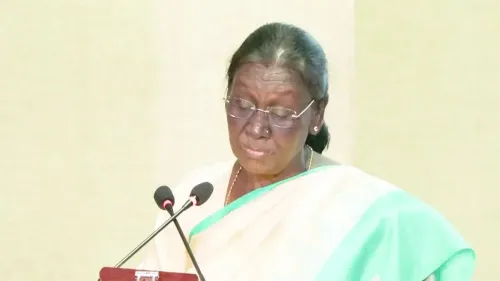
Sharing the President's statement on X, Nadda quoted Rashtrapati Bhavan as saying: 'The National Institute of Malaria Research has contributed to the development of an indigenous malaria vaccine being developed by the National Institute of Health Research, Bhubaneswar. This will strengthen the Malaria Elimination Mission. ICMR has made significant contributions against TB, leprosy, kala-azar and COVID-19. I am confident the institute will also play an effective role in the diagnosis and control of diseases like dengue.'What the indigenous malaria vaccine means for India's 2030 target
India's National Framework for Malaria Elimination 2016–2030 set a hard deadline: zero indigenous cases by the end of the decade. Progress has been real but uneven — the country still carries a significant share of South-East Asia's malaria burden, with transmission hotspots concentrated in Odisha, Jharkhand, Chhattisgarh and parts of the northeast.
An indigenously developed vaccine, if it clears clinical trials, would shift that calculus dramatically. It would reduce dependence on imported immunisation tools, cut procurement costs, and — critically — allow India to calibrate the product to the specific Plasmodium strains most prevalent on the subcontinent. The involvement of the National Institute of Health Research in Bhubaneswar — located at the heart of one of the country's highest-burden states, Odisha — also signals that the science is being done close to the ground-level problem.
ICMR's track record: from leprosy to COVID-19
ICMR, the apex biomedical research body under the Ministry of Health and Family Welfare, has been the backbone of India's elimination programmes for decades. Its institutes contributed surveillance tools, diagnostics and drug-efficacy data to the national campaigns against tuberculosis, leprosy, and kala-azar — three diseases India has officially targeted for elimination. During the COVID-19 pandemic, ICMR was at the centre of test-kit validation, sero-survey design and domestic vaccine co-development.
President Murmu's remarks place dengue as the next frontier. Unlike malaria or kala-azar, dengue has no nationally deployed vaccine in India, and the country reports among the highest dengue caseloads in the world every monsoon season. A direct presidential call for ICMR to sharpen its diagnostics and control tools for the disease is a signal the government wants institutional bandwidth directed there.
The Health Minister's amplification — and what it signals politically
J. P. Nadda, who holds charge of both the Ministry of Health and Family Welfare and the Ministry of Chemicals and Fertilizers, sharing the President's statement underlines the alignment between Rashtrapati Bhavan and the Union government on the public-health agenda. It is also a reaffirmation of the broader 'Aatmanirbhar Bharat' logic applied to vaccine science: build it here, test it here, deploy it here.
The post arrives as India heads deeper into the second half of its malaria-elimination timeline, with roughly four years remaining before the 2030 deadline. Indigenous vaccine development, expanded ICMR mandates for vector-borne diseases, and sustained investment in institutes like the one in Bhubaneswar will all be tested against that clock.
Four years is not a long runway. And the President just made sure everyone knows it.
Point of View
Amplified by the Health Minister, reflect a deliberate institutional signalling: ICMR is being positioned as the centrepiece of India's communicable-disease self-reliance strategy, not just a research body. Placing the malaria vaccine story alongside dengue and historical eliminations (TB, leprosy, kala-azar) constructs a narrative of sequential victories, building political and public confidence ahead of the demanding 2030 malaria deadline. For Nadda, sharing the President's voice adds constitutional weight to what is essentially a ministerial portfolio priority. The Bhubaneswar location is significant — Odisha is endemic-ground-zero for malaria in India, and anchoring vaccine science there is both operationally logical and politically meaningful for the ruling coalition.
NationPress
17 Nov 2026
Frequently Asked Questions
What is India's indigenous malaria vaccine and who is developing it?
An indigenous malaria vaccine is being developed by the National Institute of Health Research in Bhubaneswar , with the National Institute of Malaria Research (an ICMR institute) contributing to its development. Specific trial-stage details have not been officially confirmed.
What is India's Malaria Elimination Mission?
India's Malaria Elimination Mission operates under the National Framework for Malaria Elimination 2016–2030 , which targets zero indigenous malaria cases across the country by 2030 .
What diseases has ICMR helped fight in India?
ICMR has contributed significantly to national programmes against tuberculosis (TB), leprosy, kala-azar , and COVID-19 , and has been called upon to expand its role in dengue control and diagnostics.
Why did J. P. Nadda share President Murmu's statement on ICMR?
Union Health Minister J. P. Nadda shared President Murmu's remarks to highlight the government's public-health research agenda, underscore ICMR's institutional contributions, and reinforce India's commitment to indigenous vaccine development and disease elimination.
What is ICMR's role in India's public health system?
ICMR (Indian Council of Medical Research) is the apex body under the Ministry of Health and Family Welfare for coordinating biomedical research in India, running specialised institutes and supporting national disease-control and elimination programmes.