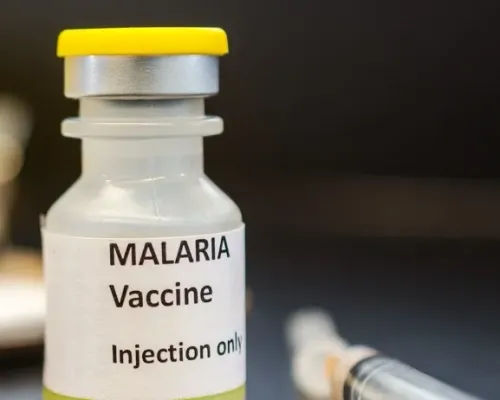
Nadda hails ICMR-NIMR on 50 years of malaria research
Synopsis
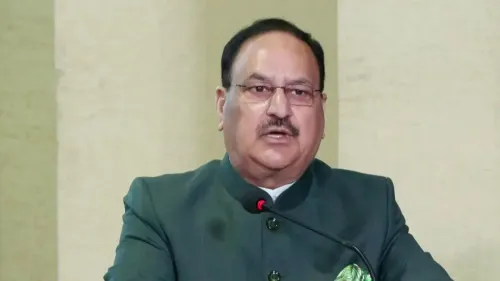
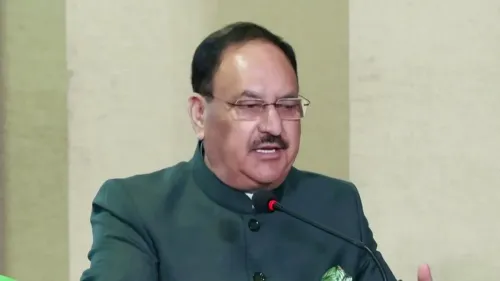
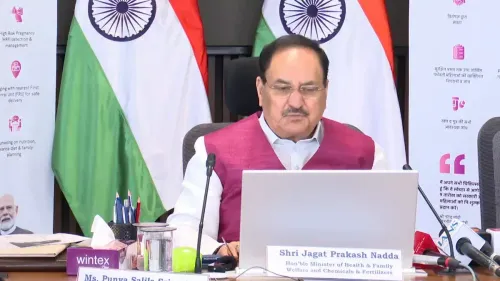
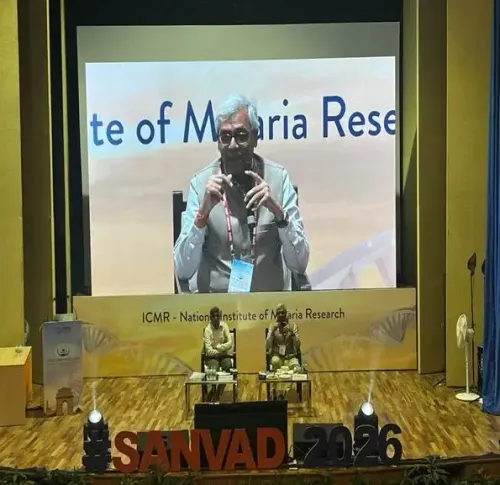
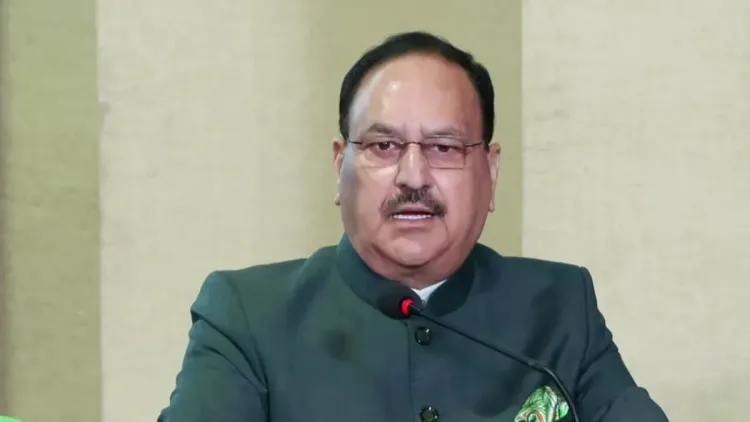
Union Health Minister J. P. Nadda on 17 November 2026 congratulated ICMR-NIMR on its 50th founding anniversary, hailing five decades of malaria research and innovation since the institute was established in 1977 alongside India's modified national malaria programme.
Key Takeaways
ICMR-NIMR marks 50 years since its founding in 1977 , coinciding with India's Modified Plan of Operation for malaria control.
Union Health Minister J.
Nadda extended congratulations and praised the institute's legacy of research, innovation, and public service.
NIMR works under the Indian Council of Medical Research and focuses on vector biology, drug resistance, and malaria surveillance.
India has committed to malaria elimination by 2030 , aligned with WHO targets — making NIMR's scientific output critical in the coming years.
NIMR's research supports operational programmes run through the National Vector Borne Disease Control Programme .
Fifty years of fighting one of humanity's oldest killers — and Union Health Minister J. P. Nadda marked the milestone on Tuesday, 17 November 2026, with a warm tribute to ICMR-NIMR, India's premier malaria research institution, as it completes half a century of work in vector biology, drug resistance, and disease control.
Nadda posted in Hindi: '1977 में स्थापना के बाद से ICMR-NIMR ने 50 वर्षों की गौरवशाली यात्रा में अनुसंधान, नवाचार और मलेरिया उन्मूलन के क्षेत्र में महत्वपूर्ण योगदान दिया है' — 'Since its establishment in 1977, ICMR-NIMR has made significant contributions to research, innovation, and malaria elimination over 50 glorious years.' He added that the NIMR family had built 'an inspiring legacy of dedication, knowledge, and public service,' and extended 'heartfelt congratulations and best wishes' to the entire institution.
From the 1977 policy reset to a golden jubilee
ICMR-NIMR was not born in a vacuum. Its founding in 1977 coincided directly with India's Modified Plan of Operation — a strategic reorientation of the national malaria programme after a sharp disease resurgence threatened to undo the gains of the earlier National Malaria Eradication Programme launched in 1958. Policymakers of that era recognised that operational control alone was not enough; sustained scientific research was essential. NIMR was the institutional answer to that reckoning.
Over five decades, the institute has built expertise in malaria vector biology, parasite drug resistance, and field-level surveillance tools — underpinning the work of frontline programmes run through the National Vector Borne Disease Control Programme. That research-to-programme pipeline is exactly what India needs as it chases a demanding target: malaria elimination by 2030, aligned with WHO global benchmarks.
Why the 2030 deadline makes this jubilee consequential
India's 2030 malaria elimination goal is ambitious — and the clock is running. With roughly four years left, the pressure on ICMR-NIMR to deliver next-generation surveillance methods, drug-resistance data, and vector-control innovations is higher than at any point in the institution's history. The jubilee is a moment of pride, but it also sharpens the stakes.
Nadda, who oversees both health policy and the broader pharmaceutical ecosystem as Minister of Chemicals and Fertilizers, framing this tribute publicly signals that the Centre views NIMR's scientific mandate as central — not peripheral — to the national health agenda. Watch for new NIMR-led field trials or updated surveillance protocols in the months ahead as India approaches critical WHO assessment windows.
Point of View
Publicly honouring NIMR signals that the Centre intends to keep dedicated scientific capacity, not just programme delivery, at the heart of its vector-disease strategy. The timing also reflects a broader BJP-led government pattern of framing public-health milestones through the lens of institutional legacy and national pride. For NIMR itself, ministerial visibility can translate into budgetary attention — a practical subtext beneath the warm words.
NationPress
17 Nov 2026
Frequently Asked Questions
What is ICMR-NIMR and what does it do?
ICMR-NIMR, the National Institute of Malaria Research, is a specialised institute under the Indian Council of Medical Research established in 1977. It conducts research on malaria vector biology, parasite drug resistance, and disease surveillance to support India's malaria control and elimination programmes.
Why was ICMR-NIMR founded in 1977?
NIMR was founded in 1977 as part of India's Modified Plan of Operation, a policy reorientation after malaria resurged following the original National Malaria Eradication Programme launched in 1958. Policymakers recognised that sustained scientific research was essential alongside operational control efforts.
What is India's malaria elimination target?
India has committed to eliminating malaria by 2030, in line with World Health Organization global benchmarks. ICMR-NIMR's research on surveillance tools and drug resistance is considered central to achieving this goal.
What did J. P. Nadda say about ICMR-NIMR?
Union Health Minister J. P. Nadda said ICMR-NIMR has made significant contributions to research, innovation, and malaria elimination over 50 glorious years, and that the NIMR family has built an inspiring legacy of dedication, knowledge, and public service.
What is the National Vector Borne Disease Control Programme?
The National Vector Borne Disease Control Programme is an operational health programme under India's central government that manages control efforts for vector-borne diseases including malaria, dengue, and chikungunya. ICMR-NIMR provides the scientific evidence base that informs this programme's strategies.