Nadda highlights ICMR's role in diagnostics and biomedical innovation
Synopsis
Union Health Minister J. P. Nadda praised ICMR's contributions to biomedical innovation, specifically citing MedTech Mitra (2023), Patent Mitra (2021), and indigenous ELISA-based molecular diagnostics for dengue, chikungunya, and Japanese encephalitis, reinforcing India's domestic public health research ambitions.
Key Takeaways
Union Health Minister J.
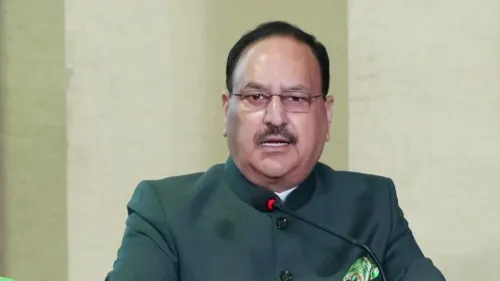
Nadda publicly highlighted ICMR 's central role in India's biomedical research on 17 November 2026 .
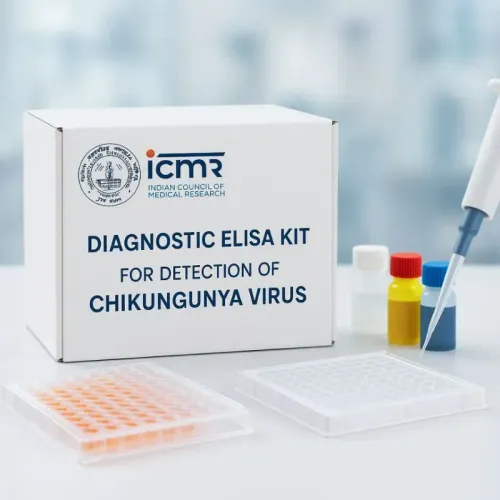
ICMR has developed ELISA-based molecular diagnostics targeting dengue, chikungunya, and Japanese encephalitis , reducing dependence on imported kits.
MedTech Mitra (2023) supports medical technology development from concept to deployment.
Patent Mitra (2021) helps health innovators navigate intellectual property processes to bring discoveries to market.
ICMR was established in 1911 as the Indian Research Fund Association and operates under the Ministry of Health and Family Welfare.
These initiatives align with the National Health Policy 2017 's goal of strengthening indigenous biomedical research and affordable diagnostics.
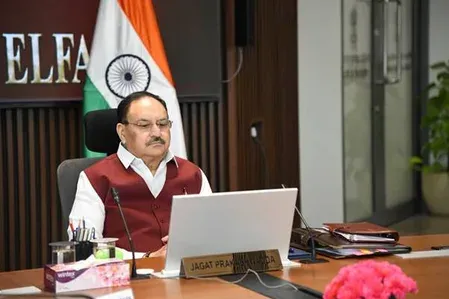
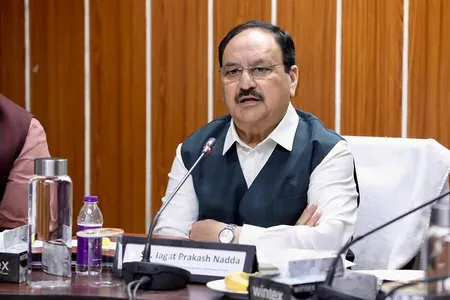
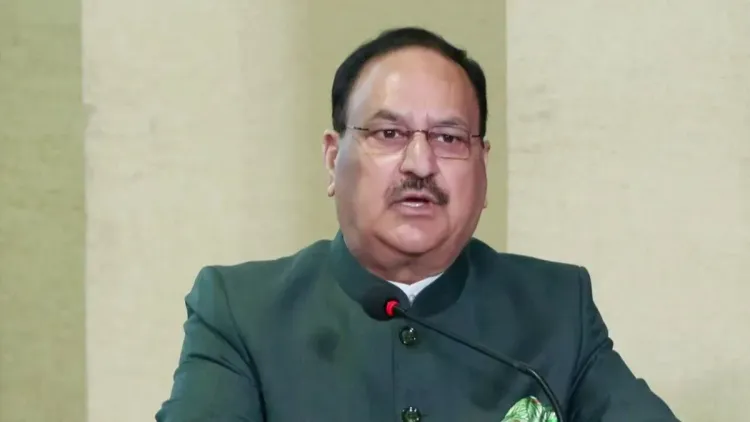
India's apex biomedical research body has been quietly building the country's diagnostic backbone — and Union Health Minister J. P. Nadda wants that work in the spotlight. On Tuesday, 17 November 2026, Nadda took to X to underscore the Indian Council of Medical Research's contributions to homegrown innovation, naming specific programmes and disease targets that place India closer to self-reliance in public health tools.
Nadda's post, written in Hindi, highlighted that ICMR has made significant contributions to biomedical innovation, the MedTech Mitra (2023) programme, the Patent Mitra (2021) programme, and the development of ELISA-based molecular diagnostics for infectious diseases including dengue, chikungunya, and Japanese encephalitis. 'ICMR's role in India's health and medical research is extremely important,' he wrote.
From 1911 to molecular diagnostics: ICMR's long arc
ICMR was not born overnight. Founded in 1911 as the Indian Research Fund Association, it has evolved over more than a century into the country's foremost autonomous body under the Ministry of Health and Family Welfare for formulating, coordinating, and promoting biomedical research. Its mandate has always been both scientific and deeply practical — translating bench-level discovery into tools that reach patients in clinics and primary health centres across the country.
That practical mandate is nowhere more visible than in ICMR's work on vector-borne disease diagnostics. Dengue, chikungunya, and Japanese encephalitis are not theoretical risks in India — they are seasonal, recurring, and they kill. ELISA-based molecular diagnostics developed indigenously cut both cost and turnaround time, reducing dependence on imported kits and placing accurate diagnosis within reach of district-level health infrastructure.
MedTech Mitra and Patent Mitra: linking research to real-world use
Patent Mitra, launched in 2021, was designed to help health innovators and biomedical researchers navigate the complex intellectual property process — a persistent bottleneck that had historically allowed Indian innovations to stall before reaching market. MedTech Mitra, introduced in 2023, extended that philosophy further, providing structured support for medical technology development from concept to deployment.
Together, the two initiatives reflect the direction charted by the National Health Policy 2017, which explicitly called for strengthening indigenous biomedical research and making affordable diagnostics a national priority. Nadda's post signals that this policy thread remains live — and that ICMR sits at its centre.
Why this moment matters for India's health research ambition
India's Covid-era experience accelerated a consensus that domestic diagnostic and therapeutic capacity is a strategic asset, not just a health metric. ICMR was at the front of that effort — from early testing protocols to vaccine trials. Nadda's public affirmation of ICMR's contributions, naming programmes and pathogens by name, is a signal to the broader biomedical community that institutional investment in home-grown research infrastructure will continue to receive political backing.
With future health ministry budget cycles on the horizon, what ICMR does next with MedTech Mitra and Patent Mitra — and how many diagnostics move from lab to field — will be the real measure of that commitment.
Point of View
The minister signals continuity of support for ICMR's innovation pipeline heading into the next budget cycle. This fits a broader BJP governance narrative that frames scientific self-sufficiency as a pillar of 'Atmanirbhar Bharat,' applied now to the health sector. The question the biomedical community will be watching: whether this endorsement translates into measurable funding and faster regulatory pathways for indigenous diagnostics.
NationPress
17 Nov 2026
Frequently Asked Questions
What is ICMR and what does it do?
The Indian Council of Medical Research is India's apex autonomous body under the Ministry of Health and Family Welfare, responsible for formulating, coordinating, and promoting biomedical research across the country. It was founded in 1911 as the Indian Research Fund Association.
What is MedTech Mitra?
MedTech Mitra is a 2023 ICMR initiative designed to support the development of medical technology and biomedical innovations, helping researchers move their work from the laboratory to practical health applications.
What is Patent Mitra launched by ICMR?
Patent Mitra is a 2021 programme launched by ICMR to assist health innovators and biomedical researchers in navigating the patent and intellectual property process, addressing a key bottleneck that had slowed commercialisation of Indian health innovations.
What ELISA-based diagnostics has ICMR developed?
ICMR has developed ELISA-based molecular diagnostics for infectious diseases including dengue, chikungunya, and Japanese encephalitis, reducing India's dependence on imported diagnostic kits for these prevalent vector-borne diseases.
Why did J. P. Nadda post about ICMR?
Union Health Minister J. P. Nadda posted on X on 17 November 2026 to highlight ICMR's contributions to biomedical innovation, naming specific programmes and disease diagnostics, reinforcing political support for India's domestic health research infrastructure.