ICMR high altitude medicine centre in Keylong: J.P. Nadda to lay stone July 11

Synopsis
India is getting its first dedicated high-altitude medicine research centre — and it's going up in one of the country's most remote and strategically critical border districts. The ICMR facility in Keylong will combine mountain medicine, climate health, and drone-enabled logistics, filling a long-standing gap in biomedical research for Himalayan communities.
Key Takeaways
Union Health Minister J.P.
Nadda will lay the foundation stone of the ICMR Centre for High Altitude Medicine and Public Health Research in Keylong on 11 July 2025 .
The centre is India's first dedicated facility for high-altitude medicine and climate-resilient public health research in the Himalayan region.
It will upgrade ICMR's existing Keylong field station into a multidisciplinary research and innovation hub.
Research mandate covers high-altitude physiology, mountain medicine, climate-sensitive diseases, maternal and child health, mental health, and disaster medicine.
The centre will collaborate with AFMS , DRDO , the Himachal Pradesh government, and international research institutions.
Digital health tools including telemedicine and drone-enabled logistics will be integrated to serve hard-to-reach Himalayan communities.
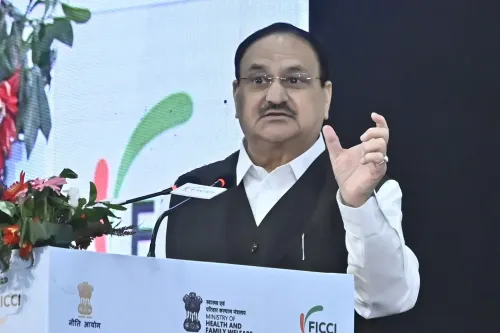
Union Minister of Health and Family Welfare Jagat Prakash Nadda will lay the foundation stone of the ICMR Centre for High Altitude Medicine and Public Health Research in Keylong, Lahaul-Spiti district, Himachal Pradesh, on 11 July 2025, government officials confirmed. The centre, being established by the Indian Council of Medical Research (ICMR) under the Ministry of Health and Family Welfare, will be India's first dedicated facility for high-altitude medicine and climate-resilient public health research in the Himalayan region.
What the Centre Will Do
The Keylong facility will upgrade ICMR's existing field station into a full-fledged, multidisciplinary hub for research, innovation, and capacity building. Its mandate spans high-altitude physiology and acclimatisation, mountain medicine, climate-sensitive and emerging diseases, infectious and non-communicable diseases, maternal and child health, nutrition, mental health, environmental and occupational health, and disaster medicine.
Critically, the centre will generate context-specific scientific evidence tailored to the unique health challenges of Himalayan communities — populations that have historically been underserved by mainstream biomedical research. It will also pilot digital health platforms, telemedicine, drone-enabled healthcare logistics, and real-time public health surveillance to bridge access gaps in terrain where conventional delivery is difficult.
Why Keylong and Why Now
The Himalayan ecosystem presents a distinct set of public health pressures: extreme altitude, harsh climatic conditions, difficult terrain, and accelerating climate variability that together reshape disease patterns, emergency response capacity, and healthcare access. Rising temperatures are altering the distribution of vector-borne diseases, while altitude-related illnesses affect both resident tribal populations and the large numbers of military and civilian personnel deployed in the region.
Keylong's location in Lahaul-Spiti — a high-altitude, strategically important border district — gives the centre year-round access to tribal and high-altitude populations, enabling long-term cohort studies and field research on environmental determinants of health that would be difficult to replicate elsewhere in India.
Institutional Collaborations
The centre is designed to function as an ecosystem rather than a standalone facility. It will build partnerships with the Armed Forces Medical Services (AFMS), the Defence Research and Development Organisation (DRDO), the Himachal Pradesh state government, and academic and research institutions in India and abroad. This positions it to feed directly into both national defence health priorities and global high-altitude medicine research.
The initiative also advances the Centre's Atmanirbhar Bharat vision in health research, aiming to reduce India's dependence on foreign data and frameworks for understanding health in its own high-altitude geographies.
What Happens on July 11
The foundation stone ceremony will include a traditional Bhumi Pujan, plantation of native Himalayan saplings under the Green ICMR Campus Initiative, a scientific exhibition, the launch of the centre's official website, an introductory video, and the release of a commemorative postal special cover.
The event will be attended by Members of Parliament and the Legislative Assembly from the region, Defence Secretary Rajesh Kumar Singh, Himachal Pradesh Chief Secretary Kamlesh Kumar Pant, senior officials from the Ministry of Health and Family Welfare, ICMR, the armed forces, and partner institutions, alongside scientists, public representatives, and local community members.
With the foundation stone laid, ICMR is expected to move swiftly toward operationalising the centre — a facility that, if it delivers on its mandate, could redefine how India approaches health research in its most climatically vulnerable and geopolitically sensitive regions.
Point of View
In one of the world's most climate-volatile geographies, have largely been studied through frameworks designed for the plains. The Keylong centre is a structural correction, not just a new building. What will determine its impact is whether it moves beyond data collection to policy translation — and whether the AFMS and DRDO partnerships produce research that actually shapes protocols for the hundreds of thousands of military personnel deployed in high-altitude zones. The inclusion of drone logistics and telemedicine signals awareness that access, not just knowledge, is the bottleneck. The real test comes after the Bhumi Pujan.
NationPress
8 Oct 2026
Frequently Asked Questions
What is the ICMR Centre for High Altitude Medicine and Public Health Research in Keylong?
It is India's first dedicated research centre for high-altitude medicine and climate-resilient public health, being set up by the Indian Council of Medical Research (ICMR) in Keylong, Lahaul-Spiti district, Himachal Pradesh. The centre will upgrade ICMR's existing field station into a multidisciplinary hub covering mountain medicine, climate-sensitive diseases, maternal health, mental health, and disaster medicine.
When will the ICMR Keylong centre foundation stone be laid?
Union Health Minister J.P. Nadda will lay the foundation stone on 11 July 2025 at Keylong. The ceremony includes a Bhumi Pujan, a scientific exhibition, the launch of the centre's website, and the release of a commemorative postal special cover.
Why is Keylong chosen for this ICMR centre?
Keylong in Lahaul-Spiti is a high-altitude, strategically important border district that gives the centre year-round access to tribal and high-altitude populations. This location enables long-term cohort studies and field research on environmental health determinants unique to the Himalayan region.
Who will attend the July 11 foundation stone ceremony?
The event will be attended by Defence Secretary Rajesh Kumar Singh, Himachal Pradesh Chief Secretary Kamlesh Kumar Pant, Members of Parliament and Legislative Assembly from the region, and senior officials from the Ministry of Health and Family Welfare, ICMR, the armed forces, and partner institutions.
How will the ICMR Keylong centre improve healthcare delivery in remote areas?
The centre will integrate digital health platforms, telemedicine, drone-enabled healthcare logistics, and real-time public health surveillance to reach communities in terrain where conventional healthcare delivery is difficult. It will also build partnerships with AFMS, DRDO, and international institutions to translate research into policy and practice.