PM Modi in Melbourne: 'Chips to ships' vision, 6G push and 2 lakh startups
Synopsis
Modi's Melbourne address was more than a diaspora pep talk — it was a statement of industrial intent. A 'chips to ships' manufacturing vision, a 6G roadmap, over two lakh startups, Gaganyaan, a future space station, and a pointed reference to Operation Sindoor: India is projecting itself not as an emerging economy catching up, but as a technology civilisation staking a claim to lead.
Key Takeaways
PM Modi addressed the Indian community in Melbourne on 9 July , his third visit to Australia in 12 years .
India is building a manufacturing ecosystem 'from chips to ships' and developing 6G technology , Modi said.
India now has over two lakh registered startups , with more than 4,000 new ventures launching every month — the world's third-largest startup ecosystem .
Upcoming milestones cited include the Gaganyaan human spaceflight mission and India's own space station .
Modi referenced Operation Sindoor , saying the counter-terrorism strikes 'were heard across the world.' A cultural performance fusing the Australian didgeridoo and Indian tabla marked the community event.
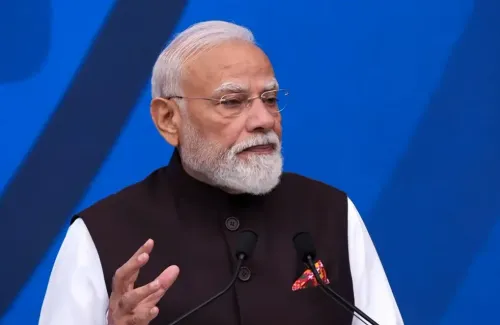
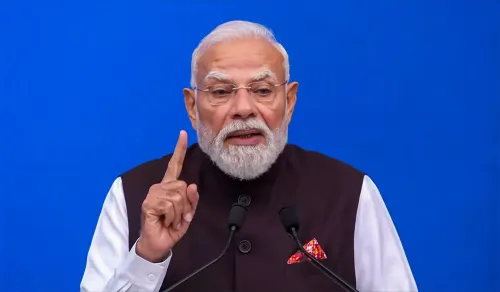
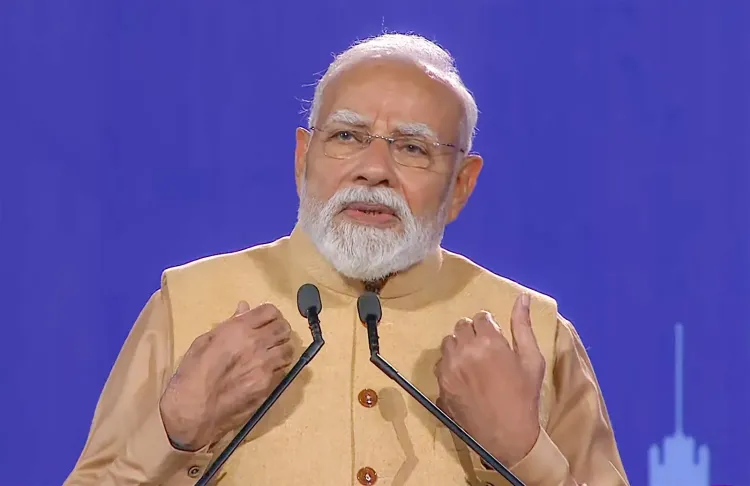
Prime Minister Narendra Modi on Thursday, 9 July told the Indian diaspora in Melbourne that India is building a comprehensive manufacturing ecosystem — spanning 'from chips to ships' — and is actively developing 6G technology to position itself at the forefront of global innovation. Addressing a packed gathering of the Indian community, Modi outlined an ambitious roadmap for a Viksit Bharat (developed India), anchored in technology, space, and enterprise.
Startup Surge and Manufacturing Ambition
Modi highlighted India's dramatic rise as a startup powerhouse, noting that the country has grown from a few hundred registered ventures to over two lakh startups, with more than 4,000 new businesses launching every month. He credited India's youth for propelling the nation to become the world's third-largest startup ecosystem.
Notably, he stressed that this entrepreneurial wave is no longer confined to metro cities — startups are now taking root in every district across the country. Hundreds of startups, he said, are active in advanced sectors including defence and space, with at least one Indian space startup reportedly preparing to launch a satellite aboard its own rocket in the near future.
Space, Gaganyaan and India's Cosmic Goals
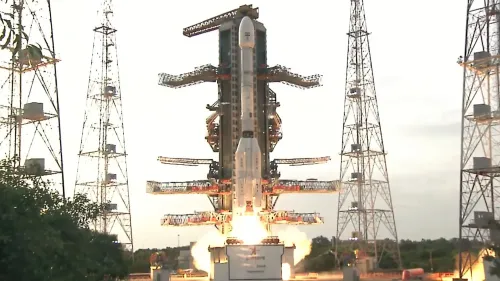
The Prime Minister outlined several upcoming milestones in India's space ambitions, including the Gaganyaan human spaceflight mission and the country's plans to establish its own space station. These, he argued, are emblematic of a nation no longer content to follow — but determined to lead.
This comes amid a broader global race in space commercialisation, where India's cost-competitive launch capabilities have already drawn international attention. The inclusion of private players in this ecosystem marks a structural shift from the earlier era of state-monopolised space activity.
Operation Sindoor and India's Strategic Resolve
Modi also referenced India's recent counter-terrorism operation, stating: 'During Operation Sindoor, explosions were taking place at terrorist bases and their echoes were heard across the world.' The remark drew strong applause from the diaspora audience and underscored his government's framing of the operation as a demonstration of India's decisive strategic posture.
India-Australia Ties and the Diaspora's Role
Reflecting on the arc of bilateral relations, Modi recalled that his 2014 visit to Australia was the first by an Indian Prime Minister in 28 years. He noted that the current Melbourne engagement marks his third visit in 12 years — what he called 'a hat-trick' — and credited the Indian diaspora as the primary driver of the strengthened partnership.
'Over the past 12 years, this is my third visit to Australia, a hat-trick, in a way. It reflects the heights India-Australia relations have reached. And do you know who deserves the biggest credit for this? Not Modi, but all of you. The Indian diaspora has played the biggest role,' he said.
On his arrival in Melbourne, Modi received a rousing reception from community members, with chants of 'Modi-Modi' and 'Vande Mataram'. He later posted on social media platform X: 'The weather in Melbourne may be cold but the warmth of the welcome from the Indian community was truly unforgettable. Their affection and unwavering bond with India continue to be a source of immense joy and pride.'
The evening also featured a cultural showcase blending the Australian didgeridoo — an ancient wind instrument of indigenous Australians — with the Indian tabla, alongside a 10-piece symphony orchestra rendition of 'Maa Tujhe Salaam' and a Kathak performance. Modi described the fusion as a reflection of 'the deep cultural connect between our two nations.'
As India accelerates its manufacturing and technology agenda on the global stage, Modi's Melbourne address signals that the diaspora remains a key pillar — both as ambassadors of Brand India and as potential contributors to its economic ambitions.
Point of View
But the distance between aspiration and execution remains India's persistent challenge. The startup numbers are real — two lakh registered ventures is a genuine milestone — but registered does not mean operational or scaled. The 6G ambition is similarly notable: India is positioning itself to leapfrog 5G dependency, but spectrum policy and infrastructure rollout will determine whether that claim holds. The Melbourne speech is also a geopolitical signal: invoking Operation Sindoor before an overseas audience plants the counter-terrorism narrative firmly in the diaspora's consciousness, reinforcing domestic political messaging on an international stage. What the speech did not address is the manufacturing share of GDP, which has remained stubbornly flat despite repeated 'Make in India' iterations. 'Chips to ships' needs a credible industrial policy scaffold — not just a memorable phrase.
NationPress
9 Jul 2026
Frequently Asked Questions
What did PM Modi mean by 'chips to ships' manufacturing ecosystem?
PM Modi used the phrase 'chips to ships' to describe India's ambition to build a comprehensive, end-to-end manufacturing base — from semiconductors and electronics at one end to shipbuilding and heavy industry at the other. He made the remark while addressing the Indian diaspora in Melbourne on 9 July, framing it as part of India's journey toward becoming a developed nation.
How many startups does India have as of 2025?
According to PM Modi's address in Melbourne, India now has over two lakh registered startups, with more than 4,000 new ventures launching every month. This makes India the world's third-largest startup ecosystem, driven significantly by youth entrepreneurship beyond major metro cities.
What is India's 6G plan?
PM Modi stated that India is actively working on 6G technology with the goal of leading global innovation. While specific timelines were not detailed in the Melbourne address, the push is part of a broader technology agenda that also includes the Gaganyaan mission and plans for an Indian space station.
What did Modi say about Operation Sindoor in Melbourne?
Modi referenced India's counter-terrorism operation, stating: 'During Operation Sindoor, explosions were taking place at terrorist bases and their echoes were heard across the world.' The remark was made during his diaspora address and was received with strong applause.
Why is Modi's Australia visit significant for India-Australia relations?
Modi's current visit to Melbourne is his third trip to Australia in 12 years, which he described as 'a hat-trick.' He noted that his 2014 visit was the first by an Indian Prime Minister in 28 years, highlighting how dramatically bilateral engagement has deepened. He credited the Indian diaspora as the primary driver of this strengthened relationship.