Nadda Highlights Centre's Push for Himachal Infrastructure
Synopsis
Union Health Minister J. P. Nadda on 13 June 2026 outlined central government investments in Himachal Pradesh, citing ₹7,000 crore for Renuka Dam, ₹1,800 crore for Luhri Stage-1 hydro, ₹13,168 crore in rail projects, and new IIM and IIIT campuses, under the #12YearsOfSeva campaign.
Key Takeaways
The Renuka Dam on the Giri River in Sirmaur has been declared a project of national importance with ₹7,000 crore approved.
The Luhri Stage-1 Hydro Project on the Satluj basin has received a central sanction of ₹1,800 crore .
Railway projects worth ₹13,168 crore , including world-class station upgrades, are cited for Himachal Pradesh.
IIM Sirmaur and IIIT Una have been established to expand premier higher education in the hill state.
Shimla and Dharamshala are beneficiaries of the central Smart Cities Mission for technology-driven urban upgrades.
Solar energy schemes are listed alongside hydropower as part of Himachal Pradesh's clean energy development push.
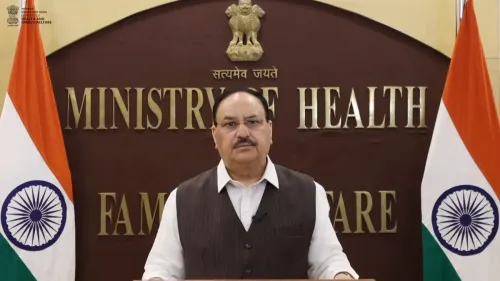
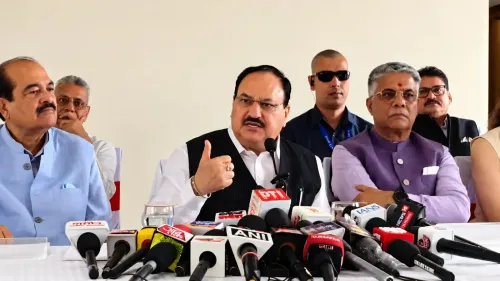
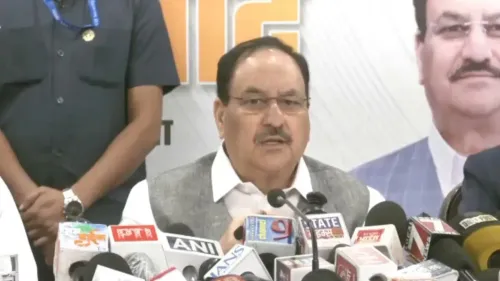
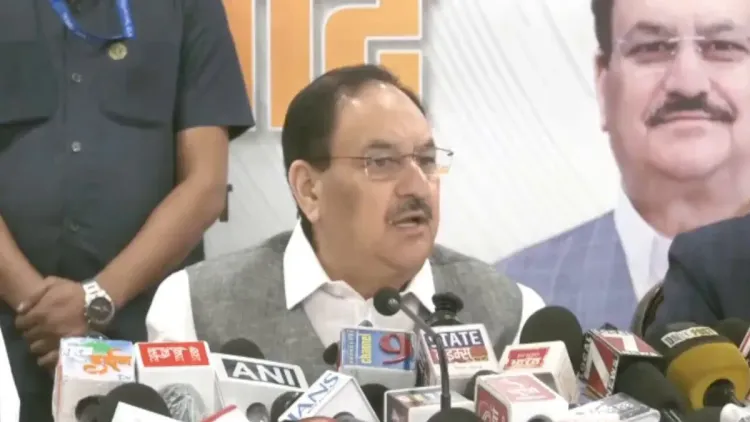
Union Health Minister and BJP national president J. P. Nadda on Saturday, 13 June 2026, highlighted a series of central government infrastructure investments in Himachal Pradesh, citing allocations across hydropower, railways, education and urban development under the hashtag #12YearsOfSeva (12 Years of Service).
Context
In his post, Nadda stated that the central government has accelerated several key projects in Himachal Pradesh spanning hydro energy, education, urban development, railways and power. He specifically noted that the Renuka Dam has been declared a project of national importance with an approved outlay of ₹7,000 crore, while the Luhri Stage-1 Hydro Project has received a sanction of ₹1,800 crore.
He further cited the establishment of IIM Sirmaur and IIIT Una, progress under Smart City projects, and railway expansion as pillars of strengthened infrastructure in the hill state. Rail projects worth ₹13,168 crore, world-class railway station upgrades and solar energy schemes were listed as additional markers of development.
Policy Backdrop
The Renuka Dam, a multipurpose project on the Giri River in Sirmaur district, has a long planning history stretching back to the 11th and 12th Five-Year Plans. It is designed to serve irrigation, drinking water supply and hydropower generation needs, and its designation as a nationally important project is an administrative mechanism used to fast-track funding and environmental clearances for strategically located assets.
The Luhri Stage-1 is a run-of-river hydroelectric scheme on the Satluj basin, aimed at adding peaking power capacity to the national grid. Both projects reflect a broader central policy of harnessing Himachal Pradesh's significant hydropower potential — one of the largest in the country — as part of India's energy security strategy.
The Smart Cities Mission, launched in June 2015, included Shimla and Dharamshala among its selected cities. The establishment of new-generation IIMs and IIITs in hill states formed part of a post-2014 higher-education infrastructure push to address regional equity in access to premier institutions. Railway capital expenditure for Himachal corridors has been part of the National Infrastructure Pipeline since 2019.
Stakeholders and Impact
Residents of Himachal Pradesh stand to benefit directly from improved power supply, drinking water access and irrigation through the dam projects. Students in the state gain from the presence of institutions like IIM Sirmaur and IIIT Una, which reduce the need to migrate to larger cities for quality higher education.
Urban local bodies in Shimla and Dharamshala have been recipients of Smart Cities Mission funding for technology-driven civic upgrades. Hydropower developers and railway contractors are key private-sector stakeholders whose project timelines and fund disbursements will determine the pace of on-ground delivery.
Himachal Pradesh's terrain has historically made infrastructure development more expensive and complex than in plains states, making central funding and national-importance designations particularly consequential for project viability.
What's Next
Progress on land acquisition and fund releases for the Renuka Dam and Luhri Stage-1 projects will be closely tracked in upcoming state and central budget documents. Parliamentary committee reviews and state assembly sessions are expected to examine completion timelines for the cited rail corridors and smart-city works.
Nadda's post, timed to the #12YearsOfSeva campaign marking the BJP-led NDA government's tenure, signals that central infrastructure delivery in hill and border states will remain a prominent political and policy narrative heading into the next electoral cycle.
Point of View
Using Himachal Pradesh's infrastructure ledger as evidence of central government delivery in a state that the party lost in the 2022 assembly election. The enumeration of large rupee figures across sectors — hydropower, railways, education, urban development — is a standard template for demonstrating federal fiscal commitment to a state governed by the opposition. Himachal's heavy dependence on central transfers for capital expenditure makes such tallies politically potent on both sides: the ruling party at the Centre claims credit for approvals, while the state government can contest delivery timelines. The broader pattern of designating hydropower projects as nationally important reflects a deliberate administrative tool to accelerate clearances in ecologically sensitive Himalayan terrain, and Nadda's highlighting of it signals continued central prioritisation of the state's energy assets.
NationPress
27 Oct 2026
Frequently Asked Questions
What is the Renuka Dam project and why was it declared of national importance?
The Renuka Dam is a multipurpose project on the Giri River in Sirmaur district, Himachal Pradesh, designed for irrigation, drinking water supply and hydropower. Declaring it of national importance is an administrative mechanism that fast-tracks funding and clearances; the central government has approved ₹7,000 crore for the project.
What is the Luhri Stage-1 Hydro Project?
The Luhri Stage-1 is a run-of-river hydroelectric scheme on the Satluj basin in Himachal Pradesh. It is aimed at adding peaking power capacity to the national grid, and ₹1,800 crore has been sanctioned for it by the central government.
How much has the Centre invested in Himachal Pradesh railways?
According to J. P. Nadda's post, railway projects worth ₹13,168 crore have been allocated for Himachal Pradesh, along with upgrades to world-class railway stations.
Which Himachal Pradesh cities are part of the Smart Cities Mission?
Shimla and Dharamshala are the Himachal Pradesh cities selected under the central Smart Cities Mission, which was launched in June 2015 to fund technology-driven urban infrastructure upgrades.
What are IIM Sirmaur and IIIT Una?
IIM Sirmaur is one of the newer Indian Institutes of Management set up in Himachal Pradesh, while IIIT Una is an Indian Institute of Information Technology in Una district. Both were established under central schemes to expand access to premier management and technical education in hill states.