Nadda Accuses Himachal Govt of Failing to Use Central Funds
Synopsis
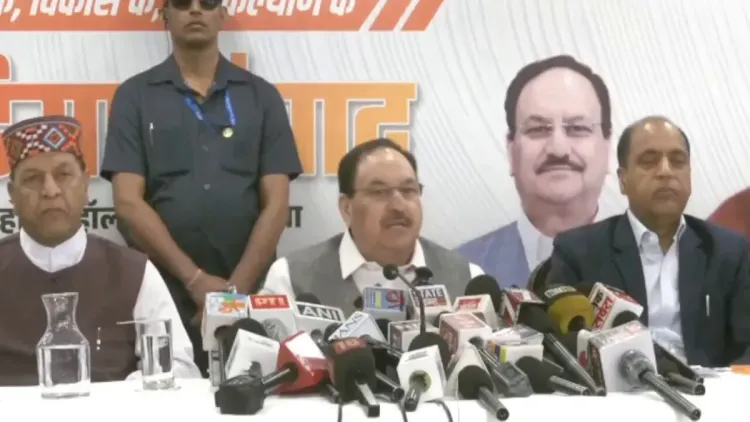
Union Health Minister J. P. Nadda on June 13, 2026, accused the Congress-led Himachal Pradesh government of squandering central assistance through scheme-implementation delays and administrative disarray, posting the charge under the BJP's #12YearsOfSeva campaign.
Key Takeaways
Union Health Minister J.
Nadda posted on June 13, 2026 , accusing the Himachal Pradesh government of failing to effectively utilise central funds.
Nadda cited delays in scheme implementation and administrative disorder as the main causes of developmental losses to the state.
He flagged a visible 'lack of coordination between the government and the administration' in Himachal Pradesh .
The post was part of the BJP 's #12YearsOfSeva campaign, giving it an explicit political framing.
Centrally sponsored schemes such as the National Health Mission and PMGSY have been active in Himachal Pradesh since 2014 , with fund release tied to utilisation certificates.
The Congress -led state government had not issued a formal response at the time of publication.
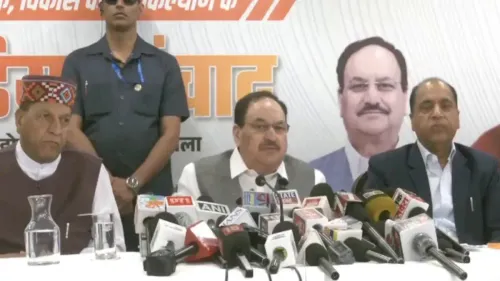
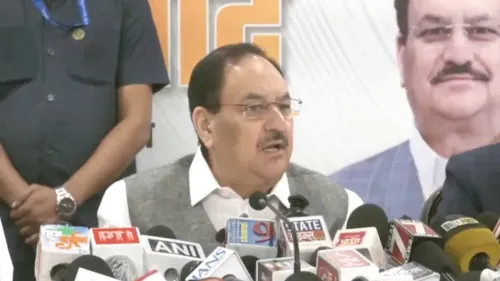
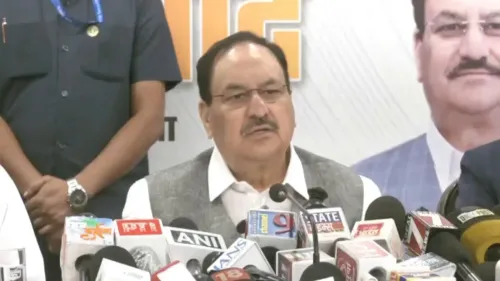
Union Health Minister and BJP national president J. P. Nadda on Saturday, June 13, 2026, publicly accused the Himachal Pradesh state government of failing to effectively utilise central assistance, citing delays in scheme implementation and administrative disarray as key reasons for the state's developmental setbacks.
Context
Posting on X under the hashtag #12YearsOfSeva, Nadda wrote that while the central government has 'always extended full cooperation to Himachal,' the state government has been unable to make effective use of the assistance provided. He stated: 'Delays in implementation of schemes and administrative disorder are causing losses to the state.'
Nadda further noted that 'a lack of coordination between the government and the administration is now visible,' and that this gap is directly affecting Himachal Pradesh's development. The post carries no specific scheme names but broadly indicts the current state administration's governance record.
Policy Backdrop
The Congress-led Himachal Pradesh government has been responsible for implementing a range of centrally sponsored schemes — including the National Health Mission (NHM) and the Pradhan Mantri Gram Sadak Yojana (PMGSY) — which require the state to submit utilisation certificates before subsequent tranches are released by the Union government.
Since 2014, periodic reviews of fund utilisation under these schemes have been a standard feature of centre-state fiscal relations. The BJP-led central government has, on multiple occasions, pointed to pending utilisation certificates or delayed state matching contributions as bottlenecks in fund flow to opposition-governed states.
The hashtag #12YearsOfSeva (12 Years of Service) signals that the post is part of a coordinated BJP campaign marking what the party frames as a decade-plus of central governance achievements, providing a political backdrop to Nadda's remarks.
Stakeholders and Impact
The primary stakeholders are the residents of Himachal Pradesh, who depend on centrally funded programmes for healthcare, rural connectivity, and disaster relief — the state being particularly vulnerable to monsoon-related infrastructure damage.
State administrators and elected representatives of the ruling Congress government in Shimla are directly implicated by Nadda's charge of poor coordination. The remarks are likely to intensify political friction between the Sukhu-led state cabinet and the Union government ahead of any quarterly review of centrally sponsored schemes.
Civil society groups and opposition legislators within the state may use the statement to press the ruling party for a public accounting of scheme-wise expenditure and pending central funds.
What's Next
Attention will now turn to the next quarterly review meeting for centrally sponsored schemes in Himachal Pradesh, where fund-utilisation data will be scrutinised. State assembly debates on supplementary demands are another forum where the ruling party will be expected to respond to these charges.
The Himachal Pradesh government has not yet issued a formal response to Nadda's post. Any rebuttal citing specific utilisation figures or scheme-completion data would shift the terms of this centre-state dispute from the political to the administrative domain — a dynamic that will be closely watched in New Delhi and Shimla alike.
Point of View
It serves a dual purpose — defending the Union government's governance record while keeping pressure on an opposition state ahead of potential scheme reviews. The absence of specific scheme names or figures keeps the charge broad and difficult to rebut with a single data point. Whether the Himachal government can respond with verifiable utilisation data will determine whether this remains a political salvo or escalates into a substantive administrative dispute.
NationPress
13 Sept 2026
Frequently Asked Questions
What did J. P. Nadda say about Himachal Pradesh?
J. P. Nadda stated on June 13, 2026, that the central government has always extended full cooperation to Himachal Pradesh but the state government has failed to effectively use the assistance, citing scheme-implementation delays and poor coordination between the government and administration.
Which party governs Himachal Pradesh?
Himachal Pradesh is governed by the Congress party, led by Chief Minister Sukhvinder Singh Sukhu, making it one of the opposition-ruled states at the time of Nadda's remarks.
What is #12YearsOfSeva?
#12YearsOfSeva is a BJP campaign hashtag marking what the party describes as over a decade of central governance achievements since 2014, under which several BJP leaders have been posting statements about central government performance.
Which central schemes are active in Himachal Pradesh?
Key centrally sponsored schemes in Himachal Pradesh include the National Health Mission and the Pradhan Mantri Gram Sadak Yojana, both of which require the state to submit utilisation certificates before fresh tranches are released.
Has the Himachal Pradesh government responded to Nadda's criticism?
As of the time of publication, the Himachal Pradesh government had not issued a formal response to Nadda's post on X.