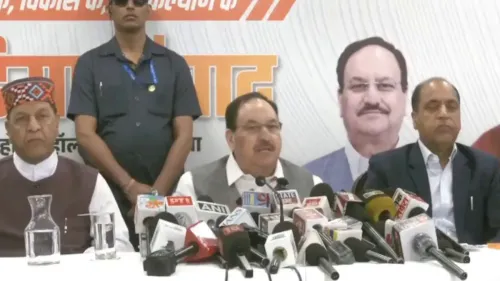
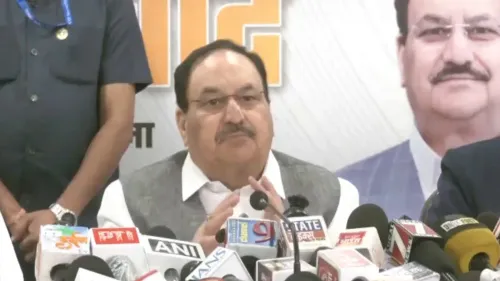
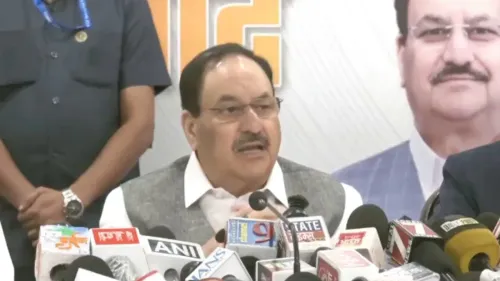
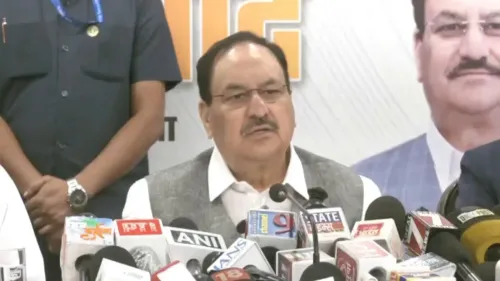
Nadda rejects Himachal govt's claim of central fund neglect
Synopsis
Union Health Minister J. P. Nadda publicly dismissed the Himachal Pradesh Congress government's claim that the Centre is withholding funds, calling it a narrative to conceal state inaction, and reaffirmed the Centre's full financial commitment to the hill state.
Key Takeaways
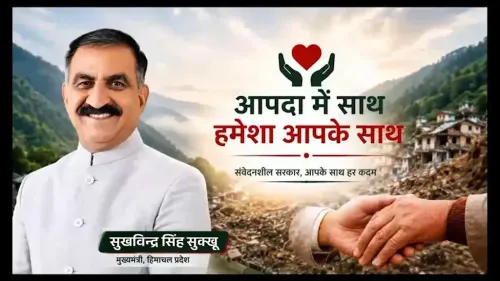
Nadda accused the Sukhvinder Singh Sukhu -led Himachal Pradesh government of fabricating a narrative of central neglect to hide its own inaction.
Nadda stated that the Government of India has no shortage of funds and that this is especially true for Himachal Pradesh .
He credited PM Narendra Modi 's government with consistently providing full economic assistance and support to Himachal Pradesh .
The post was made on 13 June 2026 under the hashtag #12YearsOfSeva , marking the NDA government's tenure at the Centre.
The 15th Finance Commission (2021–2026) includes special provisions for hill states, and the NDRF remains the primary channel for disaster relief to states like Himachal Pradesh .
The dispute reflects a recurring pattern of public exchanges between Centre and Opposition-ruled states over fiscal transfers.
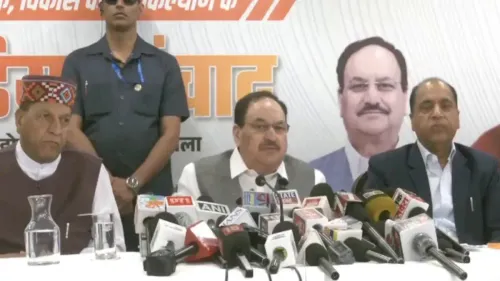
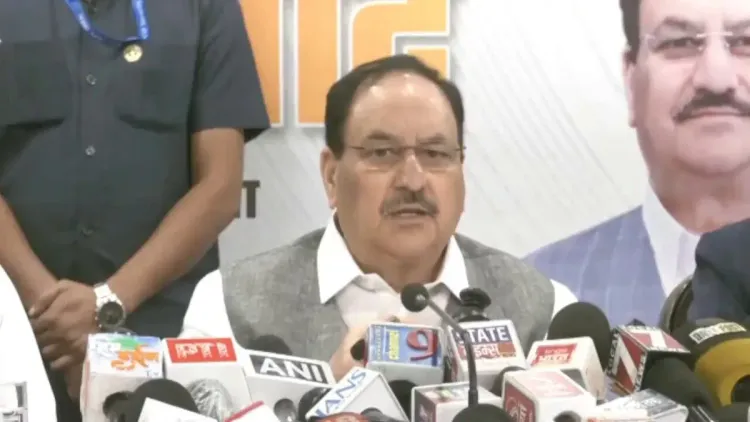
Union Health Minister J. P. Nadda on Saturday, 13 June 2026, publicly rebutted the Himachal Pradesh state government's assertion that the Centre is withholding financial assistance, saying the narrative was being constructed to cover the state administration's own inaction.
Posting in Hindi on X, Nadda said: 'A perception is being created and Sukhvinder ji's government is weaving a narrative to hide its own inaction — that help is not coming from the Centre.' He addressed his remarks directly to the people of Himachal Pradesh, asserting that the Government of India faces no shortage of funds and that this holds especially true for Himachal Pradesh.
Context
Himachal Pradesh, currently governed by the Indian National Congress under Chief Minister Sukhvinder Singh Sukhu, has been at the centre of a public dispute with the BJP-led central government over fiscal transfers and disaster relief. The state, a mountainous Himalayan territory prone to landslides and floods, has periodically raised the issue of delayed or insufficient central assistance.
Nadda, who represents Himachal Pradesh in the Rajya Sabha and serves as BJP national president in addition to his cabinet role, invoked Prime Minister Narendra Modi's leadership, stating that the Centre has 'always given Himachal full economic assistance and support.' The post carried the hashtag #12YearsOfSeva (12 Years of Service), referencing the BJP-led NDA government's tenure at the Centre.
Policy Backdrop
Fiscal relations between the Centre and states are governed partly by Finance Commission recommendations. The 15th Finance Commission, covering 2021–2026, prescribed tax devolution formulas and special grants, with hill states like Himachal Pradesh receiving specific provisions that account for their difficult terrain and limited own-tax revenue base.
For disaster relief, the National Disaster Response Fund (NDRF), established in 2005, serves as the primary mechanism through which the Centre channels emergency assistance to calamity-affected states. Himachal Pradesh has been a recurring beneficiary given its vulnerability to monsoon-related disasters. Nadda's statement that 'the Government of India has no shortage of resources' is a direct counter to any claim that structural fiscal constraints are responsible for any funding gap.
Stakeholders and Impact
The exchange reflects a well-established pattern in Indian federalism: central ministers from the ruling party publicly rebutting Opposition-governed states' claims of neglect, particularly ahead of or during periods of high public visibility such as the monsoon season. For Himachal Pradesh's residents — many of whom depend on state-delivered welfare schemes and disaster relief — the dispute carries practical stakes beyond political optics.
Chief Minister Sukhvinder Singh Sukhu's government has faced scrutiny over the state's fiscal health, with questions raised about salary disbursements and debt levels. Nadda's framing — that the Centre's resources are ample and its commitment to Himachal's development is 'special and enduring' — is aimed at shifting accountability squarely onto the state administration.
What's Next
Attention will now turn to whether the Sukhu government issues a formal rejoinder with specific figures on pending central dues or delayed fund releases. Any announcements in the upcoming Union Budget or Parliament's monsoon session regarding Finance Commission grant instalments or NDRF disbursements to Himachal Pradesh will be closely watched by both sides.
The BJP's use of #12YearsOfSeva signals that the party intends to frame this dispute within a broader electoral narrative of central generosity versus state mismanagement — a line of argument likely to intensify as Himachal Pradesh's next assembly election cycle approaches.
Point of View
The BJP is embedding a state-level dispute into a national narrative of governance performance, a tactic that typically gains traction as election cycles near. The absence of specific figures — on either side — leaves the factual question of fund flows unresolved, which suits the BJP's rhetorical strategy of broad reassurance over granular accountability. Ultimately, this exchange is less about the funds themselves and more about who owns the story of Himachal Pradesh's development.
NationPress
27 Oct 2026
Frequently Asked Questions
What did JP Nadda say about Himachal Pradesh funds?
JP Nadda said the Government of India has no shortage of funds and that the Centre has always provided full financial assistance to Himachal Pradesh, rejecting the state government's claim of central neglect.
Why is there a dispute between the Centre and Himachal Pradesh government?
The Himachal Pradesh Congress government under CM Sukhvinder Singh Sukhu has claimed the Centre is not providing adequate financial help, while the BJP-led Centre denies this, calling it a narrative to hide state-level inaction.
What is the National Disaster Response Fund and how does it help Himachal Pradesh?
The National Disaster Response Fund, established in 2005, is the primary mechanism through which the Centre provides emergency financial assistance to states hit by natural disasters. Himachal Pradesh, prone to landslides and floods, is a regular beneficiary.
What is the 15th Finance Commission's role in Himachal Pradesh's funding?
The 15th Finance Commission, covering 2021 to 2026, prescribed tax devolution and special grants for hill states including Himachal Pradesh, accounting for their difficult terrain and limited own-tax revenue.
What does #12YearsOfSeva mean in JP Nadda's post?
The hashtag #12YearsOfSeva refers to 12 years of the BJP-led NDA government at the Centre under Prime Minister Narendra Modi, which the party uses to highlight its governance and development record.