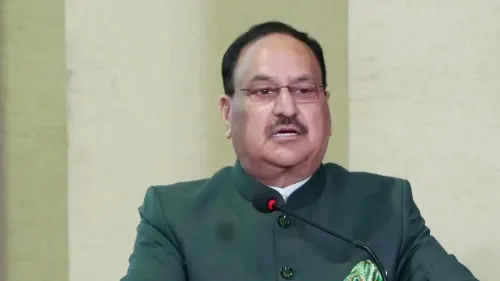
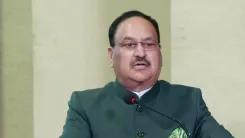
Nadda shares President Murmu's words on India's malaria fight
Synopsis
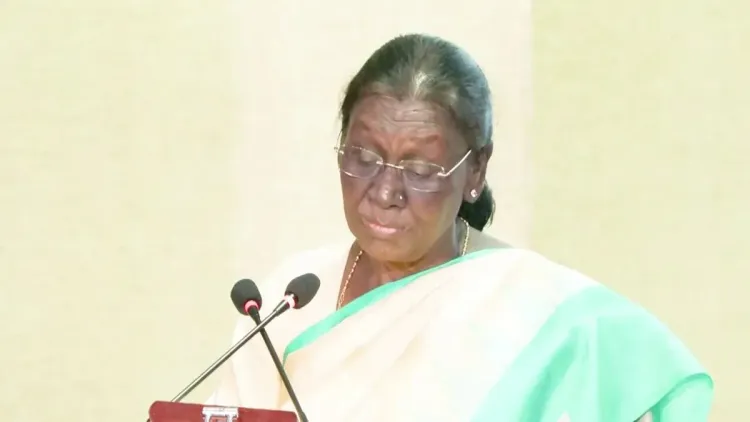
Union Health Minister J. P. Nadda shared President Draupadi Murmu's personal reflection on malaria's devastating post-independence legacy in India and the scientific breakthroughs that now enable rapid diagnosis and effective treatment, underscoring treatment adherence as a continued national health priority.
Key Takeaways
Union Health Minister J.
Nadda shared President Draupadi Murmu's remarks on India's malaria history on November 17, 2026 .
At independence, malaria was one of India's most serious public health problems, worsened by patients not completing full drug courses.
President Murmu personally conducted community awareness campaigns and urged doctors to explain treatment adherence.
India launched the National Malaria Control Programme in 1953 as the first organised national response to the disease.
Scientific advances have made rapid malaria diagnosis and effective treatment possible — a development the President described as a source of great happiness.
Completing the full drug course remains a cornerstone of India's malaria control strategy to prevent recurrence and drug resistance.
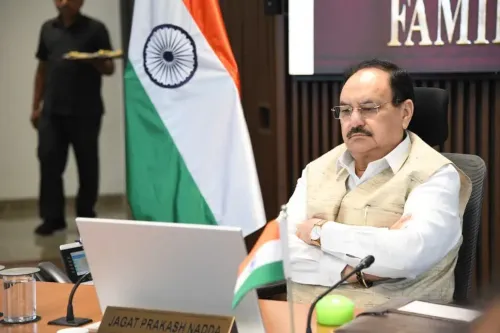
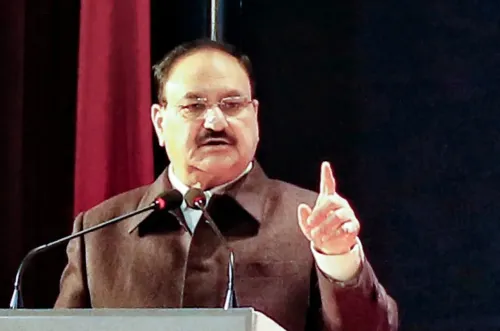
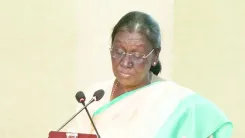
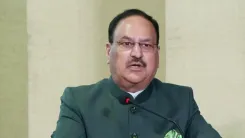
When India gained independence, malaria was not just a disease — it was a nationwide emergency that stalked villages and overwhelmed communities too poorly informed to complete a full course of treatment. Union Health Minister J. P. Nadda on Tuesday, November 17, 2026, shared a powerful personal reflection from President Draupadi Murmu on X, spotlighting both the grim legacy of malaria in post-independence India and the scientific strides that have transformed how the disease is detected and treated today.
In her quoted remarks, President Murmu recalled going door to door herself: 'मैंने स्वयं लोगों को जागरूक किया' ('I personally worked to raise awareness among people') and urging doctors to explain the importance of completing the full drug course. The root problem she identified was stark — incomplete treatment cycles caused by lack of information, which allowed the disease to return again and again.A disease that defined post-independence public health
At independence in 1947, malaria was among the gravest public health crises facing the new nation. Villages bore the heaviest burden, with recurrence driven by patients stopping medication mid-course — a gap in health literacy that President Murmu describes from first-hand experience. It took until 1953 for India to launch the National Malaria Control Programme, the country's first organised national effort to push back against the disease through vector control and treatment outreach.
The challenge of treatment adherence the President describes was not incidental — it was structural. Without completing the full drug regimen, the malaria parasite survived, re-emerged, and built the conditions for drug resistance. That single behavioural gap compounded the country's malaria burden for decades.
From recurring nightmare to rapid diagnosis
The contrast President Murmu draws is striking. What once required guesswork and incomplete treatment can today be confirmed with rapid diagnostic tests and addressed with well-established drug protocols — a transformation she attributes directly to 'the efforts of scientists and researchers.' Her closing line carries real weight: 'यह देखकर बहुत खुशी होती है' — 'seeing this fills me with great happiness.'
India has pursued successive national malaria programmes combining vector control, diagnostics, and treatment adherence campaigns. The emphasis on completing full drug courses — the same message President Murmu carried to communities personally — remains a cornerstone of public health communication to limit both recurrence and the emergence of drug-resistant strains.
Why the Health Minister is amplifying this message now
Minister Nadda's decision to share the President's words is not incidental. Linking the highest constitutional office to a grassroots public health message reinforces treatment adherence as a national priority, not merely a clinical instruction. India is working toward malaria elimination targets, and community-level behaviour — finishing the drug course — remains as critical today as it was in the villages President Murmu walked through decades ago.
The science has advanced dramatically. The resolve, it seems, must keep pace.
Point of View
Minister Nadda is deploying the country's highest constitutional voice in service of a public health behavioural message — treatment adherence — that has stubbornly resisted change since independence. The move fits a broader pattern of the Health Ministry framing malaria elimination not just as a scientific challenge but as a civic duty requiring community buy-in. With India pushing toward elimination targets, linking institutional credibility to grassroots health literacy is a deliberate and strategically sound communication choice. The President's lived-experience framing also adds moral authority that dry policy circulars cannot replicate.
NationPress
17 Nov 2026
Frequently Asked Questions
What did President Draupadi Murmu say about malaria in India?
President Murmu recalled that at independence, malaria was one of India's gravest health problems. She personally went to communities to raise awareness and urged doctors to explain the importance of completing full drug courses, noting that incomplete treatment caused the disease to recur. She expressed great happiness at today's advances in rapid diagnosis and treatment.
Why did J. P. Nadda share President Murmu's statement on malaria?
Union Health Minister J. P. Nadda shared the President's remarks to reinforce treatment adherence as a national health priority and to highlight India's progress in malaria control, connecting the highest constitutional office to a key public health message.
When was the National Malaria Control Programme launched in India?
India launched the National Malaria Control Programme in 1953 , making it the country's first organised national effort to address the widespread malaria burden through vector control and treatment outreach.
Why is completing the full malaria drug course so important?
Stopping medication before finishing the full course allows the malaria parasite to survive and return. It also contributes to drug resistance, making future treatment harder. This was a major driver of recurring malaria in post-independence India, particularly in rural areas.
What has changed in India's ability to diagnose and treat malaria?
Scientific and research advances have made rapid diagnostic testing and reliable treatment protocols widely available, allowing malaria to be confirmed and treated quickly — a stark contrast to the limited tools and poor health literacy that defined the post-independence era.