Nadda: India cuts malaria cases by 80% in a decade
Synopsis
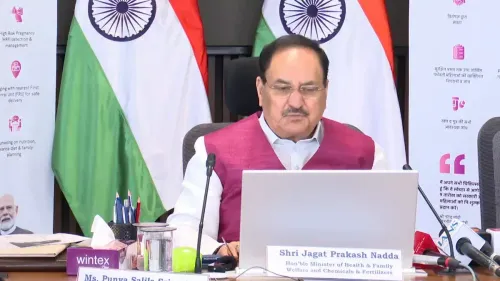
Union Health Minister J. P. Nadda announced that malaria cases in India fell nearly 80% between 2015 and 2025-26, with high-burden districts shrinking from 155 to 33. Despite hosting 16% of the world's population, India now accounts for just 0.7% of global malaria cases and 0.6% of deaths.
Key Takeaways
Malaria cases in India fell by nearly 80% between 2015 and 2025-26 , according to Union Health Minister J.
High-burden malaria districts dropped from 155 to 33 — a reduction of over 78% in the most affected geography.
Despite accounting for 16% of the global population, India contributes just 0.7% of world malaria cases and 0.6% of malaria deaths.
The National Institute of Malaria Research (NIMR) and frontline health workers were credited for the sustained decline.
India's National Framework for Malaria Elimination targets zero indigenous cases by 2030 , with the NVBDCP coordinating bed nets, rapid diagnostics, and vector control.
The remaining 33 high-burden districts — likely in forested and remote areas — are the critical focus for the final push to elimination.
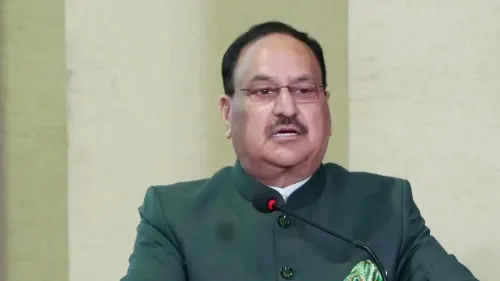
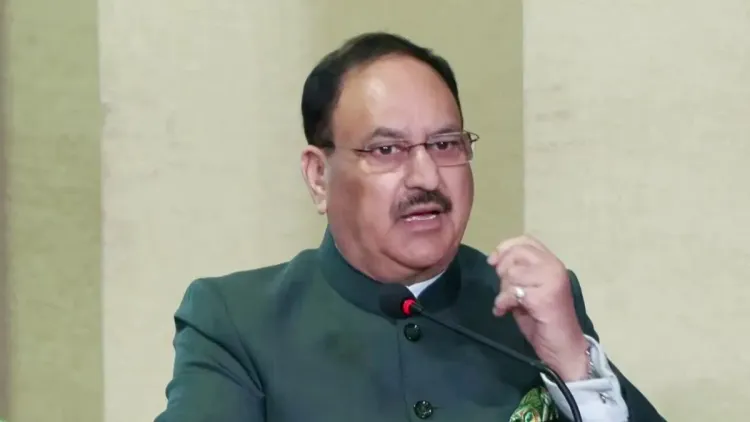
A decade of relentless fieldwork has paid off in one of public health's most striking turnarounds — Union Health Minister J. P. Nadda announced on Tuesday, 17 November 2026 that malaria cases in India have fallen by nearly 80% between 2015 and 2025-26, a feat made sharper by the fact that India is home to 16% of the world's population yet now accounts for just 0.7% of global malaria cases and 0.6% of malaria deaths.
From 155 high-burden districts to 33 — the numbers behind the milestone
The headline statistic that cuts deepest is the collapse of the country's high-burden geography. The number of districts classified as high-burden for malaria has fallen from 155 to just 33 — a reduction of more than 78% in the problem's geographic footprint. These are the districts where transmission was heaviest, where health systems were most stretched, and where vulnerable communities bore the greatest risk. Shrinking that map is not an administrative exercise; it means millions of people now live outside the highest-risk zones.
Nadda credited the achievement directly to 'swasthyakarmiyón aur NIMR ke nirantar prayas' — the sustained efforts of health workers across the country and the National Institute of Malaria Research (NIMR), an institute under the Indian Council of Medical Research (ICMR) that anchors India's malaria surveillance and control science.
The policy architecture that made the decline possible
The drop did not happen by accident. In 2016, the Government of India launched the National Framework for Malaria Elimination, setting a target of zero indigenous cases by 2030. The framework works in concert with the National Vector Borne Disease Control Programme (NVBDCP), which has coordinated mass distribution of insecticide-treated bed nets, rapid diagnostic testing at the community level, and targeted indoor residual spraying in high-risk areas for over two decades.
The strategy is explicitly tiered: districts move through elimination categories as case loads fall, with resources and surveillance intensity adjusted accordingly. The shrinkage from 155 to 33 high-burden districts reflects that tiered reclassification working in real time — each district that steps down represents a local ecosystem where the parasite's transmission chain has been broken or severely disrupted.
India's disproportionate achievement in a global context
The WHO Global Technical Strategy for Malaria 2016-2030 calls for at least a 90% reduction in case incidence and mortality by the end of the decade. India's 80% case reduction in just ten years positions it on a trajectory to meet — and potentially exceed — that target. For a country of 1.4 billion people spanning enormously diverse ecological zones, from the forests of Odisha and Chhattisgarh to the northeastern hill states, achieving sub-1% global case share is a logistical and epidemiological achievement that few comparable-population countries have matched.
The remaining 33 high-burden districts will now be the pressure point. These are likely concentrated in forested, tribal, and remote terrains where access to health infrastructure is hardest and where the Plasmodium falciparum parasite — the deadliest malaria strain — tends to persist longest. The final stretch to elimination is historically the hardest.
What the 2030 elimination finish line now looks like
With roughly four years left before India's self-imposed 2030 zero-transmission target, the NVBDCP's next annual malaria surveillance report will be closely watched — particularly for movement of districts from higher-burden to lower-burden categories and for any sub-national plateaus that signal where the programme needs to reinforce. The minister's post is as much a signal to those remaining 33 districts as it is a celebration of the 122 already removed from the high-burden list.
For the health workers who made house-to-house visits in monsoon season, who administered rapid tests at sub-centres hours from the nearest hospital, and who tracked case clusters through forest corridors — today's numbers are their ledger. The finish line is in sight.
Point of View
Designed to build institutional legitimacy for the programme ahead of the 2030 elimination deadline. The harder truth embedded in the data is that the remaining 33 high-burden districts will be exponentially more difficult to clear than the 122 already removed; they represent entrenched transmission corridors where the programme's community-delivery model faces its sternest test. If India clears those districts by 2030, it will be among the most consequential public-health achievements by any large democracy in the 21st century.
NationPress
17 Nov 2026
Frequently Asked Questions
By how much have malaria cases reduced in India?
Malaria cases in India have fallen by nearly 80% between 2015 and 2025-26, according to Union Health Minister J. P. Nadda.
How many high-burden malaria districts remain in India?
The number of high-burden malaria districts has come down from 155 to 33, reflecting targeted interventions and improved surveillance across India.
What is India's target for malaria elimination?
India's National Framework for Malaria Elimination, launched in 2016, sets a target of zero indigenous malaria cases by 2030.
What is NIMR and what role did it play in reducing malaria?
NIMR is the National Institute of Malaria Research, an ICMR institute that leads malaria surveillance, research, and control strategy in India. J. P. Nadda credited NIMR alongside frontline health workers for the decade-long decline.
How does India compare globally on malaria despite its large population?
Although India accounts for 16% of the world's population, it contributes only 0.7% of global malaria cases and 0.6% of malaria deaths — a disproportionately low share driven by sustained national programmes.