Nadda Marks 10 Years of PMSMA, Cites 86% MMR Drop
Synopsis
Union Health Minister J. P. Nadda marked the 10th anniversary of PMSMA on 9 June 2026, citing an 86% drop in India's Maternal Mortality Ratio, a 79% fall in under-five mortality, and a 70% decline in neonatal deaths — all described as exceeding the global average — while pledging to accelerate the scheme further.
Key Takeaways
Union Health Minister J.
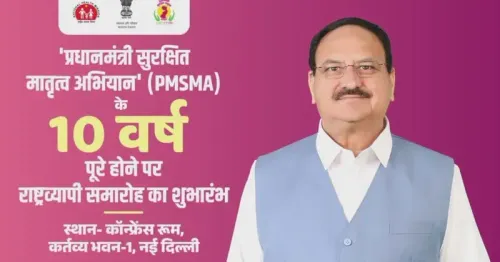
Nadda marked the 10th anniversary of PMSMA on 9 June 2026 .
India has recorded an 86% reduction in the Maternal Mortality Ratio (MMR) since the scheme's baseline, according to Nadda's post.
The under-five child mortality rate has fallen by 79% and the neonatal mortality rate by 70% , both cited as better than the global average.
PMSMA , launched in June 2016 , provides free antenatal care on the 9th of every month at designated government facilities.
India still needs to bring MMR below 70 per 1,00,000 live births to meet the SDG 3 target by 2030 .
The minister pledged to give 'further momentum' to PMSMA to fully achieve maternal and child mortality reduction goals.
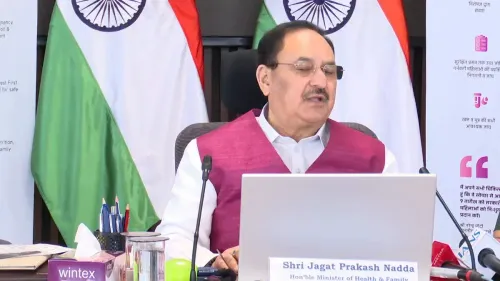
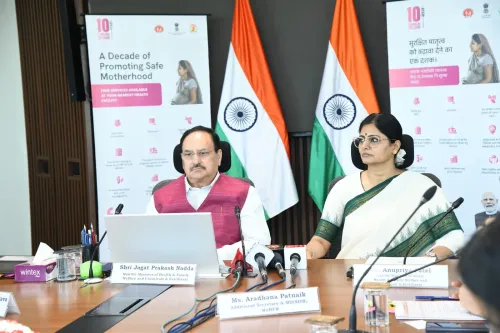
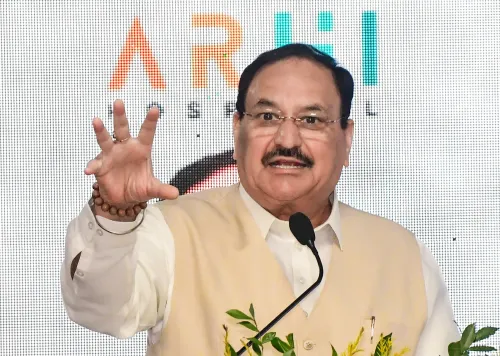
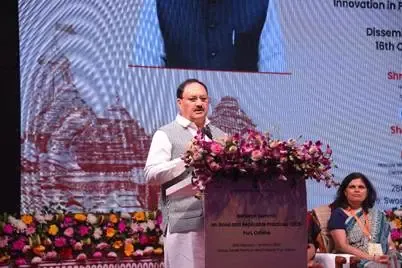
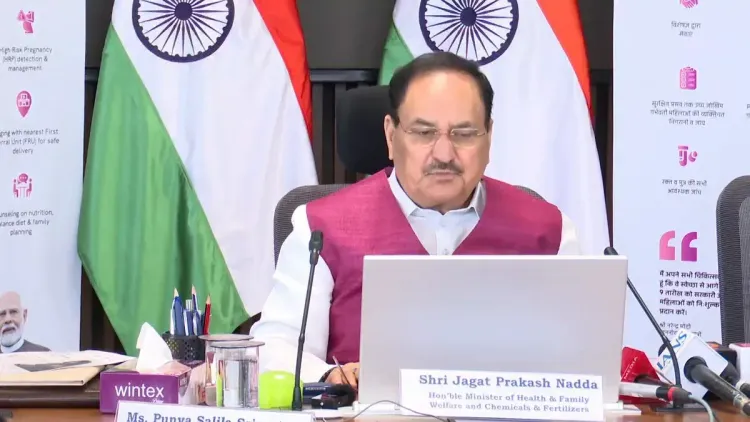
Union Health Minister J. P. Nadda on Tuesday, 9 June 2026 marked the 10th anniversary of the Pradhan Mantri Surakshit Matritva Abhiyan (PMSMA), highlighting steep declines in maternal and child mortality that he said outpace the global average, and renewing the government's commitment to accelerate the scheme further.
Context
Posting in Hindi, Nadda stated that India has recorded an 86 per cent reduction in the Maternal Mortality Ratio (MMR), a 79 per cent fall in under-five child mortality, and a 70 per cent decline in neonatal mortality — achievements he described as better than the global average. 'ये उपलब्धियां हमें संतोष के साथ-साथ आगे और बेहतर करने की प्रेरणा देती हैं' ('These achievements give us satisfaction as well as the inspiration to do even better'), he wrote.
The minister framed the figures as a collective milestone while reiterating that the government's resolve is to 'fully achieve the goal of reducing maternal and child mortality by giving further momentum to PMSMA.'
Policy Backdrop
PMSMA was launched in June 2016 to provide free, assured, comprehensive antenatal care on the 9th of every month at government health facilities across the country. The scheme sits within the broader National Health Mission (NHM) umbrella, which has prioritised maternal and child health since 2005 through interventions such as the Janani Suraksha Yojana and expanded immunisation drives.
India's National Health Policy 2017 set time-bound targets for reducing MMR and under-five mortality, and successive governments have layered targeted schemes under the NHM to drive institutional deliveries, antenatal coverage, and newborn care. Official mortality estimates are periodically published by the Registrar General of India through the Sample Registration System (SRS), which tracks demographic trends at the national and state level.
Stakeholders and Impact
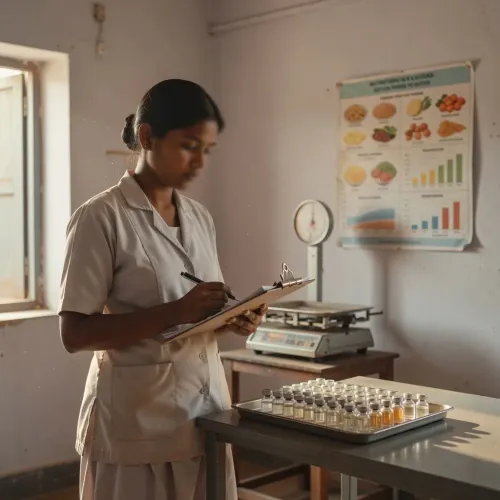
The primary beneficiaries of PMSMA are pregnant women — particularly those in rural and underserved areas — and newborns who gain from improved antenatal screening and referral pathways. State health departments are the implementing partners, responsible for designating facilities and deploying specialist doctors on fixed antenatal care days each month.
While the reductions cited are presented as exceeding global averages, health policy analysts have noted that India's MMR must still reach below 70 per 1,00,000 live births to meet the Sustainable Development Goal (SDG) 3 target by 2030, indicating that further progress is needed even as the gains are substantial.
What's Next
Attention will now turn to the forthcoming release of the next Sample Registration System statistical bulletin, which will carry updated official estimates for MMR and neonatal mortality and allow independent verification of the trend lines cited by the minister. Any formal review or expansion of PMSMA — including potential changes to outreach frequency, beneficiary coverage, or digital tracking — is expected to be discussed at the Ministry of Health and Family Welfare's annual programme review.
Nadda's post signals that the government intends to sustain political momentum behind the scheme heading into the second decade of its implementation, with the SDG 2030 deadline providing a hard policy benchmark against which progress will be measured.
Point of View
The framing emphasises relative achievement over the absolute gap that still remains. The post also signals to state health bureaucracies and frontline workers that PMSMA will continue to receive central attention and resources, sustaining implementation pressure down the chain.
NationPress
16 Sept 2026
Frequently Asked Questions
What is Pradhan Mantri Surakshit Matritva Abhiyan (PMSMA)?
PMSMA is a central government scheme launched in June 2016 that provides free, comprehensive antenatal care to pregnant women on the 9th of every month at designated government health facilities across India.
By how much has India's Maternal Mortality Ratio fallen under PMSMA?
According to Union Health Minister J. P. Nadda , India has recorded an 86% reduction in the Maternal Mortality Ratio (MMR) , a figure he described as better than the global average. Official SRS bulletins from the Registrar General of India carry the underlying data.
What is India's SDG target for maternal mortality?
Under Sustainable Development Goal 3 , India aims to reduce its MMR to below 70 per 1,00,000 live births by 2030 . Health analysts note that despite significant progress, this absolute target still requires further reductions.
What is the National Health Mission and how does PMSMA fit into it?
The National Health Mission (NHM) , which subsumed the earlier National Rural Health Mission, has been India's overarching framework for maternal and child health since 2005 . PMSMA operates as a focused antenatal care intervention within the NHM alongside schemes such as Janani Suraksha Yojana .
What does the 10-year PMSMA anniversary mean for India's health policy?
The 10th anniversary in June 2026 marks a moment for policy review and potential expansion. Minister Nadda has pledged to accelerate the scheme, and the next Sample Registration System bulletin will provide updated official mortality data to benchmark future targets.