Nadda flags 90.6% institutional delivery rate on PMSMA's 10th year
Synopsis
Union Health Minister J. P. Nadda on 9 June 2026 highlighted that India's institutional delivery rate has reached 90.6 per cent and antenatal coverage nearly 96 per cent, marking a decade of the Pradhan Mantri Surakshit Matritva Abhiyan and crediting health workers and state officials for the gains.
Key Takeaways
Union Health Minister J.
Nadda announced on 9 June 2026 that India's institutional delivery rate stands at 90.6 per cent .
Antenatal check-up coverage has reached nearly 96 per cent across the country.
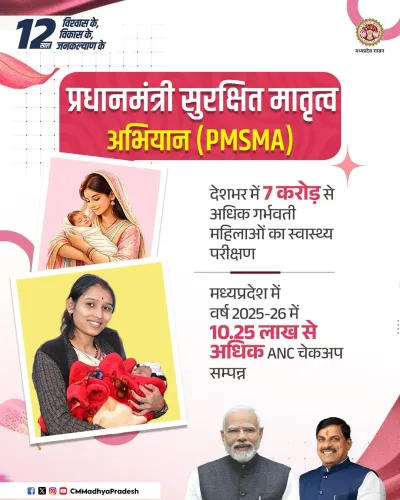
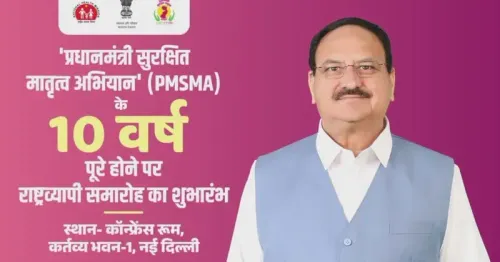
The announcement coincides with the 10th anniversary of the Pradhan Mantri Surakshit Matritva Abhiyan (PMSMA) , launched in June 2016 .
Nadda credited the health department , state health officials , and frontline health workers for achieving these milestones.
The gains build on a policy framework spanning Janani Suraksha Yojana (2005) , NRHM (2005) , and NHM (2013) .
India is working toward the SDG target of reducing Maternal Mortality Ratio to below 70 per 1,00,000 live births by 2030 .
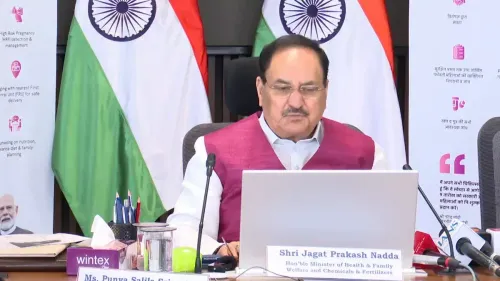
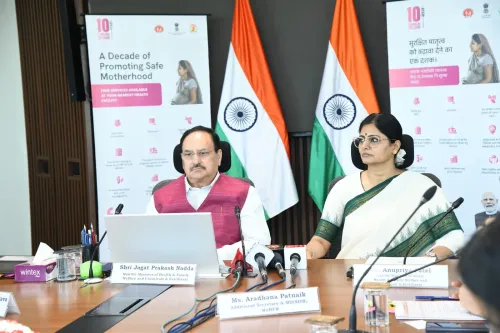
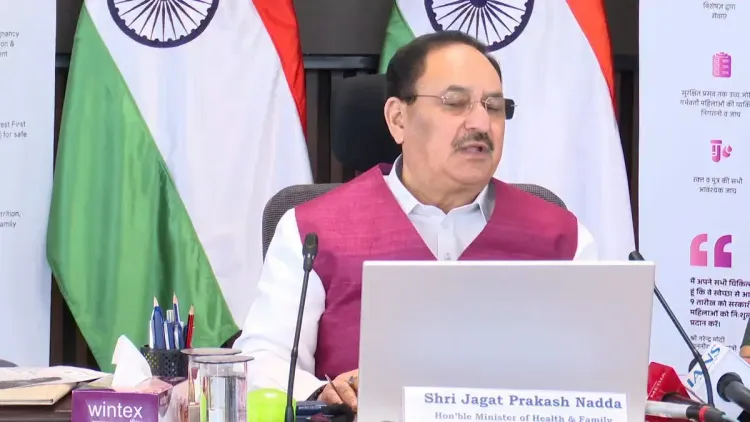
Union Health Minister J. P. Nadda on Tuesday, 9 June 2026 highlighted that institutional deliveries across India have reached 90.6 per cent and antenatal check-up coverage has touched nearly 96 per cent, marking what he called a significant achievement for a nation of 140 crore people. The announcement came as the Pradhan Mantri Surakshit Matritva Abhiyan (PMSMA) completed ten years, with the minister extending congratulations to the health department, state health officials, and all health workers.
Context
Posting in Hindi on X (formerly Twitter), Nadda wrote: 'आज देश में संस्थागत प्रसव 90.6% और एंटीनेटल चेकअप कवरेज लगभग 96% तक पहुँच चुका है' — 'Today, institutional deliveries in the country have reached 90.6 per cent and antenatal check-up coverage has reached nearly 96 per cent.' He described the figures as proof of India's resolve toward 'safe motherhood and healthy children,' and used the hashtag #10YearsOfPMSMA to anchor the post to the scheme's decade-long milestone.
The Pradhan Mantri Surakshit Matritva Abhiyan was launched in June 2016 to guarantee at least one quality antenatal check-up by a medical officer for every pregnant woman, conducted on the 9th of every month at government health facilities. The scheme was designed to address gaps in early detection of high-risk pregnancies and to standardise the quality of antenatal care at the primary health centre level.
Policy Backdrop
India's maternal health architecture rests on a layered policy framework built over two decades. The Janani Suraksha Yojana (JSY), launched in 2005, introduced conditional cash transfers to incentivise institutional deliveries among below-poverty-line families, while the National Rural Health Mission (NRHM), also from 2005, strengthened sub-centre and primary health centre infrastructure. The National Health Mission (NHM), launched in 2013, subsumed these efforts under a single umbrella and provided the administrative backbone for tracking maternal and child health indicators across states.
Successive rounds of the National Family Health Survey (NFHS) have documented a steady upward trajectory in institutional delivery rates — from below 40 per cent in the early 2000s to the figures now cited by the minister. The Accredited Social Health Activists (ASHAs) have played a central role in mobilising pregnant women toward facility-based care, particularly in rural and tribal districts where home delivery was historically prevalent.
Stakeholders and Impact
The gains are most consequential for rural and low-income women, who historically faced the highest risks from unattended home deliveries. A higher institutional delivery rate correlates with greater access to skilled birth attendants, emergency obstetric care, and postnatal services — all of which bear directly on the Maternal Mortality Ratio (MMR) and infant mortality. India has been working toward the Sustainable Development Goal (SDG) target of reducing MMR to below 70 per 1,00,000 live births by 2030.
State health departments and frontline workers — including ANMs (Auxiliary Nurse Midwives), ASHAs, and district medical officers — are the primary beneficiaries of the minister's acknowledgement. Nadda's post specifically credited 'health workers' and 'state health officials' for driving the coverage numbers, signalling central recognition of the federal partnership that underpins NHM implementation.
What's Next
The Ministry of Health and Family Welfare is expected to release updated Health Management Information System (HMIS) data in the coming months, which will provide state-level granularity on where the remaining gaps in antenatal and institutional delivery coverage persist. High-focus states — particularly those in central and northeastern India — remain priority areas for convergence efforts under NHM.
With Ayushman Bharat expanding its footprint, integration of high-risk pregnancy tracking within the digital health ecosystem is a likely next step, potentially enabling real-time monitoring of antenatal visits and delivery outcomes at scale. The PMSMA's tenth anniversary provides a policy moment to consolidate gains and set measurable targets for the next phase of India's maternal health agenda.
Point of View
Framing the 90.6 per cent and 96 per cent figures as validation of the BJP-led government's maternal health stewardship. The numbers, if borne out by HMIS data, would represent one of the more striking public-health turnarounds in a middle-income country of India's scale, lending political weight to the NHM's federal co-implementation model. The shout-out to state officials is also notable — it softens centre-state friction on health funding by publicly sharing credit. The post sets the stage for a broader push toward Ayushman Bharat integration and positions the ministry ahead of the next NFHS data release.
NationPress
19 Sept 2026
Frequently Asked Questions
What is the current institutional delivery rate in India?
Union Health Minister J. P. Nadda stated on 9 June 2026 that India's institutional delivery rate has reached 90.6 per cent, a significant rise from below 40 per cent in the early 2000s.
What is the Pradhan Mantri Surakshit Matritva Abhiyan (PMSMA)?
PMSMA is a central government scheme launched in June 2016 that guarantees at least one quality antenatal check-up by a medical officer for every pregnant woman on the 9th of every month at government health facilities.
How has India improved its maternal health outcomes?
India has used a layered approach combining the Janani Suraksha Yojana cash transfers, ASHA mobilisation, National Rural Health Mission infrastructure upgrades, and the PMSMA's fixed-day antenatal clinics to shift births from home to facilities and improve antenatal coverage.
What is India's target for Maternal Mortality Ratio by 2030?
India is working toward the Sustainable Development Goal target of reducing the Maternal Mortality Ratio to below 70 per 1,00,000 live births by 2030.
What is the role of ASHAs in improving institutional deliveries in India?
Accredited Social Health Activists (ASHAs) are frontline community health workers who mobilise pregnant women — especially in rural and tribal areas — to attend antenatal check-ups and deliver at health facilities, playing a central role in driving up institutional delivery rates.