Nadda launches PMSMA decade celebrations in New Delhi
Synopsis
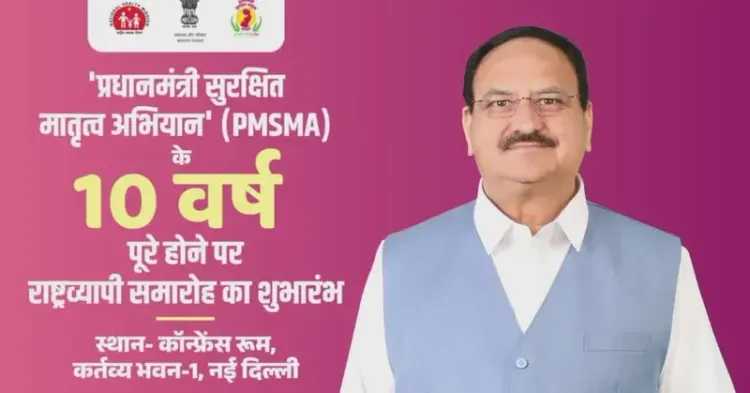
Union Health Minister J. P. Nadda on 9 June 2026 launched nationwide celebrations marking 10 years of PMSMA in New Delhi. The scheme, started in 2016, provides free antenatal check-ups to pregnant women on the 9th of every month and sits within India's broader National Health Mission framework targeting reduced maternal mortality.
Key Takeaways
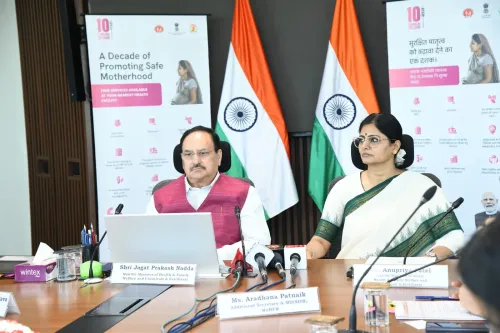
Nadda launched the '10 Years of PMSMA – A Decade of Care' celebrations in New Delhi on 9 June 2026 .
PMSMA was originally launched on 9 June 2016 , providing free comprehensive antenatal check-ups on the 9th of every month at government health facilities.
The scheme is implemented under the National Health Mission framework and complements Janani Suraksha Yojana and Ayushman Bharat .
Frontline workers including ASHAs and auxiliary nurse midwives are central to mobilising beneficiaries for the monthly camps.
The milestone is aligned with SDG-3 targets to reduce India's maternal mortality ratio further by 2030 .
State-level review meetings and potential revised operational guidelines are expected across the year-long celebration period.
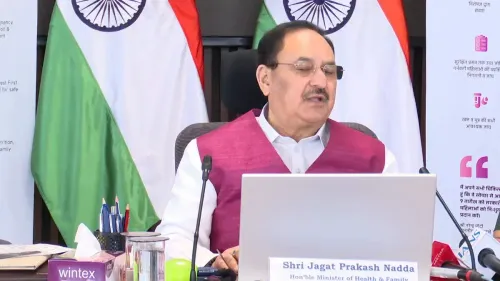
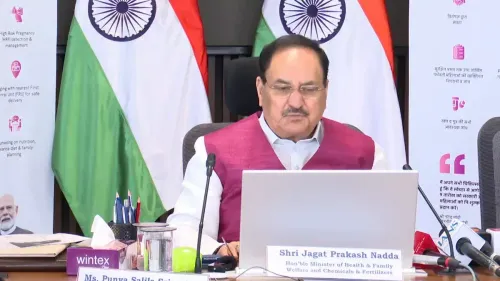
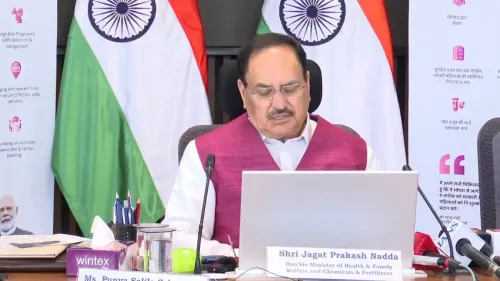
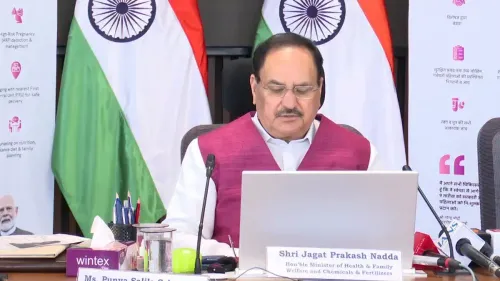
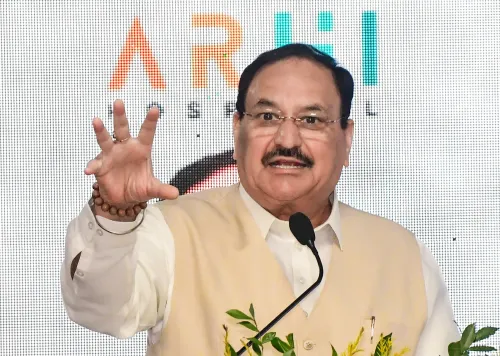
Union Health Minister J. P. Nadda on Tuesday, 9 June 2026 presided over the launch of nationwide celebrations marking 10 Years of Pradhan Mantri Surakshit Matritva Abhiyaan (PMSMA), themed 'A Decade of Care', at an event held in New Delhi. The milestone marks a full decade since the maternal health scheme was institutionalised to provide free antenatal check-ups to pregnant women across India every ninth of the month.
Context
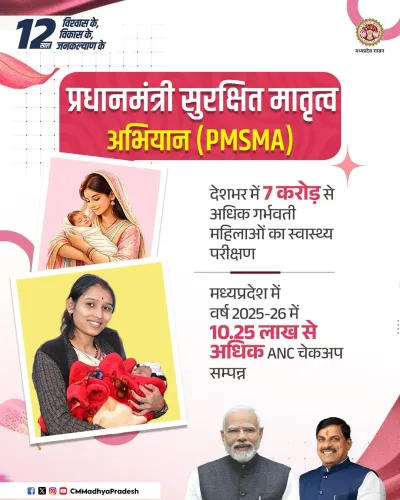
PMSMA was launched on 9 June 2016 by the Ministry of Health and Family Welfare under the government of Prime Minister Narendra Modi to address gaps in antenatal care by fixing a dedicated date — the 9th of every month — for comprehensive, free check-ups at government health facilities. The scheme targets pregnant women in their second and third trimesters, offering blood pressure screening, blood and urine tests, ultrasound, and specialist consultations that might otherwise be inaccessible. The hashtag #IPledgeFor9 used at the launch underscores the scheme's defining calendar anchor.
The ten-year celebrations signal the government's intent to sustain and amplify the programme's reach. The event in New Delhi served as the formal starting point for what is expected to be a year-long series of state-level reviews and outreach drives under the #10YearsofPMSMA banner.
Policy Backdrop
PMSMA sits within the broader National Health Mission (NHM) framework that has prioritised maternal health indicators since 2005. It complements schemes such as Janani Suraksha Yojana, which incentivises institutional deliveries, and Ayushman Bharat, which extends secondary and tertiary care coverage to vulnerable populations. Together, these initiatives are aligned with Sustainable Development Goal 3 (SDG-3), which calls for a global maternal mortality ratio below 70 per one lakh live births by 2030.
India's maternal mortality ratio has shown a sustained downward trend over the past two decades, and fixed-day antenatal care under PMSMA is credited by health administrators as a structural contributor to that improvement. The scheme is implemented through state health societies and the existing NHM infrastructure, involving frontline workers such as ASHAs and ANMs who mobilise beneficiaries ahead of the monthly camp days.
Stakeholders and Impact
The primary beneficiaries of PMSMA are pregnant women — particularly those in rural, semi-urban, and underserved urban areas — who gain access to specialist-level antenatal care without out-of-pocket expenditure. Frontline health workers, including ASHAs, auxiliary nurse midwives, and government obstetricians, are the operational backbone of the monthly fixed-day camps. Private-sector gynaecologists and doctors who volunteer for the camps on the 9th of each month are also key participants.
At the policy level, state health departments are expected to use the decade milestone to review their own PMSMA performance data, identify high-burden districts, and align their maternal health targets with revised national benchmarks. The celebrations are also an opportunity to recognise and incentivise high-performing states and districts.
What's Next
Following the New Delhi launch, state-level PMSMA review meetings and outreach events are anticipated across the country through the year-long celebrations. Health administrators and observers will watch for any revised operational guidelines, updated performance dashboards, or new targets that the Ministry of Health and Family Welfare may release in conjunction with the anniversary drive. The sustained political attention from Minister Nadda — who holds both the health portfolio and the presidency of the ruling BJP — signals that maternal health will remain a visible priority in the government's public-welfare narrative ahead of upcoming state electoral cycles.
Point of View
Who straddles both the health ministry and the BJP presidency, the event reinforces the party's 'good governance' narrative on women's welfare at a moment when several state elections loom. The decade framing also implicitly credits the Modi government with a sustained, measurable health intervention, a contrast to the pre-2016 era of fragmented antenatal services. Analysts will watch whether the celebrations yield substantive policy updates — revised targets, new district-level dashboards — or remain primarily communicative in character.
NationPress
25 Sept 2026
Frequently Asked Questions
What is Pradhan Mantri Surakshit Matritva Abhiyaan (PMSMA)?
PMSMA is a central government scheme launched on 9 June 2016 that provides free, comprehensive antenatal check-ups to pregnant women on the 9th of every month at government health facilities. Services include blood pressure monitoring, blood and urine tests, ultrasound, and specialist consultations.
Why is PMSMA celebrated on the 9th of every month?
The 9th of every month is the fixed day designated under PMSMA for antenatal care camps at government health facilities, giving pregnant women a predictable, recurring date to access free specialist services — which is also the origin of the campaign hashtag #IPledgeFor9 .
What did J. P. Nadda do at the PMSMA 10-year event?
Union Health Minister J. P. Nadda presided over the launch of nationwide celebrations for '10 Years of PMSMA – A Decade of Care' in New Delhi on 9 June 2026 , marking the scheme's tenth anniversary.
How does PMSMA relate to India's maternal mortality goals?
PMSMA is part of the National Health Mission and contributes to India's commitment under SDG-3 to reduce the maternal mortality ratio. It complements Janani Suraksha Yojana and Ayushman Bharat in building a continuum of maternal care from antenatal check-ups through institutional delivery.
Who are the frontline workers involved in PMSMA?
ASHAs (Accredited Social Health Activists) and auxiliary nurse midwives ( ANMs ) are the primary frontline workers who mobilise pregnant women for the monthly PMSMA camps, supported by government obstetricians and volunteer private-sector gynaecologists.