Nadda Cites NFHS-6 Data to Highlight Decade of Health Gains
Synopsis
Union Health Minister J. P. Nadda cited NFHS-6 figures on June 6, 2026, showing full immunisation at 87.1%, health insurance coverage up from 4.9% to 60.2%, child stunting down to 29.3%, and hygienic menstrual protection at 79.2%, contrasting outcomes with the UPA-era NFHS-3 baseline of 2005-06.
Key Takeaways
Union Health Minister J.
Nadda posted a comparative thread on June 6, 2026 , citing NFHS-6 data against the NFHS-3 (2005–06) baseline.
Full immunisation coverage has risen to 87.1% as recorded in NFHS-6.
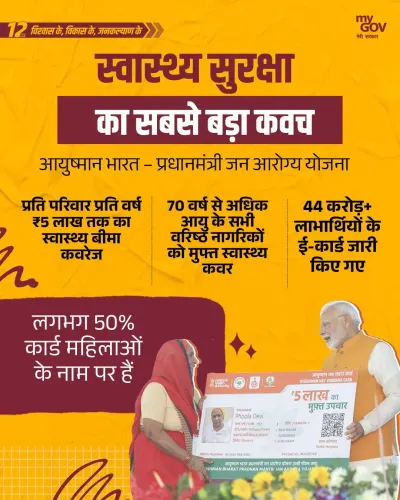
Health insurance coverage has increased from 4.9% to 60.2% , a rise broadly linked to the Ayushman Bharat PM-JAY scheme launched in 2018.
Child stunting has declined from 48.0% to 29.3% , indicating significant improvement in chronic undernutrition among children.
Use of hygienic menstrual protection has reached 79.2% , reflecting gains in women's health infrastructure and awareness.
Final NFHS-6 state-level fact sheets are awaited and will reveal regional variation behind the national averages.
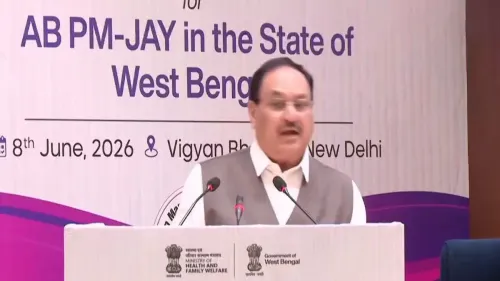
Union Health Minister J. P. Nadda on Saturday, June 6, 2026, shared a detailed thread on X comparing health indicators from the National Family Health Survey-6 (NFHS-6) with those from NFHS-3 (2005–06), arguing that improvements across immunisation, health insurance, nutrition and menstrual hygiene reflect a decade of focused governance under the current administration.
Context
The post, framed as a response to his own earlier remarks, draws a direct contrast between the UPA era — which presided over the NFHS-3 baseline conducted in 2005–06 — and the present government's record. Nadda stated that 'the gains reflected in NFHS-6 extend far beyond maternal healthcare and stand in sharp contrast to the poor outcomes witnessed during the UPA era.'
Four headline figures anchored the comparison: full immunisation coverage rising to 87.1%, health insurance coverage surging from 4.9% to 60.2%, use of hygienic menstrual protection reaching 79.2%, and child stunting declining from 48.0% to 29.3%.
Policy Backdrop
The National Family Health Survey has tracked health, nutrition and demographic indicators at roughly five-year intervals since the early 1990s, providing a consistent cross-government benchmark. NFHS-3 captured data during the first term of the United Progressive Alliance, while NFHS-5 — conducted in 2019–21 — provided the most recent nationally published round before NFHS-6.
The sharp rise in health insurance coverage cited by Nadda broadly aligns with the rollout of Ayushman Bharat Pradhan Mantri Jan Arogya Yojana from 2018, which extended cashless hospitalisation cover to low-income families. Immunisation gains have been pursued through successive missions, including the National Rural Health Mission launched in 2005 and its successor frameworks under the current government.
Child stunting — a composite marker of chronic undernutrition — has been a persistent policy challenge in India. A decline from 48.0% to 29.3% over roughly two decades, if confirmed by final NFHS-6 reports, would represent one of the steeper reductions recorded in comparable survey rounds globally.
Stakeholders and Impact
The indicators cited most directly affect women, children and rural households — populations that have historically faced the sharpest gaps in healthcare access and nutritional outcomes. Menstrual hygiene data, in particular, has been tracked as a proxy for broader women's health infrastructure and awareness.
Nadda framed the numbers in human terms, writing that 'behind every percentage point are millions of Indians with better health, greater security and improved quality of life.' He described NFHS-6 as 'not merely a set of statistics — it is evidence of the transformative outcomes achieved through sustained policy action and effective implementation.'
The post is likely to feed into ongoing parliamentary debates over health budget allocations and the performance of flagship schemes, with the Opposition expected to contest the framing that improvements are attributable solely to post-2014 governance.
What's Next
The release of final NFHS-6 state-level fact sheets and detailed thematic reports by the Ministry of Health and Family Welfare will be closely watched by public health researchers and policymakers. State-disaggregated data typically reveals significant variation that national averages can obscure, and will test whether the gains cited by Nadda are distributed equitably across regions.
With BJP national president Nadda leading the messaging, the NFHS-6 data is expected to feature prominently in the ruling party's health governance narrative ahead of upcoming electoral cycles, making the survey's full publication a politically significant milestone.
Point of View
Insurance, stunting and menstrual hygiene — covers breadth across child health, women's welfare and financial protection, signalling a coordinated messaging strategy rather than a spontaneous post. The move also pre-empts Opposition critiques by putting the ruling party's preferred data frame into public discourse before the full NFHS-6 report is released and independently scrutinised. Whether the gains hold up under state-level disaggregation will determine how durable this narrative proves to be.
NationPress
19 Sept 2026
Frequently Asked Questions
What is NFHS-6 and when was it conducted?
NFHS-6 is the sixth round of the National Family Health Survey, a large-scale health and demographic data exercise carried out periodically by India's Ministry of Health and Family Welfare. The exact fieldwork dates for NFHS-6 have not been officially confirmed in publicly available records, and the final detailed reports are still awaited.
What does NFHS-6 say about child stunting in India?
According to figures cited by Union Health Minister J. P. Nadda, child stunting has declined from 48.0% recorded in NFHS-3 (2005-06) to 29.3% in NFHS-6, indicating a significant reduction in chronic undernutrition among children over roughly two decades.
How has health insurance coverage changed between NFHS-3 and NFHS-6?
Health insurance coverage has risen sharply from 4.9% in NFHS-3 (2005-06) to 60.2% in NFHS-6, a rise that broadly corresponds with the rollout of Ayushman Bharat Pradhan Mantri Jan Arogya Yojana from 2018.
What is the immunisation coverage figure in NFHS-6?
NFHS-6 records full immunisation coverage at 87.1%, according to data cited by Union Health Minister J. P. Nadda in his June 6, 2026 post on X.
Why is J. P. Nadda comparing NFHS-6 with NFHS-3?
Nadda used NFHS-3 (2005-06), conducted during the UPA government, as a baseline to argue that health outcomes have improved substantially under the current administration. The comparison is part of a broader political and policy narrative ahead of the release of full NFHS-6 reports.