Nadda Cites NFHS-6 Data to Counter Kharge on Maternal Health

Synopsis
Union Health Minister J. P. Nadda on June 6 countered Congress president Mallikarjun Kharge by citing NFHS-6 figures showing institutional deliveries rising from 38.7% to 90.6% and skilled birth attendance from 46.6% to 91.3% since the 2005-06 NFHS-3 baseline.
Key Takeaways
Union Health Minister J.
Nadda publicly rebutted Congress president Mallikarjun Kharge on June 6, 2026 , accusing him of 'half-knowledge' on public health.
NFHS-6 data cited by Nadda shows first-trimester antenatal registration rising from 43.9% to 76.2% compared with the NFHS-3 (2005-06) baseline.
Institutional deliveries increased from 38.7% to 90.6% over the same period, according to the figures quoted by the minister.
Births attended by skilled health personnel rose from 46.6% to 91.3% , reflecting a structural expansion of the trained health workforce.
Key programmes underpinning the gains include Janani Suraksha Yojana (2005), the National Health Mission , and Ayushman Bharat (2018).
The full NFHS-6 report , including state-level data, is awaited and is expected to feature in parliamentary and policy discussions.
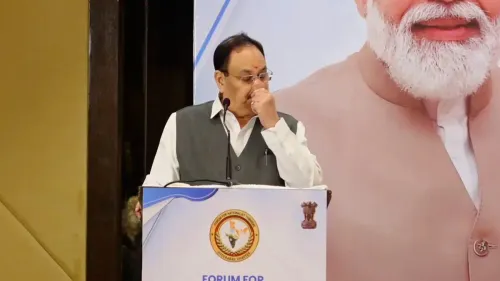
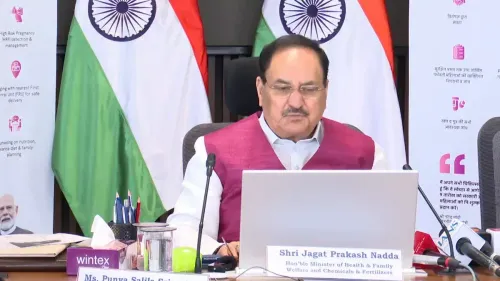
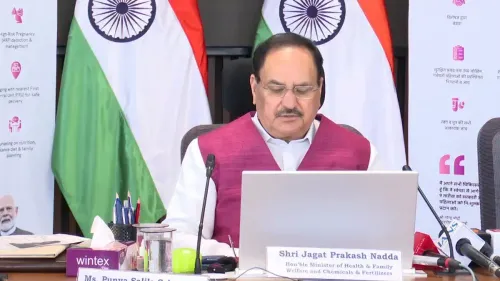
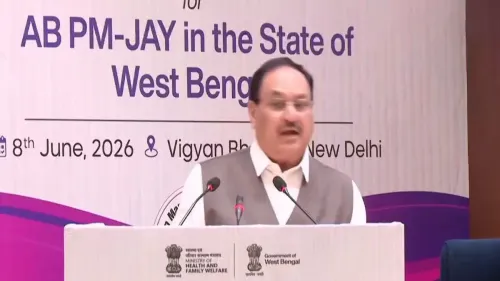
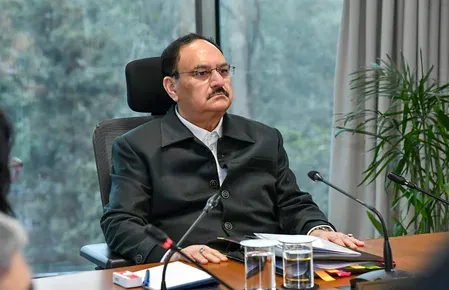
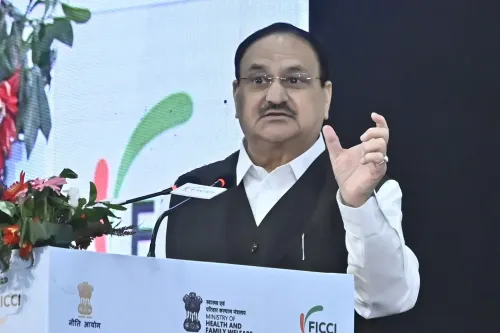
Union Health Minister J. P. Nadda on Saturday, June 6, 2026, sharply rebutted Congress president Mallikarjun Kharge, invoking the latest National Family Health Survey data to argue that India's maternal health indicators have seen transformative gains under Prime Minister Narendra Modi.
Context
Nadda's post was a direct response to remarks by Kharge, whom the minister accused of 'half-knowledge' that reduces public health to 'political rhetoric.' The health minister argued that 'selective reading may serve politics, but facts serve the nation,' framing the exchange as a contrast between data-driven governance and opposition point-scoring.
The minister cited three specific metrics from NFHS-6, comparing them with the NFHS-3 baseline of 2005-06 to illustrate long-run progress: first-trimester antenatal registration rising from 43.9% to 76.2%, institutional deliveries climbing from 38.7% to 90.6%, and births attended by skilled health personnel increasing from 46.6% to 91.3%.
Policy Backdrop
The improvements Nadda highlighted sit within a policy lineage stretching back two decades. The Janani Suraksha Yojana, launched in 2005, introduced cash incentives to encourage institutional deliveries and reduce maternal mortality, while the National Rural Health Mission — later expanded into the National Health Mission — strengthened rural maternal and child health services from the same year.
The Ayushman Bharat programme, launched in 2018, further extended primary health infrastructure and insurance coverage, providing a platform for secondary and tertiary care access for low-income families. Successive NFHS rounds — from NFHS-4 in 2015-16 through NFHS-5 in 2019-21 — have each recorded incremental gains in antenatal care and institutional delivery rates, with NFHS-6 now cited as the latest evidence of that trajectory.
India's tracking of maternal health indicators is also tied to its commitments under the Sustainable Development Goals, particularly the target of reducing the maternal mortality ratio and ensuring universal access to sexual and reproductive healthcare services.
Stakeholders and Impact
The numbers at the centre of the dispute represent concrete outcomes for millions of women. A jump in institutional deliveries from under 39% to over 90% since 2005-06 means a vastly larger share of births now take place in hospitals or health centres with trained staff, directly reducing risks of maternal and neonatal mortality.
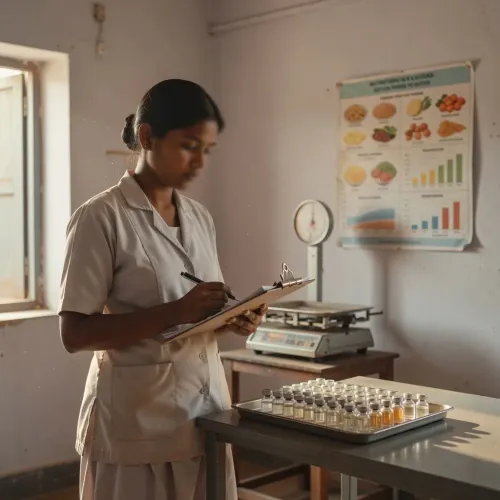
Skilled birth attendance crossing 91% similarly reflects a structural shift in how India's rural and semi-urban health workforce has been deployed. Frontline workers — Accredited Social Health Activists, auxiliary nurse midwives, and government hospital staff — are the human infrastructure behind these aggregate figures.
The political dimension is equally significant. As BJP national president, Nadda's intervention blends his ministerial brief with party communication strategy, reinforcing the ruling party's narrative that data-backed governance distinguishes it from opposition criticism.
What's Next
The full NFHS-6 report — including state-level breakdowns and district-wise data — is expected to be a key reference in forthcoming parliamentary sessions and health ministry briefings. Opposition parties are likely to scrutinise regional disparities in the data, particularly in states where maternal health indicators have historically lagged the national average.
The exchange between Nadda and Kharge signals that maternal health data will remain a live political flashpoint as both parties position themselves ahead of future electoral cycles, with the government anchoring its health record to measurable survey outcomes.
Point of View
Pivot from criticism to a progress narrative, and let the numbers carry the political weight. By stretching the comparison back to NFHS-3 in 2005-06 — a Congress-era baseline — the minister implicitly credits the post-2014 policy period with the most dramatic acceleration, a framing the opposition is certain to contest by pointing to state-level disparities or questioning survey methodology. The exchange also underscores Nadda's dual role: as health minister he owns the data, and as BJP president he deploys it. How the full NFHS-6 report holds up to independent scrutiny will determine whether this narrative sustains through the next parliamentary session.
NationPress
21 Oct 2026
Frequently Asked Questions
What is NFHS-6 and what does it say about maternal health in India?
NFHS-6 is the sixth round of the National Family Health Survey, the most recent nationwide assessment of India's population, health, and nutrition indicators. According to figures cited by Union Health Minister J. P. Nadda, it shows institutional deliveries reaching 90.6% and skilled birth attendance at 91.3%, compared with 38.7% and 46.6% respectively in the NFHS-3 survey of 2005-06.
Why did J. P. Nadda respond to Mallikarjun Kharge on health data?
Nadda responded to rebut what he described as Kharge's 'half-knowledge' about public health, arguing that the Congress president's remarks amounted to political rhetoric that ignored NFHS-6 survey data showing significant improvements in maternal healthcare under Prime Minister Narendra Modi.
What is the Janani Suraksha Yojana and how does it relate to rising institutional deliveries?
The Janani Suraksha Yojana, launched in 2005, provides cash incentives to pregnant women to encourage them to deliver in government health facilities rather than at home. It is widely credited as a key driver of the rise in institutional deliveries recorded across successive NFHS rounds.
How does India's antenatal care registration compare between NFHS-3 and NFHS-6?
First-trimester antenatal care registration rose from 43.9% in NFHS-3 (2005-06) to 76.2% in NFHS-6, according to figures cited by Health Minister Nadda, indicating that a significantly larger share of pregnant women are now registering for care in the critical early stage of pregnancy.
What is Ayushman Bharat and what role has it played in maternal health?
Ayushman Bharat, launched in 2018, is a flagship programme that expanded primary health and wellness centres and provided insurance coverage for secondary and tertiary care to low-income families. It has contributed to broadening access to institutional maternal care, complementing earlier schemes like the Janani Suraksha Yojana and the National Health Mission.