Nadda cites NFHS-6 data to counter Kharge on India's health gains
Synopsis
A political skirmish over the same dataset: Nadda and Kharge are both citing NFHS figures — but from different survey rounds. The minister's NFHS-6 numbers on institutional deliveries (90.6%) and stunting decline (48% to 29.3%) are striking, but the Congress is leaning on NFHS-5 anaemia and malnutrition data. The real story is that India's health scorecard is genuinely mixed — and both sides are right about their chosen slice of it.
Key Takeaways
Union Health Minister J.P.
Nadda rebutted Congress president Mallikarjun Kharge on 6 June over healthcare data, citing NFHS-6 improvements.
Institutional deliveries rose from 38.7% (NFHS-3, 2005–06) to 90.6% (NFHS-6), according to Nadda.
Child stunting declined from 48% to 29.3% ; health insurance coverage jumped from 4.9% to 60.2% .
Kharge had alleged on Thursday that 57% of women aged 15–49 are anaemic, citing NFHS-5 data.
Both parties are citing different NFHS survey rounds to support opposing narratives on India's public health record.
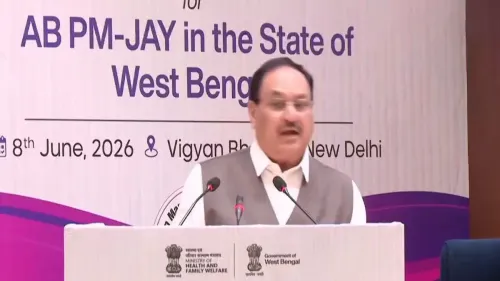
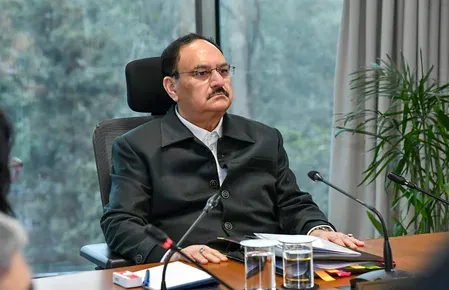
Union Health Minister J.P. Nadda on Saturday, 6 June sharply rebutted Congress president Mallikarjun Kharge's criticism of the Narendra Modi government on healthcare and nutrition, asserting that the National Family Health Survey (NFHS-6) data demonstrates measurable improvements in India's public health outcomes over the past decade. Nadda accused Kharge of presenting a selective reading of survey findings, warning that political rhetoric on public health serves no one.
What Nadda Said
Responding through a series of posts on X, Nadda was unsparing in his assessment of the Congress leader's remarks. 'Shri Kharge ji's half-knowledge is dangerous. Public health is too important to be reduced to political rhetoric. Selective reading may serve politics, but facts serve the nation,' he said.
The minister maintained that NFHS-6 data reflects genuine, ground-level progress — not a statistical artefact — and cautioned that denying these gains would undermine the efforts of frontline health workers and beneficiaries across the country.
Key NFHS-6 Figures Cited
Comparing NFHS-6 with NFHS-3 (conducted in 2005–06), Nadda pointed to a sharp rise in first-trimester antenatal registration — from 43.9% to 76.2%. Institutional deliveries climbed from 38.7% to 90.6%, while births attended by skilled health personnel rose from 46.6% to 91.3%.
Additional indicators cited by the minister include full immunisation coverage reaching 87.1%, health insurance coverage expanding dramatically from 4.9% to 60.2%, and the use of hygienic menstrual protection touching 79.2%. Child stunting, he noted, has declined from 48% to 29.3% over the same period.
'These are not mere statistics. They represent millions of mothers receiving timely care, safer deliveries and better health outcomes. The real story of India's healthcare journey is one of progress, not pessimism,' Nadda said.
What Kharge Had Alleged
The exchange was triggered by a post on X by Kharge on Thursday, in which the Congress president accused the Bharatiya Janata Party (BJP)-led government of concealing crucial health data and failing women and children. Kharge claimed that one in five children suffers from acute malnutrition, one-third of children are underweight, and over 84% of children aged 6 to 23 months do not receive adequate nutrition.
He also cited NFHS-5 figures, alleging that 57% of women aged 15 to 49 are anaemic and one in five women is undernourished — figures the Congress has repeatedly deployed to challenge the government's public health narrative.
The Political Backdrop
Nadda contrasted the NFHS-6 improvements with what he described as poor outcomes during the Congress-led United Progressive Alliance (UPA) years, alleging that decades of policy failures had left India with weak healthcare infrastructure and poor health indicators. This comes amid a broader political contest over data ownership — both sides invoking the same survey series while drawing opposing conclusions.
Notably, the NFHS-6 and NFHS-5 datasets cover different reference periods, which critics argue makes direct comparisons between the two politically convenient but methodologically selective. The government has attributed gains to schemes such as Ayushman Bharat, the Poshan Abhiyaan, and expanded sanitation drives under the Swachh Bharat Mission.
With both parties staking claim to the same survey data, the NFHS series has become an unlikely political battleground — and the debate is unlikely to end here.
Point of View
Not just the flattering columns.
NationPress
21 Oct 2026
Frequently Asked Questions
What is NFHS-6 and what does it show about India's health?
The National Family Health Survey-6 (NFHS-6) is the latest edition of India's large-scale household health survey. According to Health Minister J.P. Nadda, it shows significant gains: institutional deliveries have risen to 90.6%, child stunting has fallen to 29.3%, and health insurance coverage has expanded from 4.9% to 60.2% compared with the 2005–06 NFHS-3 baseline.
What did Congress president Mallikarjun Kharge allege about India's health data?
Kharge, in an X post on Thursday, accused the BJP-led government of concealing crucial health data and failing women and children. He cited NFHS-5 figures claiming 57% of women aged 15–49 are anaemic, one in five women is undernourished, and over 84% of children aged 6–23 months do not receive adequate nutrition.
How did J.P. Nadda respond to Kharge's criticism?
Nadda posted a detailed rebuttal on X, accusing Kharge of 'selective reading' of survey data. He said 'half-knowledge is dangerous' and cited NFHS-6 figures on maternal care, immunisation, and child health to argue that India's public health trajectory under the Modi government has been one of measurable progress.
Why are both sides citing different NFHS data?
NFHS-5 and NFHS-6 cover different reference periods. The Congress has relied on NFHS-5 figures — particularly on anaemia and malnutrition — while the government cites NFHS-6 improvements. Critics note that comparing NFHS-6 directly against the older NFHS-3 (2005–06), as Nadda did, maximises the apparent scale of progress by skipping more recent baselines.
Which government schemes has the Centre credited for the health improvements?
The government has attributed NFHS-6 gains to programmes including Ayushman Bharat (health insurance), Poshan Abhiyaan (nutrition), and the Swachh Bharat Mission (sanitation). Nadda said these reflect 'sustained investments in healthcare, nutrition, sanitation, financial inclusion and last-mile service delivery.'