WHO Chief Tedros Praises India's Healthcare Gains, Meets Nadda in Timor-Leste
Synopsis
WHO Director-General Tedros Adhanom Ghebreyesus praised India's healthcare progress — from 1,60,000 Ayushman Arogya Mandirs to ASHA workers and a jump in institutional deliveries from 78% to 93% — during a meeting with Health Minister J.P. Nadda on the sidelines of the WHO regional session in Timor-Leste.
Key Takeaways
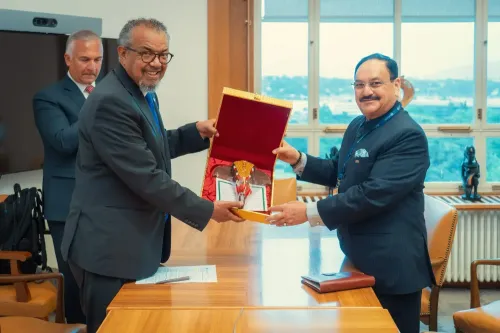
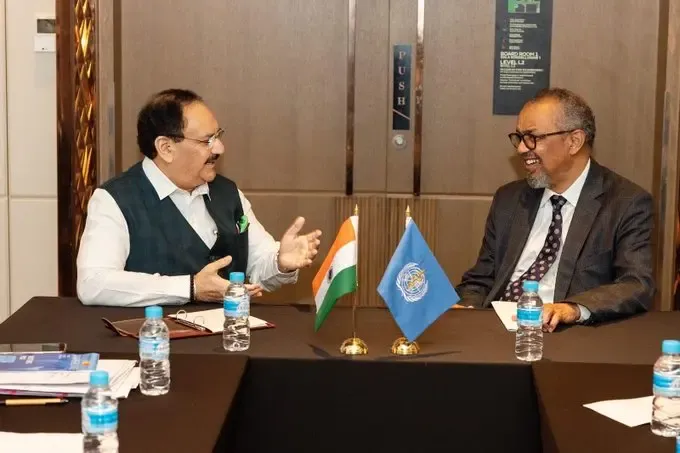
WHO Director-General Tedros Adhanom Ghebreyesus met Union Health Minister J.P.
Nadda at the 79th WHO Regional Committee session in Dili, Timor-Leste .
Tedros praised India's progress in maternal and child health, including a rise in institutional deliveries from 78% to 93% .
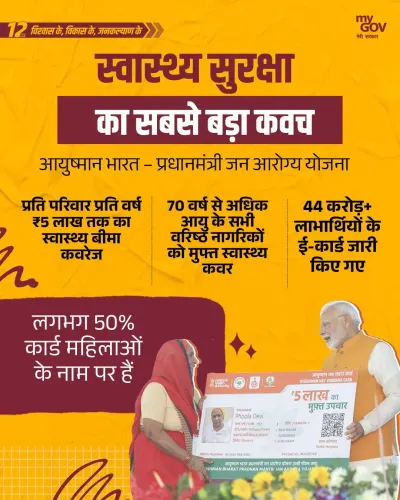
Approximately 1,60,000 Ayushman Arogya Mandirs are screening communities for hypertension, diabetes, and cancers.
India's ASHA workers were described as a 'powerful example' of community-level healthcare delivery.
The leaders also discussed India's TB elimination efforts and the ongoing WHO Pandemic Agreement negotiations.
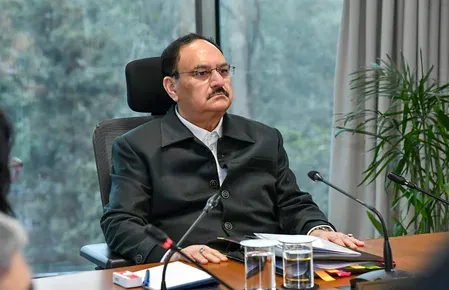
World Health Organization (WHO) Director-General Tedros Adhanom Ghebreyesus lauded India's significant strides in healthcare — particularly in maternal and child health, primary care expansion, and non-communicable disease (NCD) prevention — during a meeting with Union Health Minister J.P. Nadda on the sidelines of the 79th Session of the WHO Regional Committee for South-East Asia in Dili, Timor-Leste, on 10 September.
Key Highlights of the Bilateral Meeting
The interaction between the WHO chief and Nadda covered a broad sweep of India's public health achievements and its deepening cooperation with the global health body. Tedros reportedly singled out India's progress on maternal and child health outcomes, its expanded immunisation coverage, and its efforts to combat NCDs such as hypertension, diabetes, and common cancers.
In a post on X, Tedros stated: 'I met India's Health Minister J.P. Nadda and congratulated him on the country's impressive health gains, particularly in maternal and child health and the fight against noncommunicable diseases.'
Ayushman Arogya Mandirs and Grassroots Screening
Tedros specifically praised the Ayushman Arogya Mandir initiative, through which approximately 1,60,000 centres are reportedly bringing screening for hypertension, diabetes, and cancers closer to communities across India. These facilities also provide referral pathways for patients requiring further care.
The WHO chief highlighted that this model represents a scalable approach to primary healthcare — one that other developing nations in the South-East Asia region could potentially learn from. This comes amid a global push by the WHO to strengthen community-level health infrastructure, particularly in low- and middle-income countries.
ASHA Workers Recognised as 'Powerful Example'
Tedros also drew attention to India's extensive network of ASHA (Accredited Social Health Activist) workers, describing them as 'another powerful example of health care reaching people where they are, supporting mothers and children from conception through adolescence.' India's ASHA programme — involving over 10 lakh community health workers — has been widely recognised as a cornerstone of the country's rural healthcare delivery system.
Maternal Health and Immunisation Progress
The WHO Director-General pointed to the rise in institutional deliveries from 78 per cent to 93 per cent as a key factor behind sustained improvements in maternal and child health outcomes. The expansion of immunisation coverage was also noted as a significant contributor to declining infant and maternal mortality rates.
Notably, India has been working to align its immunisation programme with WHO-recommended schedules, and the improved institutional delivery figure reflects a years-long investment in facility-based birthing infrastructure.
Tuberculosis Elimination and Global Health Cooperation
The two leaders also discussed India's intensified campaign to eliminate tuberculosis (TB), which continues to be one of the country's most pressing public health challenges. India accounts for a significant share of the global TB burden, and the government has been pursuing expanded screening, diagnosis, and treatment programmes.
Additionally, Tedros and Nadda reviewed cooperation on strengthening the regulation of medical products for quality, safety, and effectiveness. India's contributions to international health initiatives — including traditional medicine collaboration and the ongoing negotiations on the Pathogen Access and Benefit Sharing (PABS) system under the proposed WHO Pandemic Agreement — were also acknowledged.
Context and Broader Significance
The meeting took place as health ministers and senior representatives from countries across the WHO South-East Asia Region convened in Dili for the regional committee's 79th session. India's healthcare trajectory, its primary health infrastructure build-out, and its role in multilateral health diplomacy were reportedly among the central themes of the interaction.
With the WHO Pandemic Agreement negotiations still under way and TB elimination targets looming, the next phase of India-WHO cooperation will likely be closely watched by global health observers.
Point of View
Not just access, remains a persistent concern flagged by domestic audits. Similarly, the 1,60,000 Ayushman Arogya Mandirs represent impressive scale, but staffing shortfalls and supply-chain gaps at many centres have been well documented. India's TB elimination target of 2025 has already been pushed back, and the country still accounts for roughly a quarter of global TB cases. Diplomatic praise is one thing; translating infrastructure scale into consistent outcomes is the harder test.
NationPress
13 Sept 2026
Frequently Asked Questions
What did WHO chief Tedros say about India's healthcare progress?
Tedros Adhanom Ghebreyesus praised India's achievements in maternal and child health, non-communicable disease screening through Ayushman Arogya Mandirs, and the role of ASHA workers in community healthcare delivery. He made the remarks during a meeting with Health Minister J.P. Nadda in Timor-Leste.
What are Ayushman Arogya Mandirs?
Ayushman Arogya Mandirs are primary healthcare centres — approximately 1,60,000 across India — that provide screening for hypertension, diabetes, and common cancers at the community level, along with referral pathways for further treatment.
Why did the WHO chief mention India's ASHA workers?
Tedros described India's ASHA workers as a 'powerful example of health care reaching people where they are,' highlighting their role in supporting mothers and children from conception through adolescence.
What other health topics were discussed between Tedros and Nadda?
The two leaders discussed India's tuberculosis elimination efforts, regulation of medical products, cooperation on traditional medicine, and the ongoing negotiations on the Pathogen Access and Benefit Sharing system under the WHO Pandemic Agreement.
Where did the Tedros-Nadda meeting take place?
The meeting took place on the sidelines of the 79th Session of the WHO Regional Committee for South-East Asia in Dili, the capital of Timor-Leste.