CM Majhi hits Congress over Emergency, Article 356 record
Synopsis
Odisha Chief Minister Mohan Charan Majhi accused Congress of hypocrisy on institutional independence, citing the 1975 Emergency and repeated Article 356 dismissals of elected governments as evidence that the party cannot credibly claim to be democracy's protector.
Key Takeaways
Odisha CM Mohan Charan Majhi posted a pointed attack on Congress's record on institutional independence on October 28, 2026 .
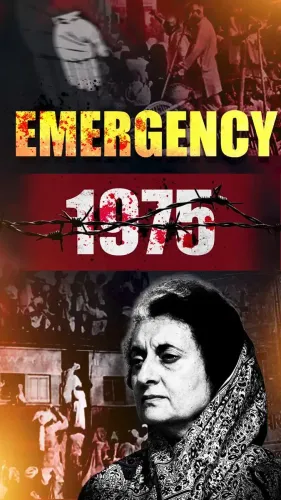
He cited the 1975-77 Emergency — declared by PM Indira Gandhi — which suspended civil liberties and jailed opposition leaders for 21 months .
He also referenced Congress's use of Article 356 to dismiss elected state governments through the 1970s and 1980s.
The Supreme Court's S.R.
Bommai judgment (1994) curtailed that dismissal power, widely seen as a rebuke of Congress-era practice.
BJP leaders regularly deploy the Emergency and Article 356 record as a counter when Congress raises concerns about democratic norms under current governance.
Majhi demanded Congress 'answer for its own actions before preaching democratic values to others.'
Odisha Chief Minister Mohan Charan Majhi fired a sharp salvo at the Congress party on Wednesday, October 28, 2026, accusing it of hypocrisy on institutional independence — pointing directly to the 1975 Emergency and the serial dismissal of elected state governments as proof that Congress has no standing to lecture others on democratic values.
The Emergency card, played with precision
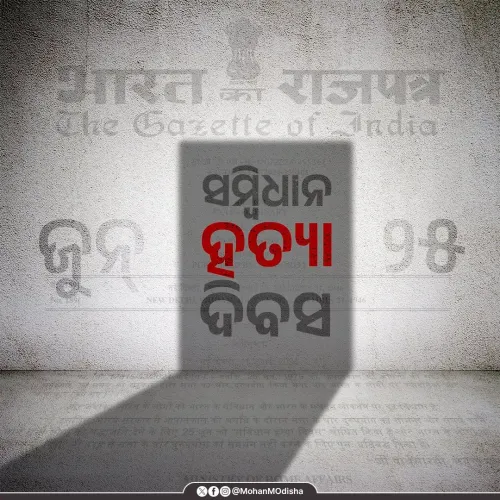
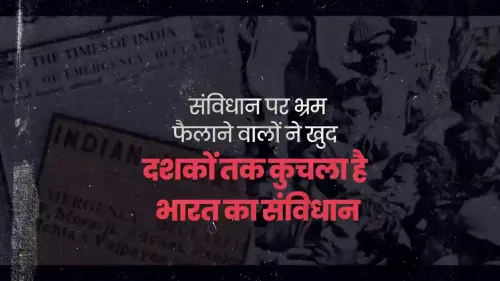
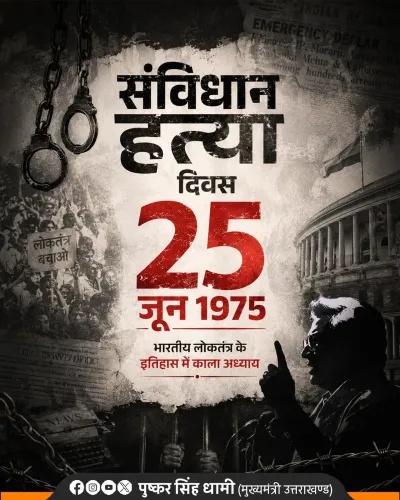
Majhi's post pulled no punches: 'Those who weakened institutions when in power cannot pose as their protectors today.' The reference lands on two of Congress's most contested chapters — the 21-month Emergency declared by Prime Minister Indira Gandhi in June 1975, which suspended civil liberties, jailed opposition leaders, and imposed press censorship; and the repeated invocation of Article 356 through the 1970s and 1980s to topple elected state governments deemed inconvenient to New Delhi.
The Article 356 era eventually drew a constitutional correction: the Supreme Court's landmark S.R. Bommai judgment of 1994 sharply curtailed the Centre's power to dismiss state governments, a ruling widely read as a direct rebuke of Congress-era practice. Majhi's post, in essence, replays that historical verdict as a political charge.
A well-worn BJP counter, sharpened for today
This is not the first time BJP leaders have reached for the Emergency and Article 356 files. The pattern is consistent: whenever Congress or the broader opposition raises allegations about central agencies, judicial pressure, or gubernatorial overreach under BJP-led governments, the response swings back to Congress's own institutional record.
What gives Majhi's intervention its particular edge is timing and authority. As a sitting Chief Minister — a constitutional office once routinely vulnerable to Article 356 — he speaks from the position that Congress's dismissal powers were most directly aimed at. The implicit argument: the party that invented that weapon should not now present itself as democracy's guardian.
Accountability as the central demand
The CM's closing line frames the challenge explicitly: 'Institutional independence demands accountability, and the Congress must answer for its own actions before preaching democratic values to others.' It is less an argument than a gauntlet — an invitation for Congress to relitigate its own record in the court of public opinion.
Congress leaders and the broader opposition have not been silent in recent weeks on questions of institutional autonomy, though the precise trigger for Majhi's post on this date could not be independently confirmed. What is certain is that this exchange — BJP invoking Emergency-era ghosts, Congress contesting the equivalence — is a durable feature of Indian political argument that shows no sign of resolution.
The historical ledger is open, the charges are old, but the political stakes they're being wielded for are very much of the present.
Point of View
Pivot to Congress's own documented history of emergency rule and Article 356 misuse. The strategy is effective precisely because the historical record is not disputed — the Emergency and the Bommai judgment are matters of constitutional fact, not partisan allegation. By framing the debate as one of credibility rather than policy, Majhi shifts the burden of proof onto Congress, forcing the older party to defend its legacy rather than press its current charges. This kind of historical accountability argument tends to intensify around election cycles and parliamentary sessions, suggesting the immediate political context — whatever the specific trigger — is high-stakes enough to warrant a Chief Minister's direct engagement.
NationPress
28 Oct 2026
Frequently Asked Questions
What did Odisha CM Mohan Majhi say about Congress and institutional independence?
CM Majhi accused Congress of hypocrisy, arguing that the party which imposed the 1975 Emergency and dismissed elected state governments under Article 356 cannot credibly claim to be a defender of institutional independence today.
What was the 1975 Emergency in India?
The Emergency was declared by Prime Minister Indira Gandhi in June 1975 and lasted 21 months. It suspended fundamental rights, censored the press, and led to the detention of thousands of opposition leaders and activists.
What is Article 356 and how did Congress use it?
Article 356 of the Indian Constitution allows the Centre to impose President's Rule and dismiss elected state governments. Congress-led central governments used it extensively in the 1970s and 1980s to remove opposition-ruled states, a practice later curtailed by the Supreme Court's S.R. Bommai judgment in 1994.
What was the S.R. Bommai judgment?
The S.R. Bommai judgment, delivered by the Supreme Court of India in 1994, imposed strict safeguards on the Centre's power to dismiss state governments under Article 356, effectively ending its widespread political misuse.
Why do BJP leaders frequently raise the 1975 Emergency against Congress?
The Emergency is BJP's most powerful historical counter-argument: whenever Congress raises concerns about democratic norms or institutional pressure under BJP rule, BJP responds by pointing to the Emergency as evidence that Congress itself has the most serious record of institutional subversion in independent India.