Shivraj Singh Chouhan: Ram and Shiva belong to no party
Synopsis
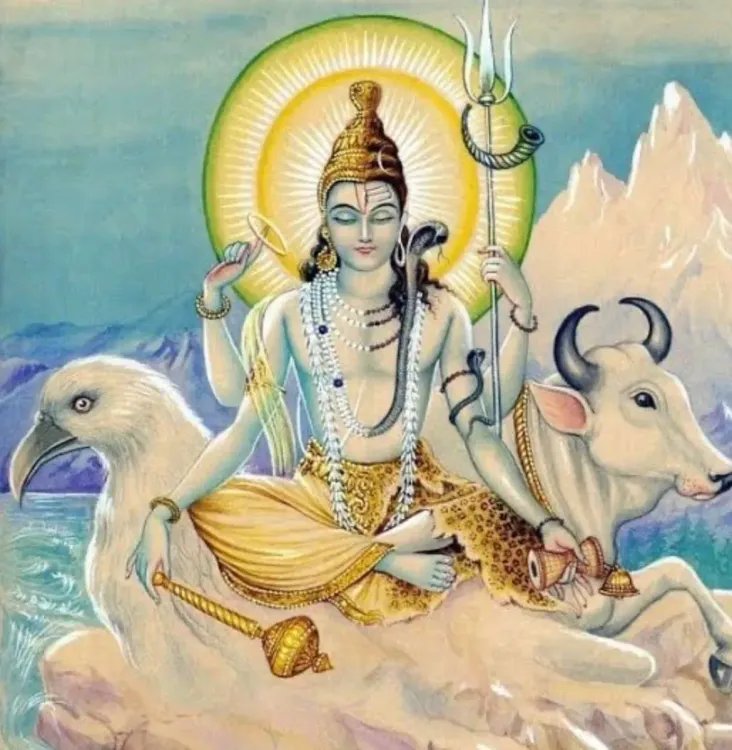
Union Agriculture Minister Shivraj Singh Chouhan posted on X invoking the ancient Harihar philosophy — the non-dual unity of Vishnu and Shiva — to argue that Lord Ram and Mahadev belong to no political party and that using them as partisan symbols distorts Sanatan Dharma.
Key Takeaways
Union Agriculture Minister Shivraj Singh Chouhan posted on X on 28 October 2026 invoking the concept of Harihar — the composite unity of Vishnu (Ram) and Shiva (Mahadev).
He argued that Ram and Shiva are not rivals but mutual objects of each other's devotion, making any political opposition between their followers theologically unsound.
Chouhan directly criticised those who 'position Mahadev in opposition to the BJP' or view Jai Shri Ram through a partisan political lens.
He asserted that both deities 'belong to no party or faction' and are eternal symbols of the faith of crores of Indians.
The post closed with the formulation 'Faith unites; the narrowness of politics divides' and twin salutations — Jai Shri Ram and Har Har Mahadev .
When a senior cabinet minister invokes the ancient philosophical unity of Vishnu and Shiva to push back against what he calls the politicisation of Hindu deities, the message lands beyond theology. Union Agriculture Minister Shivraj Singh Chouhan posted on X on Wednesday, 28 October 2026, arguing that Lord Ram and Lord Shiva are not rivals but mutual symbols of devotion — and that those who pit one against the other for political gain misread both religion and culture.
The Harihar argument: one truth, two forms
Chouhan's post opens with a core concept from Sanatan Dharma — Harihar, the composite form representing the non-dual unity of Hari (Vishnu/Ram) and Har (Shiva/Mahadev). 'Hari and Har are not separate; both are two forms of the same supreme essence,' he writes. The philosophical point is deliberate: in Hindu tradition, Ram is a devotee of Shiva, and Shiva himself reveres Ram — making any attempt to set the two in opposition theologically incoherent.
He drives this home with a pointed rhetorical question: 'Mahadev himself is the one whom Ram worships — can devotion in his name create distance from Ram?' The logic, put plainly, is that no devotee of Shiva can be an adversary of Ram, and vice versa. 'Hari mein Har hain, Har mein Hari hain' — 'In Hari there is Har; in Har there is Hari' — is the closing formulation he offers as 'the eternal truth of Harihar.'
A direct rebuke of 'Mahadev vs BJP' framing
The post is not abstract theology. Chouhan names a specific pattern he objects to: 'Those who do politics sometimes position Mahadev in opposition to the BJP, and sometimes view the chant of Jai Shri Ram through a political lens.' He does not name opponents, but the target of the critique is unmistakable — opposition voices who have, at various points, framed the BJP's use of Ram imagery as exclusionary or claimed a separate cultural ownership of Shiva-centric traditions.
'Mahadev belongs to no party. Ram belongs to no faction. They are the eternal symbols of the faith of crores of people and of Sanatan culture,' he writes. The argument is a pre-emptive reframe: by asserting that both deities transcend partisan ownership, he simultaneously deflects the charge that the BJP has monopolised Ram while rejecting any counter-claim that Shiva represents a rival political constituency.
Faith unites, political narrowness divides
Chouhan closes with a normative claim that doubles as a campaign-ready line: 'Aastha jodti hai, rajneeti ki sankeerṇata todti hai' — 'Faith unites; the narrowness of politics divides.' For a former four-term Chief Minister of Madhya Pradesh who built much of his political identity around accessible, grassroots Hindu cultural expression, this framing is consistent with a long-running communications strategy: position BJP's religious symbolism as inclusive and civilisational, not partisan.
The post ends with twin salutations — Jai Shri Ram! and Har Har Mahadev! — one for Vishnu's avatar, one for Shiva. The symmetry is the argument.
Point of View
He elevates the register while making the same political point. The twin salutations at the close signal that this is not just theology: it is a message to both Ram-bhakt and Shiva-bhakt constituencies that their loyalties need not diverge. The post fits a broader pattern in which senior BJP leaders increasingly occupy the space of cultural authority, not just administrative power.
NationPress
28 Oct 2026
Frequently Asked Questions
What did Shivraj Singh Chouhan say about Ram and Shiva?
Chouhan argued on X that Ram and Shiva are not rivals but represent the same supreme essence through the concept of Harihar, and that neither deity belongs to any political party.
What is Harihar in Hinduism?
Harihar is the composite form in Sanatan Dharma representing the unity of Hari (Vishnu/Ram) and Har (Shiva/Mahadev), symbolising that both are manifestations of the same ultimate reality.
Why did Shivraj Chouhan make this post about religion and politics?
The post appears to rebuke opposition voices who have at various points framed the BJP's use of Ram imagery as exclusionary or claimed that Shiva-devotion represents a rival political identity separate from the BJP.
Is Shivraj Singh Chouhan still a Chief Minister?
No. Shivraj Singh Chouhan served four terms as Chief Minister of Madhya Pradesh and is currently Union Minister of Agriculture and Farmers Welfare and Rural Development in the central government.
What does 'Jai Shri Ram' and 'Har Har Mahadev' mean politically?
Both are devotional salutations — to Lord Ram and Lord Shiva respectively. Chouhan used both simultaneously to argue that Hindu faith is unified and should not be divided along partisan lines.