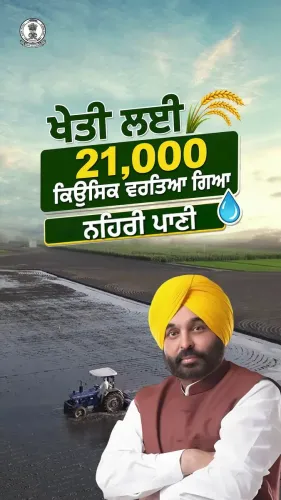
CM Bhagwant Mann: Canal Push Lifts Punjab Groundwater

Synopsis
Chief Minister Bhagwant Mann announced that Punjab's reinforced canal irrigation infrastructure has lifted groundwater levels by 1 to 5 metres and converted multiple over-exploited 'dark zones' into safe zones, marking a potential turning point in the state's chronic groundwater crisis.
Key Takeaways
The Chief Minister's Office of Punjab announced on 28 October 2026 that canal irrigation upgrades have produced measurable groundwater recovery.
CM Bhagwant Mann stated groundwater levels have risen by 1 to 5 metres in several areas of Punjab.
Multiple blocks previously classified as 'dark zones' (over-exploited) have been reclassified as 'safe zones.' Punjab has one of India's highest concentrations of over-exploited groundwater blocks, driven by rice-wheat cultivation and tubewell dependence.
The state's canal rehabilitation strategy aims to substitute surface water for groundwater across agriculture-heavy districts.
Independent verification through the Central Ground Water Board's next annual report will be critical to confirming the scale of recovery.
Punjab's groundwater table — long in freefall from decades of tubewell-driven rice farming — is showing signs of recovery, and Chief Minister Bhagwant Mann says the canal network is the reason why. The Chief Minister's Office of Punjab announced on Wednesday, 28 October 2026, that strengthening the state's canal irrigation infrastructure has translated into measurable groundwater savings, with water levels rising by 1 to 5 metres in several areas and multiple 'dark zones' reclassified as 'safe zones.'
The post, shared in Punjabi, quotes CM Mann directly: 'ਧਰਤੀ ਹੇਠਲੇ ਪਾਣੀ ਦੇ ਪੱਧਰ ਵਿੱਚ 1 ਤੋਂ 5 ਮੀਟਰ ਤੱਕ ਵਾਧਾ ਦਰਜ ਕੀਤਾ ਗਿਆ ਹੈ' — ('A rise of 1 to 5 metres has been recorded in the groundwater level'). The claim lands against a backdrop of one of India's most acute agricultural water crises.
Why 'Dark Zones' Matter in Punjab
In the Central Ground Water Board's classification system, a 'dark zone' — or over-exploited block — is a district where groundwater extraction exceeds recharge. Punjab has historically held the largest share of such over-exploited blocks among Indian states, a direct consequence of the rice-wheat cultivation cycle that locks millions of farmers into tubewell-dependent irrigation. Each paddy season pulls billions of litres from aquifers faster than monsoon rains can replenish them.
The conversion of even a handful of these blocks to 'safe zone' status is a significant administrative and ecological milestone. It signals that surface-water delivery through canals is successfully substituting for groundwater extraction — the precise outcome successive Punjab governments have chased since the Punjab Preservation of Subsoil Water Act was enacted in 2009, which famously delayed paddy transplantation dates to cut the irrigation window.
Canal Infrastructure as the Policy Lever
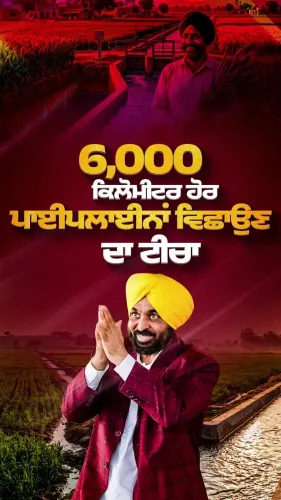
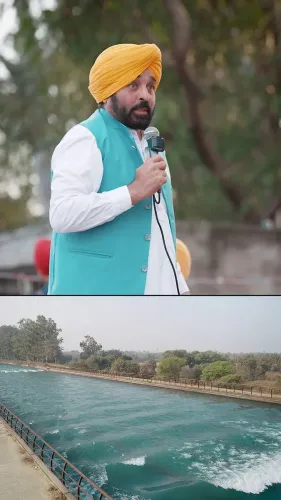
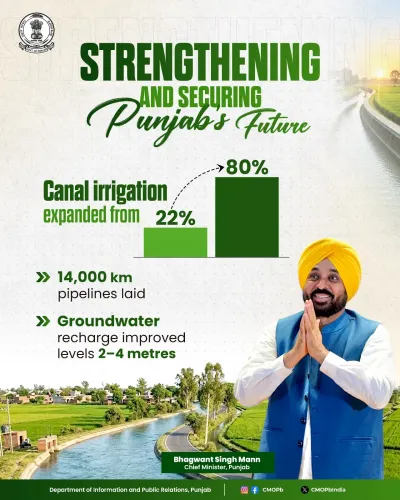
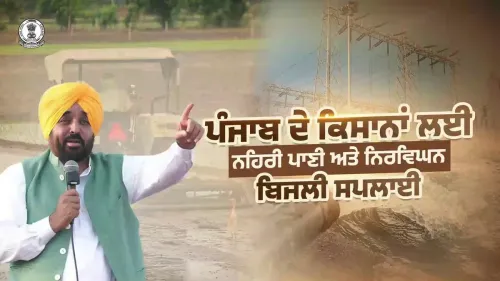
The Mann government's stated strategy centres on rehabilitating and reinforcing the state's canal network — lining earthen channels to reduce seepage losses and expanding the reach of surface-water delivery to farms that have historically relied solely on tubewells. The logic is straightforward: every acre irrigated by canal water is an acre not drawing down the aquifer.
Punjab sits atop the Indo-Gangetic Alluvial Plain, where the aquifer system feeds both agriculture and drinking water for tens of millions of people. A sustained reversal in groundwater depletion would ease pressure on rural households, reduce energy costs for farmers who pump water from ever-deeper levels, and improve the state's long-term food-production security.
What the Numbers Still Need to Prove
The figures cited — a rise of 1 to 5 metres and the reclassification of multiple dark zones — are the government's own reported metrics. Independent verification through the Central Ground Water Board's next annual block-wise assessment will be the definitive test of whether these gains are sustained across seasons or concentrated in specific pockets. The upcoming state budget cycle will also reveal how much capital the government intends to commit to extending canal works further.
For Punjab's farmers and rural communities, the direction of travel matters as much as any single data point. After years of warnings that the state's aquifers could reach critical depletion within a generation, a government claiming measurable recovery — backed by infrastructure investment rather than restriction alone — is a different kind of message entirely.
Point of View
Infrastructure-led answer to Punjab's groundwater emergency — a politically useful reframe that shifts the narrative from restriction (as with the 2009 paddy-delay law) to delivery. The AAP government is signalling that governance efficiency, not just regulation, can move environmental indicators. The harder test is whether the gains hold when the next Central Ground Water Board assessment publishes bloc-by-bloc data; state-reported metrics and independent monitoring have historically diverged in Punjab. If the reclassifications hold, Mann will have a rare, tangible climate-adaptation credential ahead of the next electoral cycle.
NationPress
28 Oct 2026
Frequently Asked Questions
What did CM Bhagwant Mann say about Punjab's groundwater?
CM Bhagwant Mann announced on 28 October 2026 that strengthening Punjab's canal irrigation infrastructure has resulted in groundwater levels rising by 1 to 5 metres in several areas and the conversion of multiple 'dark zones' into 'safe zones.'
What is a 'dark zone' in groundwater terms?
A 'dark zone,' or over-exploited block, is a classification by the Central Ground Water Board where groundwater extraction exceeds natural recharge. Punjab has historically had one of the highest numbers of such blocks in India due to intensive rice-wheat farming.
How does canal irrigation help save groundwater in Punjab?
Canal irrigation delivers surface water directly to farms, reducing farmers' dependence on tubewells. When fields are irrigated by canal water instead of pumped groundwater, aquifer extraction slows and water tables can recover over time.
What is the Punjab Preservation of Subsoil Water Act?
Enacted in 2009, the Punjab Preservation of Subsoil Water Act delayed the date of paddy transplantation in the state to shorten the irrigation window and reduce groundwater extraction during the kharif season.
How will the Punjab groundwater recovery claims be verified?
The Central Ground Water Board publishes annual assessments of block-wise groundwater levels across India. Its next report will provide independent data to confirm whether the rises of 1-5 metres and dark-zone reclassifications reported by the Punjab government are reflected across multiple seasons.