India's space economy targets $44 billion by 2033, NGLV to triple launch power
Synopsis
India's space sector is no longer just a government prestige project — it is a $44 billion economy in the making. With $618.5 million already flowing into space start-ups, 118 technology transfer deals done, and a next-gen rocket that triples current payload capacity in development, the country is engineering a structural shift from state-led launches to an enterprise-driven space ecosystem.
Key Takeaways
India's space economy is targeted to reach $44 billion by 2033 , according to a government factsheet released on 28 October 2026 .
Cumulative investment in Indian space start-ups reached $618.5 million as of 31 March 2026 , with funding shifting to growth-stage rounds.
NSIL has signed 118 Technology Transfer Agreements to transfer 83 ISRO technologies to Indian industry.
The Next Generation Launch Vehicle (NGLV) , approved with a ₹8,240 crore outlay, will carry up to 30 tonnes to LEO — triple the LVM3's capacity.
India became the fourth country to achieve autonomous in-orbit spacecraft docking through the SpaDeX mission.
Space applications — from weather alerts to earth observation — directly serve agriculture, disaster management, and national security.
India's space economy is on course to reach $44 billion by 2033, driven by emerging technologies, rising private investment, and a new generation of launch vehicles, according to a government factsheet released on Wednesday, 28 October 2026. The sector is expanding beyond its scientific and strategic roots to become a significant engine of economic growth and industrial capability.
Private Investment and Technology Transfer
NewSpace India Limited (NSIL) has signed 118 Technology Transfer Agreements, channelling 83 ISRO-developed technologies into Indian industry. Investor confidence has followed: cumulative investment in Indian space start-ups reached approximately $618.5 million as of 31 March 2026. Notably, funding is shifting from early-stage seed rounds to larger, growth-stage commitments — a signal that the sector is maturing beyond pilot-phase ambitions.
Next Generation Launch Vehicle: Tripling India's Payload Capacity
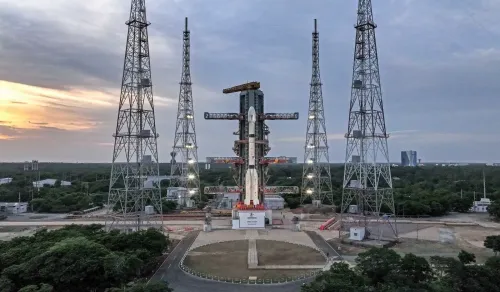
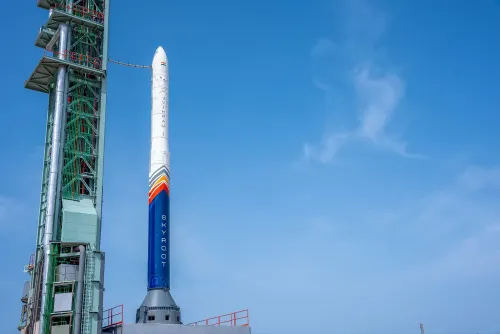
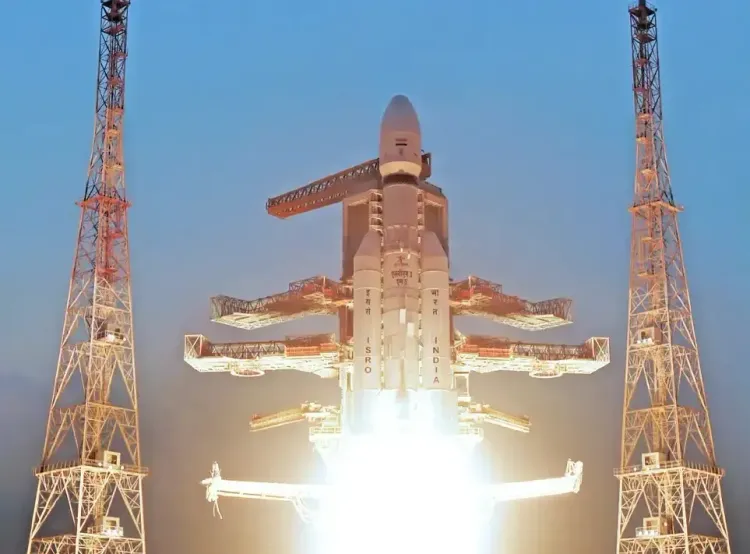
In September 2024, the Union Cabinet approved development of the Next Generation Launch Vehicle (NGLV), with an approved outlay of ₹8,240 crore covering development costs, three developmental flights, essential facilities, programme management, and the launch campaign. The NGLV is designed for a maximum payload capacity of 30 tonnes to Low Earth Orbit (LEO) — triple the 10-tonne LEO limit of the existing LVM3. A partially reusable NGLV variant with a 14-tonne LEO payload capability is also under development to support lower-cost space access.
The NGLV will serve both national and commercial missions, including human spaceflight to the planned Bharatiya Antariksh Station, lunar and interplanetary exploration, and the deployment of communication and earth observation satellite constellations.
Milestones in Emerging Space Technologies
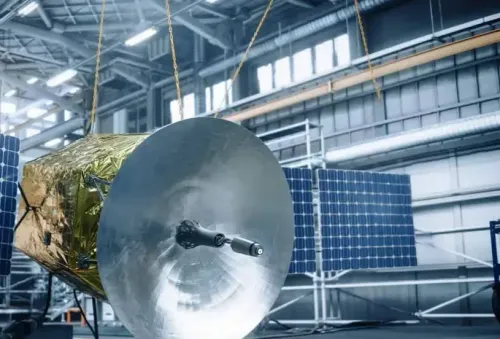
Technologies such as reusable launch vehicles, air-breathing propulsion, electric propulsion, and in-space docking are underpinning this growth, according to the factsheet. Through the SpaDeX mission, India became the fourth country to achieve autonomous docking of two spacecraft in orbit — a capability critical for future space station assembly and deep-space missions. The Gaganyaan programme, meanwhile, continues to advance India's human spaceflight goals.
Space Serving Citizens: Agriculture, Weather and Security
Beyond prestige missions, India's space infrastructure directly affects daily life. Communication satellites extend connectivity to remote and underserved regions. Earth observation data supports agriculture, disaster assessment, environmental monitoring, and urban planning. Weather satellites track cyclones and monsoons, enabling early warnings that protect fishing communities, farmers, and coastal populations. Space-based communication systems also support national security and strategic requirements, the factsheet states.
What Comes Next
The convergence of NGLV development, the Bharatiya Antariksh Station roadmap, and rising private capital positions India for a structural shift in its space ambitions — from a government-led programme to a diversified, enterprise-driven ecosystem. With the $44 billion target on the horizon, execution pace and regulatory clarity for private players will be the defining factors in the years ahead.
Point of View
But the underlying signals — maturing start-up funding, technology transfers at scale, and a rocket that triples payload capacity — suggest this is more than a headline number. The real inflection point will come when private launch providers can operate commercially without ISRO as the backstop, something the NGLV's reusability features are designed to enable but have not yet delivered. India's SpaDeX docking achievement is strategically underappreciated: it is a prerequisite for any credible space station programme, and it puts India in a club of four nations that can assemble assets in orbit. The question is whether regulatory frameworks and spectrum policy will keep pace with the hardware ambitions.
NationPress
28 Oct 2026
Frequently Asked Questions
What is India's space economy target for 2033?
India's space economy is targeted to reach $44 billion by 2033, according to a government factsheet released on 28 October 2026. The growth is driven by emerging technologies, rising private investment, and an expanding commercial launch capability.
What is the Next Generation Launch Vehicle (NGLV)?
The NGLV is India's next-generation rocket approved by the Union Cabinet in September 2024 with an outlay of ₹8,240 crore. It is designed to carry up to 30 tonnes to Low Earth Orbit — three times the current LVM3 capacity — and will support human spaceflight, lunar missions, and commercial satellite launches.
How much has been invested in Indian space start-ups?
Cumulative investment in Indian space start-ups reached approximately $618.5 million as of 31 March 2026. Funding has shifted from early-stage seed support to larger, growth-stage rounds, reflecting growing investor confidence in the sector.
What is SpaDeX and why does it matter?
SpaDeX is an Indian Space Research Organisation mission through which India became the fourth country to achieve autonomous docking of two spacecraft in orbit. This capability is essential for assembling the planned Bharatiya Antariksh Station and enabling future deep-space missions.
How does India's space programme benefit ordinary citizens?
India's space infrastructure supports weather forecasting, cyclone and monsoon tracking, agricultural monitoring, disaster assessment, and connectivity in remote areas. Fishermen, farmers, and coastal communities rely on satellite-enabled early warnings, while space-based systems also support national security requirements.