India's aerospace sector set to grow twice as fast as global market by 2030
Synopsis
India's aerospace sector is not just growing — it is set to outpace the global market by a factor of two. With a current valuation of $13 billion racing toward $40 billion by 2030, private firms eyeing 45 international launches a year, and $3.5 billion in projected venture capital, the country's cost-efficient engineering edge is turning a domestic space programme into a global commercial force.
Key Takeaways
India's aerospace sector, currently valued at $13 billion , is forecast to exceed $40 billion by 2030 — growing at twice the pace of the global market.
Private firms are projected to conduct up to 45 international launches a year and manufacture one-third of global earth-observation satellites by 2030.
Cumulative private investment has hit $600 million ; space tech startups raised $256 million in 2026 alone.
The sector is expected to attract up to $3.5 billion in venture capital and private equity over the next five years.
Technology transfer via NewSpace India Limited (NSIL) , ISRO's commercial arm, is a key enabler for private aerospace companies.
Realising targets depends on startups securing recurring global launch contracts and delivering reliable satellite services at scale.
India's aerospace industry is on track to expand at twice the pace of the global market, powered by state-backed reforms, rising private capital, and deepening collaboration with the Indian Space Research Organisation (ISRO), according to a new report released on 22 October 2026. The sector, currently valued at $13 billion, is forecast to more than triple to $40 billion by 2030, with some projections placing the space economy at $44 billion by 2033.
Growth Drivers and Market Projections
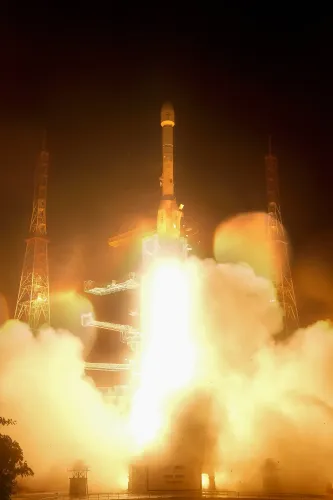
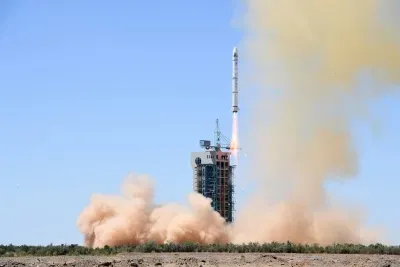
The report, citing analysis from Arkam Ventures, attributes India's outsized growth trajectory to a convergence of policy tailwinds, cost-competitive manufacturing, and a deep pool of engineering talent. Private firms are expected to participate in up to 45 launches a year for international customers by 2030, and to manufacture as much as one-third of the world's earth-observation satellites.
India is also likely to emerge as a significant exporter of avionics, Global Navigation Satellite System (GNSS) equipment, Satellite Communication (SATCOM) systems, and ground Radio Frequency (RF) infrastructure, according to the report.
Private Investment Surges
Total cumulative private investment in the sector has reached $600 million to date. Space technology startups alone raised nearly $256 million in 2026, and the segment is projected to attract up to $3.5 billion in venture capital and private equity over the next five years.
'Capital is making a beeline for India's space startups because the country can build sophisticated aerospace systems at a fraction of the cost of the US and Europe,' Sanjay Kumar, co-founder of EON Space Labs, was quoted as saying. Kumar added that India's engineering talent is deep and manufacturing remains cost-efficient relative to other nations.
ISRO's Role and Technology Transfer
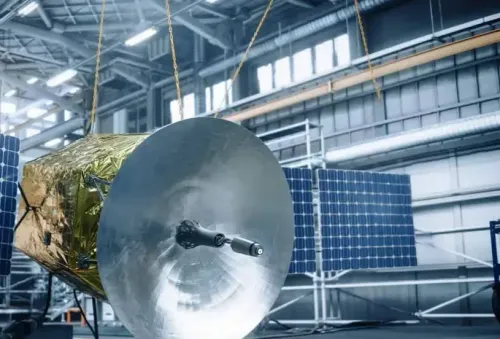
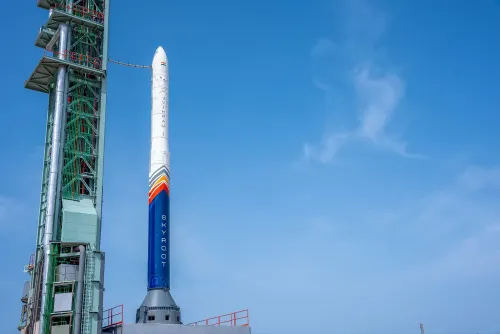
Small, technology-driven private companies are building payload-carrying rockets and developing satellites, leveraging technology transfer agreements made available through ISRO's commercial arm, NewSpace India Limited (NSIL). This public-private architecture is seen as a key structural advantage that distinguishes India from other emerging space economies.
The report also highlighted the downstream opportunity, noting: 'To win the celestial race, India's space startups need to strongly leverage the nation's unique attributes in software development to cater to the downstream market of data mining from satellites.'
Risks and Conditions for Success
Despite the optimistic outlook, the report cautioned that realising these ambitions hinges on startups' ability to secure recurring global launch contracts and deliver reliable satellite services at scale. Execution risk — particularly around commercial launches and long-term service agreements — remains the sector's central challenge. This comes amid a globally competitive environment where incumbents such as SpaceX and emerging players from Europe and China are also scaling rapidly.
With investment momentum building and policy support firm, the next five years will be a critical stress-test for India's aspirations as a global aerospace hub.
Point of View
Engineering depth, and ISRO's institutional knowledge are genuine differentiators. But the jump from $13 billion to $40 billion by 2030 is a steep curve that demands more than favourable reports: it requires sustained commercial launches, not just test flights, and bankable long-term satellite service contracts rather than one-off agreements. The $600 million in cumulative private investment, while encouraging, remains modest against the scale of what SpaceX alone deploys in a single year. The downstream data-services opportunity is real, but India's space startups have yet to demonstrate the recurring revenue models that global investors ultimately demand. Policy support is necessary but not sufficient — execution will be the true proof of concept.
NationPress
22 Oct 2026
Frequently Asked Questions
How big is India's aerospace industry expected to become by 2030?
India's aerospace sector is forecast to grow from its current value of $13 billion to over $40 billion by 2030, with some estimates projecting a $44 billion space economy by 2033. This represents more than a tripling of the sector's size and growth at roughly twice the pace of the global market.
What is driving the rapid growth of India's space and aerospace sector?
Growth is being driven by state-backed policy reforms, rising private investment, cost-competitive manufacturing, deep engineering talent, and closer collaboration with ISRO through its commercial arm NewSpace India Limited (NSIL). The ability to build sophisticated systems at a fraction of Western costs is a key competitive advantage.
How much private investment has India's space sector attracted?
Cumulative private investment in India's space sector has reached $600 million. Space technology startups raised nearly $256 million in 2026 alone, and the sector is projected to attract up to $3.5 billion in venture capital and private equity over the next five years.
What role does ISRO play in India's private aerospace growth?
ISRO supports private companies through technology transfer agreements facilitated by its commercial arm, NewSpace India Limited (NSIL). This allows small private firms to build payload-carrying rockets and develop satellites using transferred expertise and infrastructure, giving India's startups a significant head start.
What are the key risks to India achieving its aerospace targets?
The report cautions that realising the sector's ambitions depends on startups securing recurring global launch contracts and delivering reliable satellite services at scale. Without consistent commercial launches and long-term service agreements, the projected growth figures may prove difficult to achieve in the face of stiff global competition.